Showing posts with label 1950s. Show all posts

Wednesday, May 01, 2024

Forbidden Notebook - Alba De Céspedes


Forbidden Notebook very much reflects the state of Italian culture, especially the relationship between husbands and wives, during the period during which it was was first published. Even so, it still surprises me that the novel was written in 1952, not written in retrospect some decades later. Thankfully, Astra House republished a Forbidden Notebook translation by Ann Goldstein in 2023, or I would most certainly have never heard of it. 

As the novel opens, Valeria is married and has a husband, a son in university, and a teen daughter about to finish high school. She's pretty much resigned herself to her life, even though she's not completely happy with being a full-time caretaker to three other adults. But all it will take is one innocent decision to change the lives of her entire family forever. 

It all begins when Valeria goes to a tobacconist to buy cigarettes for her husband one Sunday afternoon. According to Italian law, legally the shop can only sell tobacco products on Sundays, nothing else, but Valeria manages to coerce the shop owner into selling her the blank journal that catches her eye. Valeria has been bothered that she has no private space of her own to claim: her husband has his study, and her children each have a bedroom of their own. She, however, has no place to be alone, and when she gets back home that Sunday afternoon, Valeria realizes that she doesn't even have a place to hide the journal from the prying eyes of her family- much less the actual opportunity to sit and write down her own secrets and personal feelings about what goes on around her. She's never before had the time to think much about herself in relationship to her husband and children, and how she really feels about the way each of them takes for granted that she will always be there to do whatever they need her to do for them.

But Valeria figures it out. She starts staying up long after everyone else has gone to sleep with the excuse that she needs to finish up one more household task or another. Nervous as it all makes her, she has carved out a little private time for herself, and she makes the most of it. Gradually, Valeria begins to realize that the very act of composing her thoughts before putting them to paper has made her see her world and her family in a way she never has before. And she begins to realize that she wants more from life - and more importantly that she deserves more.

The author very cleverly uses Valeria's written words exclusively to tell of her transformation, so the reader is able to watch it all happen exactly as she experiences it. This works remarkably well to pace the novel in a way that allows the reader's eyes to be opened to a more realistic view of what Italian women of the fifties were experiencing layer by layer, just as Valeria was figuring it all out for herself layer by layer. 

Forbidden Notebook is a brilliant novel with a lot to say - and thanks to Astra House, you don't have to miss it.

Alba De Céspedes jacket photo

Friday, February 02, 2024

A Murder Is Announced - Agatha Christie


Of all the avid readers in the world, only a tiny percentage have read fewer Agatha Christie novels than I have. A Murder Is Announced is my first, so a reader has to have read exactly zero Christie novels to be less familiar with her books than I still am. And even though I believe this Miss Marple novel is a good start toward becoming familiar with Christie's work, it leaves me with more questions than answers about her style and what to expect from the author's other novels.

For that reason, this is not really a review, as such, of A Murder Is Announced other than to say that it was Christie's fiftieth book (the count includes short story compilations in both the UK and the US), and that it is a variation of the locked room mystery genre. It all begins with this ad placed in a village weekly:

"A murder is announced and will take place on Friday, October 29, at Little Paddocks at 6:30 p.m. Friends please accept this, the only intimation."

 From there, it becomes a matter of using the process of elimination to determine which of the residents and visiting neighbors could have possibly killed someone right on schedule in a room filled with potential witnesses. It's all competently written and quite engaging, but it left me wondering about a few things:

  • This is the fourth Miss Marple mystery, so by now she is a well established character. Why then does she not appear until almost one hundred pages into the book, and why does she remain more a side-character even then than a character with a whole series of her own?
  • I couldn't help feeling just a little bit cheated as a reader by Christie's solution to the original murder and the ones that followed because most of the clues Marple uses to identify the killer are very obscure ones just barely mentioned (I'm not convinced all of them even were mentioned). 
  • The longest chapter in the book is the "recap" at the end when Marple and Chief Inspector Craddock go step-by-step describing to an assembled group of side-characters everything that's happened offstage - largely, things they and the reader have no way of knowing beforehand.
  • Was this "tell-don't-show" approach more acceptable in the 1940s and 1950s than I find it to be today? In my estimation, it makes Christie's mysteries seem less clever, not more clever, even though I saw a couple of reviews written in the 1950s that gushed about her cleverness.
  • Does Miss Marple always get such a limited page-count, and is Hercule Poirot's exposure in his books as limited as hers is in her own?
I did enjoy the novel a lot, especially the classic characters and setting Christie is so good at creating. Even so, my enthusiasm for quickly moving on next to The Murder of Roger Ackroyd has taken a bit of a hit because of the way A Murder Is Announced ends...just a bit over the "show me don't tell me" line to suit my taste. For those sites that demand star-ratings, I'm going to call this one 3.5 stars and will round up to 4 stars where only whole stars are accepted.  

Friday, January 19, 2024

The Hustler - Walter Tevis


Almost despite himself, Walter Tevis was an amazingly successful writer whose novels have held up very well since his death to lung cancer thirty-nine years ago. I was very slow to pick up a Walter Tevis novel for the first time, but as it turns out, when I finally did (The Queen's Gambit), I already knew more about his books than I realized thanks to several of them having been made into major films. Including The Queen's Gambit, which was adapted into a hit series by Netflix in 2020, four Tevis novels have been filmed. The other three are The Hustler, The Color of Money, and The Man Who Fell to Earth, all of which are familiar to film buffs.

Tevis's hustler, who has come to be known as "Fast Eddie," is a young man who has been working his way across the country from pool hall to pool hall so that when he makes it to Chicago he will have enough money in his pocket to challenge the big boy pool hustlers there. Eddie wants as much as anything to make a reputation for himself, and he will be pleased to learn that his reputation, and expectation of his immanent arrival, precede him to the biggest pool halls in the city.

And that's where Eddie finds his own "white whale" waiting for him in the person of the almost grotesquely fat man who is acknowledged to be the best pool player in the country, one "Minnesota Fats." Fat the man may be, but something almost miraculous happens when he picks up a pool cue and strides toward the table:

"He stepped up to the table with short, quick little steps, stepping up to it sideways, bringing his cue up into position as he did so, so that he was holding his cue, standing sideways to the table, out across his great stomach, the left hand bridge already formed, the right hand holding the butt delicately, as a violinist holds his bow - gracefully but surely...And then Fats began moving around the table, making balls, all of his former ponderousness gone now, his motions like a ballet, the steps light, sure, and rehearsed."

Walter Tevis was an artist himself, and it's passages like this one that prove it to me. His novels are character-driven tales populated by flawed people whose deepest thoughts and motivations are all on full display for the reader to absorb and judge. The Hustler, while not exactly a coming-of-age novel for the young man in question, is one in which Fast Eddie finally figures out who he is and why he is that way. It's a bumpy ride, but with a lot of coaching along the way Eddie turns himself from a loser into a winner. What a shame it is too late.

This 1959 novel was followed, finally, by a 1984 sequel that would turn out to be Tevis's last book. In 1986, The Color of Money was made into a successful movie featuring Paul Newman in a reprisal of his role as Fast Eddie from The Hustler film, and co-starring Tom Cruise as a young pool player that Eddie wants to turn into a professional hustler.  

A Young Walter Tevis

Monday, January 15, 2024

What I'm Reading This Week (January 15, 2024)


I finished three books last week ( Red Leaves by Thomas H. Cook, The Diabolical by David Putnam, and All the Little Bird-Hearts by Viktoria Lloyd-Barlow), but I still managed to increase my in-progress reads from eight books to nine books by the end of the week. Momentum-wise, I've really been finding it difficult to put down Walter Tevis's The Hustler the last couple of days. Tevis creates such believable and complete characters that I think about them even when not reading.

In addition to the other books I'm carrying in from last week (Blues Brothers, The Boys from Biloxi, Writing to Learn, and What to Read and Why), I've begun these four:

Holmes on the Range is Steve Hockensmith's introductory novel in his series about a pair of cowboying brothers out West, one of whom (he's called "Old Red") is so infatuated by the Sherlock Holmes stories that he begins to model his entire life after the fictional detective - much to the exasperation of "Big Red," his younger brother. The brothers are working on an isolated cattle ranch when Old Red becomes convinced that the ranch manager's sudden death was not the accident it appears to be to everyone but him.

I'm a big fan of Dan Fesperman's thrillers ever since reading The Prisoner of Guantanamo back in 2007. Fesperman's novels usually reflect world politics of the day, and many of them have been about the impact of Islamic-influenced terrorism. The Cover Wife, a 2021 novel, follows a similar theme, but it is set in late 1999 before intelligence agencies around the world realized just how horrendous this kind of terrorism would soon prove to be. The "cover wife" in question is an American agent chosen to pretend that she is the wife of an author who has just published a book that fundamentalist Muslims consider very insulting to the religion. 

I love the idea that 84-year-old Lillian Boxfish has decided to take a NYC walk on New Year's Eve, a walk during which she interacts with people she meets on the street and wherever she stops for a moment. During the walk, Lillian looks back on her life and all the changes she's seen in the city since she first arrived decades earlier. I haven't been able to jumpstart this one yet because I'm not much enjoying the flashbacks, and keep wishing Lillian would return to the present. It's like two separate books, one I really like, and one that kind of bores me.

I've only read the first chapter of A Murder Is Announced so far, but at least I can finally say that I've read some Agatha Christie. I've found Christie to be surprisingly easy to read so far, and I'm intrigued by the set-up of this 1950 novel in which someone places an ad in the "Personals" of a local newspaper announcing a murder-to-be that will occur at a specific place and time. Everyone who sees the ad assumes that it's an invitation to one of the "murder games" that are so popular at the moment. Expect a crowd of suspects. 

Also most likely to be added later this week are one or two of these:


And that's not even to speak of the list of mystery writers I posted a few days ago and asked for your input on. I got some really great responses and will actively begin looking for some of the titles and authors most praised in the comments sometime in the next few days. 

Have a great week, everyone!

Friday, November 03, 2023

Take It Out in Trade - Walter Whitney


When Ace Books published Take It Out in Trade in 1957, the novel was met with public scorn and ridicule from publishing people like Random House's Bennett Cerf and others. Even the Roman Catholic Church took notice of the novel and labeled it as "Objectionable" on its monthly "Office of Decent Literature" list. 

(As an aside, I remember as a young teenaged reader scouring that very list every month to see if I could find any of the books I wasn't supposed to be reading - taking it as kind of a personal challenge to locate one or two of them. I like to think it was also an indication of my already budding belief that no one should be in the business of banning books. There is just no telling how many books the church list was responsible for selling, so I always wondered, too, if publishers ever actually got upset when one of their books appeared on it.) 

This new edition from Cutting Edge marks the first time that Take It Out in Trade has been in print in more than sixty years. According to Cutting Edge, Walter Whitney was a pen name for an author who "was never heard from again...at least not under his real name." 

The book itself is a surprisingly well written representation of the American pulp fiction genre that was so popular during the 1940s and 1950s. Its main characters may be borderline stereotypical ones, but they generally have enough depth and nuance to make them separately memorable. The plot itself could be taken as an early warning to American consumers that using revolving credit to finance what would otherwise be an unaffordable lifestyle is never a good idea. But best of all, the mysterious "Walter Whitney" is a pretty good storyteller.

The villain of the piece is Fran, a young woman with a scheme she hopes will make her rich enough to flee her hometown long before her physically abusive husband is released from prison. All of the "Arkies" and "hillbillies" coming north for factory jobs are easy pickings for a woman like Fran, and she is determined to milk her victims for every dime they have before she tosses them aside for her next target. 

But Fran doesn't have a plan for a man like Leroy, someone who has become so infatuated by her that he's willing to ruin himself and his family even after he figures out exactly what she's up to. Knowing that her husband's release from prison can come any day, Fran is desperate for the one big score that will put her nest egg over the top. But the clock is ticking...and she has two men to worry about now, not just one.

Take It Out in Trade is a novel for fans of noir crime fiction and those who have fond memories of the pulp fiction of that era. It may be tame by today's standards, but Take It Out in Trade must have been a real shocker to 1950s readers.

Walter Whitney author photo

Wednesday, May 26, 2021

The Real Cool Killers - Chester Himes


I first became aware of the books of Chester Himes from one of the thirty-six segments of the The Great Courses class on Mysteries and Thrillers. I was already a fan of writers like Walter Mosley and Attica Locke, but the segment entitled “African-American Mysteries” introduced me to other writers like Himes, Barbara Neely, and Valerie Wilson Wesley whom I had never heard of. Of the three, I was most fascinated by Himes’s personal story.


Chester Himes was born in Missouri in 1909 and, although he did not start writing stories until he was serving prison time for a jewel theft in the 1930s, he would eventually publish almost twenty novels before he died in 1984. Fifteen or so years after being released from prison, Himes moved to Europe and became particularly well known in France, his new home country. He is best known for his Harlem Detectives novels featuring black NYPD detectives Coffin Ed Johnson and Gravedigger Jones. The novels are set in the 1950s and 1960s, and The Real Cool Killers (published in 1959) is one from that series. 


The gist of the plot is that a large white man has his life threatened by a knife-wielding black man who resents his presence in a Harlem bar in which everyone else inside is black. The white man is rescued by the bartender only to end up being chased down the street by a second black man firing shots at him from a pistol. After the white man learns the hard way that he can’t outrun bullets, Coffin Ed and Gravedigger are called to the scene of the crime to see what they can figure out — and all hell breaks loose. The result is that Coffin Ed is suspended from duty pending investigation of what he did after he arrived on the scene. Now, it is up to Gravedigger Jones not only to find the white man’s killer, but to justify his best friend’s behavior at the scene of the crime so that he can be reinstated to duty on the NYPD. 


If The Real Cool Killers is any indication, the Harlem Detective novels are an over-the-top, almost surrealistic representation of the Harlem of the fifties and sixties, but they still accurately portray the tone of how blacks and whites most often saw each other during those decades. In describing his black characters, Himes uses every racial stereotype in the book — many, if not most of them, so derogatory that even a back author would be unlikely to get away with using them in today’s politically correct world. That allows Himes, I think, to rather subtly slip in observations about how easy it is for Harlem’s residents to fool and manipulate the whites they encounter every day in their neighborhood, including the cops. (I should mention, too, that a key element of the plot is a simplistic and insulting view of the Muslim faith as seen through the eyes of one of the story’s villains.) 


Bottom Line: The Real Cool Killers is surely to be appreciated by fans of noire crime fiction because it doesn’t get much darker than this, and it's easy to see the influence that Chester Himes had on African-American crime writers, especially Walter Mosley, who followed him. Coffin Ed and Gravedigger are two characters I want to get to know better, so this will not be the last Chester Himes novel that I read. The work of Chester Himes compares favorably, I think, with two of his contemporaries: Dashiell Hammett and Raymond Chandler. Fans of those two should definitely take a look at Himes. 


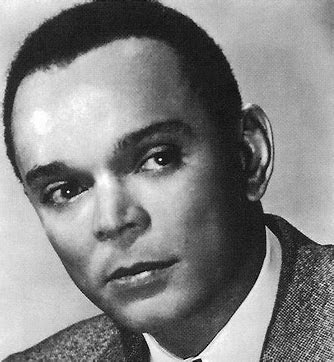
Chester Himes Through the Years:


Wednesday, April 28, 2021

The Killer inside Me - Jim Thompson

Original Cover of "The Killer Inside Me"


Simply put, Jim Thompson’s 1952 novel The Killer Inside Me is a stunner, one of those novels that, once picked up, demand the reader to keep turning pages. Mostly during the 1930s and 1940s, Thompson wrote over thirty novels, and most of those, including The Killer Inside Me, were published as paperback originals. That’s probably why Thompson got so little critical appreciation during his lifetime. He was, however, “rediscovered” during the 1980s, and several of his novels have now been filmed or republished. The Killer Inside Me even opens the Library of America collection titled Crime Novels: American Noir of the 1950s, a five-novel collection that includes Patricia Highsmith’s remarkable The Talented Mr. Ripley along with works from the classic noir writers Charles Willeford, David Goodis, and Chester Himes. 


“I grinned, feeling a little sorry for him. It was funny the way these people kept asking for it. Just latching onto you no matter how you tried to brush them off, and almost telling you how they wanted it done. Why’d they all have to come to me to get killed? Why couldn’t they kill themselves?”


Twenty-nine-year-old Lou Ford, narrator of The Killer Inside Me, is a cop in the small West Texas town he’s lived in his whole life. Central City, Texas, is an oil boom town that has grown from a population of 4,800 to one of more than 48,000 during Lou’s lifetime, and it is not anything like the quiet little community it had been when his father was the town’s family doctor. Lou is the cop everybody likes, the guy who doesn’t appear to be all that smart but always has the time and good advice for those who need it most. And that’s just the way Lou wants it.


The real Lou Ford, however, is nothing like the one people think he is. No, the real Lou Ford is brilliant. He reads in several languages, a feat he taught himself by reading from the extensive library his father left behind in the family home/doctor’s office after he died. He’s read his father’s medical texts — and he’s completely conversant about their contents. With his photographic memory, Lou could have easily become a doctor and taken over his father’s established practice had he wanted to do that. But most importantly, the real Lou Ford is a psychopath who is just as likely to kill you as smile at you and quote some homespun advice he’s memorized from his reading. He’s a man who, entirely for his own amusement, manipulates everyone unfortunate enough to know him. And the really scary thing is what he’s capable of doing to the people he grows tired of — or those who make the mistake of crossing him.


Lou Ford is an unforgettable narrator who, despite his mental illness, turns out to be the exact opposite of the unreliable narrator. Instead, Lou wants the reader (often addressing them directly) to know exactly what he is thinking and planning — even to telling them that he is going to kill someone long before he actually does it. He is a brutal, violent man in the midst of losing the self-control that has allowed the killer inside him to remain hidden as long as it has. But that is about to change…and the body-count is mounting.


“…the way I see it is, the writer is just too goddam lazy to do his job. And I’m not lazy, whatever else I am. I’ll tell you everything. But I want to get everything in the right order. I want you to understand how it was.”


Bottom Line: The Killer Inside Me is a surprisingly disturbing novel, but the disturbance does not necessarily come from the explicitness of Lou Ford’s murders. I was much more taken aback by the ease with which a man like Lou Ford (and his real life versions) is able to lure innocent victims into his web of murder and abuse. The horror of that ability is magnified by the pleasure that Ford takes in giving his readers such a revealing account of how easy it is for someone like him to kill — and to get away with it.


Jim Thompson


Wednesday, February 03, 2021

Shadow of a Star - Elmer Kelton

Elmer Kelton was really something. Born on one ranch in 1926, and growing up on a different  one, Kelton had plenty of time to observe the cowboy life through his own eyes. He earned a journalism degree from the University of Texas, and served as editor for various agricultural and ranching publications for most of his life. But what makes Kelton so special is his success with writing western novels. Eight of his novels won the Spur Award given annually by the Western Writers of America in recognition for best western novel of the year. So, the group finally just decided to proclaim Kelton “the greatest Western writer of all time.” Heck, back in 1997 the Texas state legislature even proclaimed a special “Elmer Kelton Day” in his honor. In other words, Elmer Kelton may just be the Babe Ruth of westerns - underrated as I feel he still is even today. 


Shadow of a Star is Kelton’s 1959 western novel about Jim-Bob McClain, a young man still on the cusp of manhood who finally realizes the dream of his life: the sheriff he has admired for most of his young life hires him as his only deputy. In the truest sense of the term, Shadow of a Star is a coming-of-age novel, one in which this young man needs to get things figured out quickly so that he doesn’t die in the process. 


Sheriff Mont Taylor is showing his age now, and he’s recently had to fire his deputy because the man enjoyed the power that comes with wearing a badge a little too much. The ex-deputy doesn’t have that power anymore, but he has a new enemy: Jim-Bob McClain, the kid who replaced him. And he thoroughly enjoys watching Jim-Bob botch the first couple of incidents he’s called upon to handle - especially the one during which the young deputy’s gun is snatched from him as he attempts to handcuff a would-be prisoner. 


The climax of Shadow of a Star finds Jim-Bob McClain fighting to get a bank-robbing murderer to authorities before the locals catch up with him and lynch the man. Also on his trail, is a gang-of-three - including the prisoner’s elder brother - that intends to relieve Jim-Bob of his prisoner. Finally, within two miles of the town he’s so desperate to reach, both groups are closing in on him. And now, he realizes that he doesn’t have much of a chance of making those last two miles in one piece. His head tells him to give up; his heart tells him hell, no. 


Bottom Line: I don’t think that Elmer Kelton necessarily thought of Shadow of a Star as a YA novel, but that’s what I consider it to be today. Because it was written in 1959, it seems tame by today’s standards, especially when it comes to language, violence, and sexual relationships. Things happen, of course, but the details are largely left up to the reader’s imagination, making the novel, perhaps, more appropriate for today’s YA readers than for adults looking for a more gritty representation of the Old West. That aside, Elmer Kelton tells a good western story, and he gives a good feel for what that isolated lifestyle must have been like. Watching Jim-Bob McClain figure out who he is and what his badge represents to him and to the townspeople he protects makes for a satisfying experience for readers of any age.


Elmer Kelton: Texas Book Festival 2007

Saturday, April 18, 2020

The Case of the Negligent Nymph - Erle Stanley Gardner

I must have read twenty-five or thirty of Erle Stanley Gardner’s eighty Perry Mason novels during my teen years in the mid-1960s. I don’t remember specific titles anymore, but I do remember being fascinated by the Perry Mason, Della Street, and Paul Drake characters and what a great team they made. The legendary courtroom battles that Perry Mason always won were the icing on the cake that introduced me to the legal thriller genre, a genre I’ve enjoyed off-and-on to this day.

So I thought I knew what to expect when I decided to read Gardner’s 1950 Perry Mason novel The Case of the Negligent Nymph. But I was only partially correct, and now I wonder if this one is truly representative of my reading experience all those years ago. In this one, Mason inadvertently becomes a participant in the crime of a woman he will shortly find himself defending in court – all the while trying to cover up the fact that he is the unknown “accomplice” who plucked the woman burglar from the water as she tried to make her escape. (I’m no lawyer, but is that even ethical?)

But before long, Mason has more to worry about than his accidental participation in a home burglary. The bodies start falling and his client, despite all the good counsel she receives from Mason, follows none of it. Instead, she seems determined to drag her lawyer deeper and deeper into a complicated plot that could very easily see both of them ending up in prison. Perry Mason deeply regrets his instinct to help the woman escape the vicious guard-dog that was rapidly gaining on her in the deep water. But, really, what else could he have done?

Erle Stanley Gardner
Gardner managed to pack a rather complicated plot into what is a relatively short novel (the 1968-vintage paperback I read has 215 pages), but the lack of space for character development sometimes makes it difficult to remember which is which and how they tie into the plot. I would, in fact, recommend that readers take a moment to jot down the names of each new character as they encounter them, along with a brief description of who they are and how they fit in. I wish I had done that because it would have helped.

That brings me to my main quarrel with Gardner’s approach to The Case of the Negligent Nymph (other than the dangling participle or two that jumped out at me). The novel ends rather abruptly, after a farce of a courtroom section that was borderline silly, with the reader still not in possession of all the pertinent facts. Gardner then rather clumsily has Perry Mason expose some of the missing pieces by reading a long newspaper article aloud to Della Street. That is followed by a conversation between Mason, Della, and Paul Drake during which the gloating Mason provides the rest of the missing information. Frankly, I felt a bit cheated as a reader that I had to learn some of the key elements of the story at the same time Mason was explaining it to the novel’s other two recurring characters. Please, crime writers, show me, don’t tell me.

Bottom Line: The Case of the Negligent Nymph was a disappointment to me, but I do wonder if I would have actually enjoyed this one as a fifteen-year-old. Maybe it’s just that I’m a more mature reader now than I was when I read all those other Perry Mason novels. I do have on hand another Perry Mason novel, this one called The Case of the Haunted Husband, that I plan to read soon. I’m hoping for a better reaction to that one.

Thursday, February 13, 2020

Old Yeller - Fred Gipson

The first time I read Fred Gipson’s Old Yeller, I was already thirteen or fourteen years old and “officially” too old for the book since it was aimed at 9-to-12-year-old children when it was published in 1956. That would be about right, too, since the book is only 117 pages long, and would be called a “chapter book” today. I do hope that copies of Old Yeller can still be found in elementary and middle school libraries because it tells the kind of story that kids are likely to remember for the rest of their lives - just the way I remembered it so well that this re-read held few surprises for me despite my fifty-eight year gap between readings. (I admit that the 1957 Disney movie of the same name probably had a lot to do with those clear memories, though, because the movie seems to have followed the book’s plot straight down the line.)  

Old Yeller is a coming-of-age story about Travis and his little brother Arliss, two boys left alone in the late 1860s on a small Salt Lick, Texas, farm with their mother while their father (along with most of the other men in the area) is away on a cattle drive. Fourteen-year-old Travis is going to have to grow up fast if he’s even going to come close to filling his father’s shoes, and it’s not going to be easy. It doesn’t help that “little Arliss” is the kind of free-spirited little boy who likes nothing better than to get naked and spend his time wading around in the family’s drinking water.

 When, out of nowhere, a big yeller, meat-stealing, dog shows up at the ranch and devours what was left of the family’s last slaughtered hog, it looks like Travis has another problem to contend with. But after that “big yeller dog” is noisily adopted into the family by little Arliss, he turns out to be exactly the kind of ranch dog that every boy needs by his side. Thus begins a series of encounters with bears, wild pigs, and raging bulls during which Old Yeller proves that he is willing to fight anyone and anything to keep his adopted family safe from harm.

Fred Gipson
And then, just about the time you finally catch your breath, here comes an ending that no one who has ever read Old Yeller will ever forget. Let me warn you that this is an ending that few ten-year-olds are going to get over quickly – but here’s a tip for you parents out there. Old Yeller has a sequel called Savage Sam that tells the story of one of Yeller’s pups, the little dog that came to live with Travis and Arliss near the end of Old Yeller. That will make it all better.

Bottom Line: Old Yeller may be a children’s book, but it works pretty well for adults, too, especially those who remember the book or the movie from their childhood. It is written in a straight-forward style that sometimes causes the mini-climaxes to come a little too close together for readers used to the more comfortable pacing of adult novels but, after all, that approach keeps it short enough for its target audience. This 1957 Newberry Medal nominee is, in my estimation, a five-star book for readers of all ages.

Sunday, January 26, 2020

Alas, Babylon - Pat Frank


Pat Frank’s Alas, Babylon was published in 1959, and I first read it as a sixteen-year-old in 1964. This is the first time I’ve read it since, but that initial reading impressed me so much that I still have that particular paperback copy of Alas, Babylon on my shelves. To understand why this one made such an impact on me, it helps to remember just how deeply implanted into the minds all of us growing up in the fifties and sixties the relative likelihood of a nuclear holocaust was. We were part of that whole “duck and cover” drill process that was going on in schools all across the country in those days. We took it seriously because the adults all around us took it seriously.

So along comes Pat Frank in 1959 with a 315-page novel about what would happen if Russia started firing missiles at the United States and Western Europe in an attempt to win a nuclear war via a devastating first strike that would cost millions of lives in a matter of hours – and suddenly, our worst fears were easier than ever to picture in our minds. It all seemed very real to someone my age because, after all, the Soviet Union was already winning the space race, and catching up seemed to be beyond the capacity of the U.S. space program.

But, as it turns out, Alas, Babylon is not at all the pessimistic and terrifying book it might have been. Yes, millions do die, whole cities are wiped out in minutes, and millions more will die in the months following “The Day,” but those in little Fort Repose, Florida, are not prepared to give up even then. Randy Bragg is not going to let them. Mark Bragg, Randy’s brother, is an officer in SAC Intelligence, and Mark manages both to evacuate his wife and children from Omaha to Florida and to give Randy a 24-hour heads-up about the impending doomsday. That little head start would make a difference.

Pat Frankb
The core of Alas, Babylon is, as would be expected, the community’s common effort to survive the aftermath of being completely cut off from the rest of civilization. Suddenly responsible for their own food supply, safety, health care, and the like, the people of Fort Repose soon learn that they will have to depend upon each other if any of them are to survive the long term – and that thieves will be subject to the harshest penalty there is. Fans of dystopian novels will find much here to please them. It can be argued in fact,  that books like Alas, Babylon, Nevil Shute’s On the Beach, Eugene Burdick’s Fail Safe, and Peter George’s Red Alert created the pattern for most every dystopian novel that would follow.

Pat Frank’s message, however, is a bit different than the message sent by most dystopian novels. Frank does not shy away from showing the reader exactly what the carelessness and stupidity of the political class might cost the world one day. He doesn’t linger in the gore, but he does paint a clear enough picture of what would be lost – perhaps lost forever. Frank focuses more on how much we are going to miss all the things we destroy, and just how suddenly thousands of years of human advancement could be made meaningless. Pat Frank, though, has one more message for his readers, a message of hope - hope that those who survive will be able to claw back as much of the past as is humanly possible, and that civilization will survive the worst.

Bottom Line: I’ve seen a few reviews of Alas, Babylon claiming that the novel is so racist and misogynistic that it is barely readable. All I can say to those reviewers is that they just don’t get it. The novel was written in 1958 or 1959, a period during which racism was more obvious than it is today. Pat Frank makes that racism part of his story, particularly the way that everyday conversation often included casual racial and religious slurs, even to using the infamous “N-word” on numerous occasions in the book. Frank’s main characters, Randy Bragg and his family, though, are anything but racist in attitude and action. The author uses the Bragg family to make his points about racism and racists; he doesn’t preach tolerance, he shows it in action, and he makes sure that one of the key families in Fort Repose’s survival is a black family, a family that is totally accepted in the new world in which they find themselves. Read between the lines, people.