Showing posts with label American Noir. Show all posts

Saturday, September 09, 2023

Paperback Jack - Loren D. Estleman


I have been a fan of the noir novelists who were in their prime from the 1940s through the 1960s ever since discovering a dark closet treasure trove of cheap paperbacks that my then-teenaged uncle must have at some point hidden (and then left behind when he enlisted in the Navy) from my grandparents. The covers were just too good for a kid to ignore, and I had that same feeling when I spotted the cover of Loren D. Estleman's Paperback Jack in my local library. I had to bring it home, but unlike my uncle I didn't have to hide it from anyone.

Estleman set the novel in 1946, just when combat veteran Jacob Heppleman comes home hoping to publish his great American war novel. Heppleman had tried his hand at publishing a novel before the war, but he barely recognizes the publishing world he comes home to. The cheap paperbacks that were so loved by soldiers during the war are now the reading format of choice everywhere, and publishers are scrambling to be the first to publish a paperback original. The pulps are all dead or dying so publishers turn to unemployed pulp fiction writers, including Jacob Heppleman, to provide the stories they need. 

Jacob (who will become novelist Jack Holly) wants to join the fun but needs to do a whole lot of research if he is to write a credible crime novel. He is prepared to do just that; he is not prepared, however, for the reaction he gets from one gangland boss who demands a cut of the resulting novel's royalties. And no one is prepared when in 1951 the House Select Committee on Pornography and Juvenile Delinquency decides that the most popular fiction genre on the American market needs to be shut down. 

Paperback Jack is fun; that's the bottom line. But this is nostalgic fun all wrapped up inside an informative look at how publishing was forever changed by the introduction of cheap paperback copies of classics,  author back catalogs, and new books. The fictional congressional committee that tried so hard to ban books like Paperback Jack is based on the very real House Select Committee on Current Pornographic Materials that tried to do exactly the same thing in 1952. This one is primarily for readers who enjoy noir fiction, but I found its historical fiction aspects to be the best takeaway from Paperback Jack. It is also my first experience with the prolific Loren D. Estleman's work, but not my last. 

Loren D. Estleman jacket photo 


Wednesday, May 26, 2021

The Real Cool Killers - Chester Himes


I first became aware of the books of Chester Himes from one of the thirty-six segments of the The Great Courses class on Mysteries and Thrillers. I was already a fan of writers like Walter Mosley and Attica Locke, but the segment entitled “African-American Mysteries” introduced me to other writers like Himes, Barbara Neely, and Valerie Wilson Wesley whom I had never heard of. Of the three, I was most fascinated by Himes’s personal story.


Chester Himes was born in Missouri in 1909 and, although he did not start writing stories until he was serving prison time for a jewel theft in the 1930s, he would eventually publish almost twenty novels before he died in 1984. Fifteen or so years after being released from prison, Himes moved to Europe and became particularly well known in France, his new home country. He is best known for his Harlem Detectives novels featuring black NYPD detectives Coffin Ed Johnson and Gravedigger Jones. The novels are set in the 1950s and 1960s, and The Real Cool Killers (published in 1959) is one from that series. 


The gist of the plot is that a large white man has his life threatened by a knife-wielding black man who resents his presence in a Harlem bar in which everyone else inside is black. The white man is rescued by the bartender only to end up being chased down the street by a second black man firing shots at him from a pistol. After the white man learns the hard way that he can’t outrun bullets, Coffin Ed and Gravedigger are called to the scene of the crime to see what they can figure out — and all hell breaks loose. The result is that Coffin Ed is suspended from duty pending investigation of what he did after he arrived on the scene. Now, it is up to Gravedigger Jones not only to find the white man’s killer, but to justify his best friend’s behavior at the scene of the crime so that he can be reinstated to duty on the NYPD. 


If The Real Cool Killers is any indication, the Harlem Detective novels are an over-the-top, almost surrealistic representation of the Harlem of the fifties and sixties, but they still accurately portray the tone of how blacks and whites most often saw each other during those decades. In describing his black characters, Himes uses every racial stereotype in the book — many, if not most of them, so derogatory that even a back author would be unlikely to get away with using them in today’s politically correct world. That allows Himes, I think, to rather subtly slip in observations about how easy it is for Harlem’s residents to fool and manipulate the whites they encounter every day in their neighborhood, including the cops. (I should mention, too, that a key element of the plot is a simplistic and insulting view of the Muslim faith as seen through the eyes of one of the story’s villains.) 


Bottom Line: The Real Cool Killers is surely to be appreciated by fans of noire crime fiction because it doesn’t get much darker than this, and it's easy to see the influence that Chester Himes had on African-American crime writers, especially Walter Mosley, who followed him. Coffin Ed and Gravedigger are two characters I want to get to know better, so this will not be the last Chester Himes novel that I read. The work of Chester Himes compares favorably, I think, with two of his contemporaries: Dashiell Hammett and Raymond Chandler. Fans of those two should definitely take a look at Himes. 


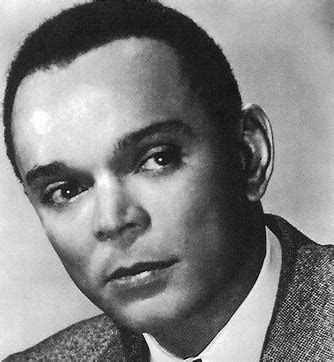
Chester Himes Through the Years:


Wednesday, April 28, 2021

The Killer inside Me - Jim Thompson

Original Cover of "The Killer Inside Me"


Simply put, Jim Thompson’s 1952 novel The Killer Inside Me is a stunner, one of those novels that, once picked up, demand the reader to keep turning pages. Mostly during the 1930s and 1940s, Thompson wrote over thirty novels, and most of those, including The Killer Inside Me, were published as paperback originals. That’s probably why Thompson got so little critical appreciation during his lifetime. He was, however, “rediscovered” during the 1980s, and several of his novels have now been filmed or republished. The Killer Inside Me even opens the Library of America collection titled Crime Novels: American Noir of the 1950s, a five-novel collection that includes Patricia Highsmith’s remarkable The Talented Mr. Ripley along with works from the classic noir writers Charles Willeford, David Goodis, and Chester Himes. 


“I grinned, feeling a little sorry for him. It was funny the way these people kept asking for it. Just latching onto you no matter how you tried to brush them off, and almost telling you how they wanted it done. Why’d they all have to come to me to get killed? Why couldn’t they kill themselves?”


Twenty-nine-year-old Lou Ford, narrator of The Killer Inside Me, is a cop in the small West Texas town he’s lived in his whole life. Central City, Texas, is an oil boom town that has grown from a population of 4,800 to one of more than 48,000 during Lou’s lifetime, and it is not anything like the quiet little community it had been when his father was the town’s family doctor. Lou is the cop everybody likes, the guy who doesn’t appear to be all that smart but always has the time and good advice for those who need it most. And that’s just the way Lou wants it.


The real Lou Ford, however, is nothing like the one people think he is. No, the real Lou Ford is brilliant. He reads in several languages, a feat he taught himself by reading from the extensive library his father left behind in the family home/doctor’s office after he died. He’s read his father’s medical texts — and he’s completely conversant about their contents. With his photographic memory, Lou could have easily become a doctor and taken over his father’s established practice had he wanted to do that. But most importantly, the real Lou Ford is a psychopath who is just as likely to kill you as smile at you and quote some homespun advice he’s memorized from his reading. He’s a man who, entirely for his own amusement, manipulates everyone unfortunate enough to know him. And the really scary thing is what he’s capable of doing to the people he grows tired of — or those who make the mistake of crossing him.


Lou Ford is an unforgettable narrator who, despite his mental illness, turns out to be the exact opposite of the unreliable narrator. Instead, Lou wants the reader (often addressing them directly) to know exactly what he is thinking and planning — even to telling them that he is going to kill someone long before he actually does it. He is a brutal, violent man in the midst of losing the self-control that has allowed the killer inside him to remain hidden as long as it has. But that is about to change…and the body-count is mounting.


“…the way I see it is, the writer is just too goddam lazy to do his job. And I’m not lazy, whatever else I am. I’ll tell you everything. But I want to get everything in the right order. I want you to understand how it was.”


Bottom Line: The Killer Inside Me is a surprisingly disturbing novel, but the disturbance does not necessarily come from the explicitness of Lou Ford’s murders. I was much more taken aback by the ease with which a man like Lou Ford (and his real life versions) is able to lure innocent victims into his web of murder and abuse. The horror of that ability is magnified by the pleasure that Ford takes in giving his readers such a revealing account of how easy it is for someone like him to kill — and to get away with it.


Jim Thompson


Friday, January 08, 2021

Dark Passage - David Goodis


David Goodis’s 1946 novel Dark Passage could not possibly be more aptly named than it is because this is one of the darkest novels imaginable. According to the Library of America, Dark Passage is the novel that gave Goodis the little bit of fame that he enjoyed during his lifetime, and that was primarily because the book was turned into a popular movie starring Humphrey Bogart and Lauren Bacall. Other than that relatively brief moment, it appears that his work was kept alive  mostly by what LOA calls an “international cult following” which included several prominent European film directors who adapted Goodis’s work for the screen. 


The story begins with Vincent Parry escaping San Quinton Prison where he has been jailed for the murder of his wife. Parry, though, is one of those rarities among a prison population that never stops protesting its innocence - he really is innocent. He did not kill his wife, and he was convicted of the crime almost entirely based upon the trial testimony of a friend of his wife’s. Now, recognizing the perfect set of circumstances that have come together, Parry makes his escape and heads for San Francisco where he hopes to hide out long enough to figure his next step.


Parry’s luck bizarrely continues long enough for him to reach the city. And that’s where his real problems begin.


With Vincent Parry, David Goodis created one of the most paranoid characters imaginable, a man who cannot afford to be wrong about any of the people he encounters in the city while he tries to figure out how to disappear forever. He is paranoid, but he is justifiably paranoid, and Goodis places the reader inside the man’s head for pages at a time, eerily allowing readers to experience that feeing of paranoia for themselves. We literally hear, word-by-word, what is going on inside Vincent Parry’s head as he faces one critical situation after another.


Dark Passage is not a long novel, coming in at around 200 pages depending on which edition you read, but it paints a picture of 1940s San Francisco that is hard to forget. This is a city where life is lived in the shadows and after dark, a place where every one (including the cops) seems to have angle, a place where nothing is exactly as it seems and no stranger should be trusted. It is a city whose underbelly is not confined to only a few blocks, and as Parry moves through it, searching for a safe way out, things begin to happen to him. People die, people fall in love or think they fall in love, and several of them expose the blackness of their own hearts to the world. 


Bottom Line: Dark Passage shows clearly why David Goodis has come to be known as somewhat of a pioneer of American noir novels. His distinctive style, and his feel for troubled characters and city streets, make his writing stand out even in a genre filled with more famous writers. The Library of America volume of five novels, in which this is the first entry, also includes: Nightfall (1947), The Burglar (1953), The Moon in the Gutter (1953), and Street of No Return (1954). 


David Goodis

Wednesday, May 08, 2019

Houston Noir - Various Houston-Associated Writers

Houston Noir is one of the latest books in what has become a favorite series of mine, the Akashic Books noir short story collections.  My quick (and probably inaccurate) count of the titles already published comes to 100, with another dozen on the way. That serves as a reminder that even though I've read at least 15 of the books, I've barely scratched the surface of what the series has to offer fans of dark crime fiction.


In full disclosure, I need to say that I have lived in Houston for almost five decades, so this title is one I've really been looking forward to reading.  The fourteen stories are set in various Houston neighborhoods and suburbs (including the one I live in), and most of the stories do a very good job of capturing the unique atmospheres of each of the locations, something I both appreciated and enjoyed. 

As in most short story collections I've read, a few of the stories are particularly memorable and enjoyable. My personal favorites include "One in the Family" by Adrienne Perry, about a young woman who stalks her college financial aid advisor because of his callous attitude; "Where the Ends Meet" by Deborah D.E.E.P. Mouton, a story about horrific human trafficking; and "Happy Hunting" by Icess Fernandez Rojas, one about two vigilantes in search of a serial killer.

Houston Noir is fun, and it further confirms my love of the whole series. Give it a look - and you might be hooked, too.

Monday, July 11, 2016

The Far Empty

J. Todd Scott has worked as a DEA agent for over twenty years and has put that experience to good use in The Far Empty, his debut novel set in far West Texas.  Murfee, Texas, may be fictional but it is obvious to anyone familiar with that part of the state that it would fit right in near the actual cities found there (Scott, in fact, notes in his Acknowledgements that the town is “stitched together” from places found in the West Texas counties of Presidio and Brewster).

 Murfee is one of those towns so typical to Texas, where high school football is king and high school football players who do well are remembered as town heroes for a long, long time.  It’s a town in which, at the least, everyone pretty much knows everyone else by sight – and that’s not always a good thing.  What makes Murfee different is that the evil people there are so darkly and cleverly evil that they are able to exploit everyone else in town easily through guile or through outright intimidation.  And it’s been that way for way too long.

J. Todd Scott
Deputy Sheriff Chris Cherry is one of those high school heroes.  Chris, in fact, was able to turn his great success on the high school football field into the chance to play college football.  That opportunity, however, did not work out so well, and Chris is back in Murfee with a blown-out knee and a sheriff department job handed to him largely because of his high school glory.  And, even worse, the man who hired Chris, Sheriff Stanford “Judge” Ross, is evil personified. 

Caleb Ross, the sheriff’s teen-aged son is convinced that his father has murdered at least three men.  Perhaps even worse, Caleb thinks the sheriff may very well have killed each of the women he’s been married to – including his third wife, Caleb’s mother.  Since his mother’s disappearance, the house Caleb and the sheriff live in has become kind of a war zone, a place in which both of them tolerate the other’s presence and speak only the minimum amount required to make it through a day.  For good reason, Caleb both hates and fears his father.

Things come to a head very suddenly when Chris Cherry finds the remains of a murder victim whose hands are bound behind his back with the very type of plastic handcuff favored by the Murfee sheriff department.  Caleb needs an ally if he is to ever find out what happened to his mother, and he sees Chris as just the man he needs.  Throw in the Feds who come snooping, and you have a whole lot of people putting pressure on Sheriff Ross, a man capable of doing anything to keep the truth about how he runs Murfee hidden – perhaps even to killing his own son if that’s what it takes.


The Far Empty is genuine West Texas Noir: dark, gloomy, and not a lot of fun for any of the characters caught up in this story.  All the fun is reserved for those of us who read it.

(Review Copy provided by Publisher)

Tuesday, July 05, 2016

St. Louis Noir

St. Louis Noir is just the latest of about a dozen of the short story collections in this Akashic series that I’ve read now, and the streak continues – not a single one of them has disappointed me.  Each of the collections begins with an introduction from the book’s editor (in this instance, Scott Phillips) that helps set the overall tone for what is to follow.  As Phillips says, the St. Louis region has not had an easy time in recent years, and that makes the city the perfect setting for this kind of hardcore crime fiction.  Consider that one of Phillips’s definitions of noir is fiction that “traffics in fatality and doom and bad luck and characters who persistently, knowingly, act against their own best interests” and you have an idea of what is to come.

Among my favorite stories in St. Louis Noir is one called “Deserted Cities of the Heart” (by Paul D. Marks) in which a loner of an IT nerd with a security clearance is convinced to hack into a witness protection data base with disastrous results by the attractive young out-of-towner who suddenly comes into his life.   Another is “A Paler Shade of Death” (by Laura Benedict) about a young woman that many suspect is guilty of killing her four-year-old son.  Now that her marriage has fallen apart, she is trying to convince herself that it is time for a fresh start – but is it?  Two other stories are particular standouts: “The Brick Wall” (by John Lutz) and “One Little Goddam Thing” by the collection’s editor Scott Phillips.  The first is a rather Hitchcockian story involving revenge of the most ingeniously delicate variety, and the second involves revenge of the cruder, but equally effective, type. 

St. Louis Noir also includes what is titled “A Poetic Interlude,” four short poems from Michael Castro.  In very few words, the first two pieces (“In St. Louis Heat” and “Gaslight Square”) paint vividly memorable pictures of St. Louis street scenes, but the third poem, “St. Louis Blues Revisited” strikes a note I wish it had not stricken by referencing “the cold cop who killed Michael Brown.”  Perhaps I am misreading the poet’s intention in making that reference, but I do not see that it adds much of anything to mood of the poem, even coming in the poem’s very first stanza as it does.  Much worse is a similar reference in author Umar Lee’s short author biography (whether written by Lee or by the editor did, I do not know) to the “murder of Michael Brown.”  That reference serves no purpose whatsoever other than to explain the politics of Umar Lee who is “presently a candidate for mayor of St. Louis.”


The bottom line: St. Louis Noir is another worthy addition to what is perhaps already the best series of short story collections to be published in decades.

(Review Copy provided by Publisher)

Monday, April 11, 2016

The Long Goodbye

Raymond Chandler is the master, the guy who pretty much created the pattern for most of the fictional, tough-guy detectives that would follow Chandler's own Philip Marlowe.  Written in 1953 (while his wife was dying of a terminal illness), The Long Goodbye is my favorite of all the Philip Marlowe novels because of how much it reveals about Marlowe's character and core beliefs.  Marlowe is a cynic with a good heart, a man attracted to the down and out characters he so often finds on the streets of Los Angeles.  He still believes that he can help them, even though more times than not, he fails to do so.

One of those whom Marlowe tries to help is a hopeless drunk by the name of Terry Lennox.  Marlowe and Lennox meet late one night when a woman angrily drives away and leaves the appallingly drunk Lennox standing alongside Marlowe outside a restaurant.  After Marlowe takes the man home with him so that he can safely sleep off his drunk, the two men become friends of a sort. Things get interesting a few months later when Lennox comes to Marlowe looking for a quick ride to the Tijuana airport.  Marlowe, hoping to avoid incriminating himself, refuses to listen to the reason for the sudden trip but decides to drive his friend to Mexico despite his suspicions that Lennox is in trouble.  Upon his return to Los Angeles, Marlowe learns two things: Lennox's wife was murdered just before the man left town, and the cops know that Marlowe helped him flee the city. 

Chandler, never one to shy away from using coincidence to move his story along, uses the device effectively several times in The Long Goodbye to keep Marlowe involved in Lennox's problems long after their late night drive to Tijuana.  For instance, when a New York publisher asks Marlowe to help find missing writer Roger Wade, another out-of-control drunk, the detective (only after the man's wife personally asks for his help) reluctantly agrees to take the job.  As it turns out, there are connections - several of them - between Terry Lennox and the Wades, and what Marlowe learns about those connections keeps him hanging around the Wades a whole lot longer than he ever intended to.

Raymond Chandler
Probably because of what he and his wife were going through at the time he was writing The Long Goodbye, the novel has a more serious tone than what Marlowe fans had come to expect from Chandler.  Marlowe is presented here as a cynic trying to get by, a hard man with a soft side who values friendship but has few friends because he understands that he lives in an every-man-for-himself world where he is all too often the odd man out.  This aspect of Marlowe's character not only makes Chandler's writing a little different from most of the detective fiction of his day, it is one of the chief influences on the writers who followed him. 

Philip Marlowe is the granddaddy of all the fictional detectives working the streets today, and Raymond Chandler deserves to be read and appreciated for his tremendous contribution to what is still one of the most popular literary genres in publishing.