Showing posts with label Authors. Show all posts

Saturday, March 21, 2026

Shy Girl, an AI Generated Novel, Is Being Yanked from British Bookstore Shelves


Big Five publisher Hatchette has decided to pull Mia Ballard’s Shy Girl from British bookstore shelves, and will not be publishing the novel in the United States at all because the publisher is now convinced that Shy Girl is largely AI generated. This is a first, but it will almost certainly not be a last unless publishers get more serious about vetting the manuscripts they take on for publication. 

According to accepted AI-detection software, the novel is approximately 78% “machine made.”

According to The Sunday Times (London):

"Hachette picked up the rights to Shy Girl, attributed to an author called Mia Ballard, after it rose up Amazon’s sales chart of horror-fiction after being self-published in February last year. (emphasis mine)

At the time the publisher said it had worked with Ballard on “refining her brilliant novel’, describing it as a “gory horror and razor-sharp revenge thriller”.


According to The New York Times, she said that it was an acquaintance she had hired to edit her original, self-published version who had used the technology."

So there we have it. A self-published novel starts climbing the Amazon charts rapidly enough to get the attention of a major publisher; that publisher fails to do its due diligence and publishes the novel as legitimate; the author blames the scam on an “acquaintance” who helped her out with the book’s editing; the “author” is prepared now to sue everyone involved. 

This is no little thing. This was allowed to happen by a major publisher, and that publisher only took action after the internet was already full of rumors about the novel being an illegitimate one. 

We all know that this is just the barest tip of the coming iceberg of scam writing. Amazon has been terrible for avid readers in so many ways; this is the latest, but it probably won’t be the last.

Friday, March 06, 2026

The Writer’s Library by Nancy Pearl & Jeff Schwager


The Writer’s Library: The Authors You Love on the Books That Changed Their Lives consists of twenty-two author-interviews during which Nancy Pearl and Jeff Schwager ask the authors a set series of questions. Twenty-one of the interviews are conducted in person, and one, that of author Donna Tartt, via email. Despite the questions all being pretty much being the same from author to author, Pearl and Schwager manage to turn all of the in-person interviews into genuine conversations with the various authors (and one poet) they visit. The Donna Tartt interview is by far the stiffest of the twenty-two and clearly demonstrates the limitations of email interviews as compared to the in-person variety.

No matter who is being interviewed, whether the author is young or old, famous or lesser known, these four questions are key parts of the conversation:

“Did you come from a reading houselhold? How did you learn to read and at what age? Were you a voracious reader as a child? What were your favorite books as a child."

 Oftentimes, too, the interviewees are asked about their favorite classic and contemporary authors, what they read, if anything, while they are involved in their own creative process, whether they limit their pleasure (as opposed to research) reading to certain genres - if they read genre literature at all, which authors influenced their own work, and if there had been one book in their lives that convinced them they wanted to become writers also. 

Pearl and Schwager helpfully attached a summary to the end of each interview listing the key books and authors mentioned along the way. Each of the lists is headed up something like: “Some Books and Authors in Donna’s Library.” 

It is difficult to read The Writer’s Library without comparing your own early reading experiences to those being recounted by the various authors. You can’t help but wonder how your own early childhood experiences compared to theirs, or how differently your own life may have turned out if one or two key people had not appeared in your world just when they did.

I never really expected to finish The Writer’s Library when I first began reading it, figuring that it would soon become repetitive and predictable - and probably boring. Well, I was wrong. Pearl and Schwager’s enthusiasm for their project was so contagious that most of the authors they spoke with were soon so caught up in the fun of the whole thing that I never grew bored. And, despite having already read many of the books referenced in the twenty-two lists, I still managed to come away with a substantial lists of books and new-to-me authors of my own that I’ll be exploring for weeks to come. I enjoyed this one.

Sunday, February 15, 2026

Top of the Desk: What I’m Reading This Week

 I don’t seem to be finishing many books so far this year, but that’s not because I’m not turning lots of pages. Seems like I’m falling back into one of my old habits of immediately beginning to read a book rather than simply adding it to my TBR for later. The stack of partially read books on my desk seems to be multiplying on its own these days, and even though I read from each of them several times a week, I am slow to reach the final page of any of them. 

The current desktop stack is only this short because I did finish two books in the last couple of days:

Chernow’s biographies, of which I’m a fan, are well researched, complete, and very, very long. Mark Twain (2025), coming in at 1,033 pages of text, plus another 125 pages of footnotes and index, is no exception. Thankfully, Mr. Chernow has a very readable style, but at just over 300 pages into this one, I have a long way to go. (This books is so physically heavy, that you could injure yourself trying to read it in bed.) Mark Twain really comes alive in this great biography.


Blasphemy (2012) is a book of Sherman Alexie short stories that I just started reading last night. Alexie is a Native American (he, I think, calls himself an Indian) author perhaps best known for The Absolutely True Diary of a Part-Time Indian. Another title of his that intrigues me, a short story collection I read in 2021, is The Lone Ranger and Tonto Fistfight in Heaven. His stories brutally expose the problems so many Native Americans face to this day. He is a solid short story writer.


Gerald Seymour has been one of my favorite espionage thriller writers since I discovered a book of his in a London library in the mid-nineties. I loved his first book from the first page, and more than a dozen books later, he has yet to let me down. The Best Revenge (2024) is the fourth in Seymour’s Jonas Merrick series. Jonas is not your typical spy, he’s more of what his colleagues think of as just another MI-5 pencil pusher…but his pencil is a deadly weapon.


This is my first experience with anything by C.S. Lewis, and through the first three chapters I’m still not really into it. The book was produced from a series of radio talks Lewis did for the BBC during World War II. It’s not deep theology, more like sitting down with a neighbor across a cup of coffee every few days for a good conversation about how we should all try to live our lives. Lewis, at least in Mere Christianity, doesn’t talk down to his audience. I imagine that the British population really looked forward to these talks during the war. 

I read at least a dozen memoirs a year, but I usually know who the writer is before starting the book. Not the case with Isaac Fitzgerald’s Dirtbag, Massachusetts: A Confessional (2022). But no way could I resist a book with a first sentence like this one: “My parents were married when they had me, just to different people.” Turns out Fitzgerald is quite an interesting man who survived a chaotic childhood to do OK for himself. This one is very conversational and pages turn quickly. 


Just what I need, a book interviewing some twenty-two authors on “the books that changed their lives.” Nothing like that to add to my monstrous TBR list. Yep, just what I need. The Writer’s Library (2020) by Nancy Pearl and Jeff Schwager turns out to be even more interesting than I expected it would be. The authors use the interviews to explore their personal literary comings-of-age, and leave me with a whole lot that I want to read for myself, books and authors that had barely, if at all, cracked my radar before now.

There’s something here to fit just about every mood I might find myself in for the next couple of weeks, but I would not be at all surprised to find one or two new ones sitting atop my desk by this time next week. I can’t wait to find out.

Thursday, January 04, 2024

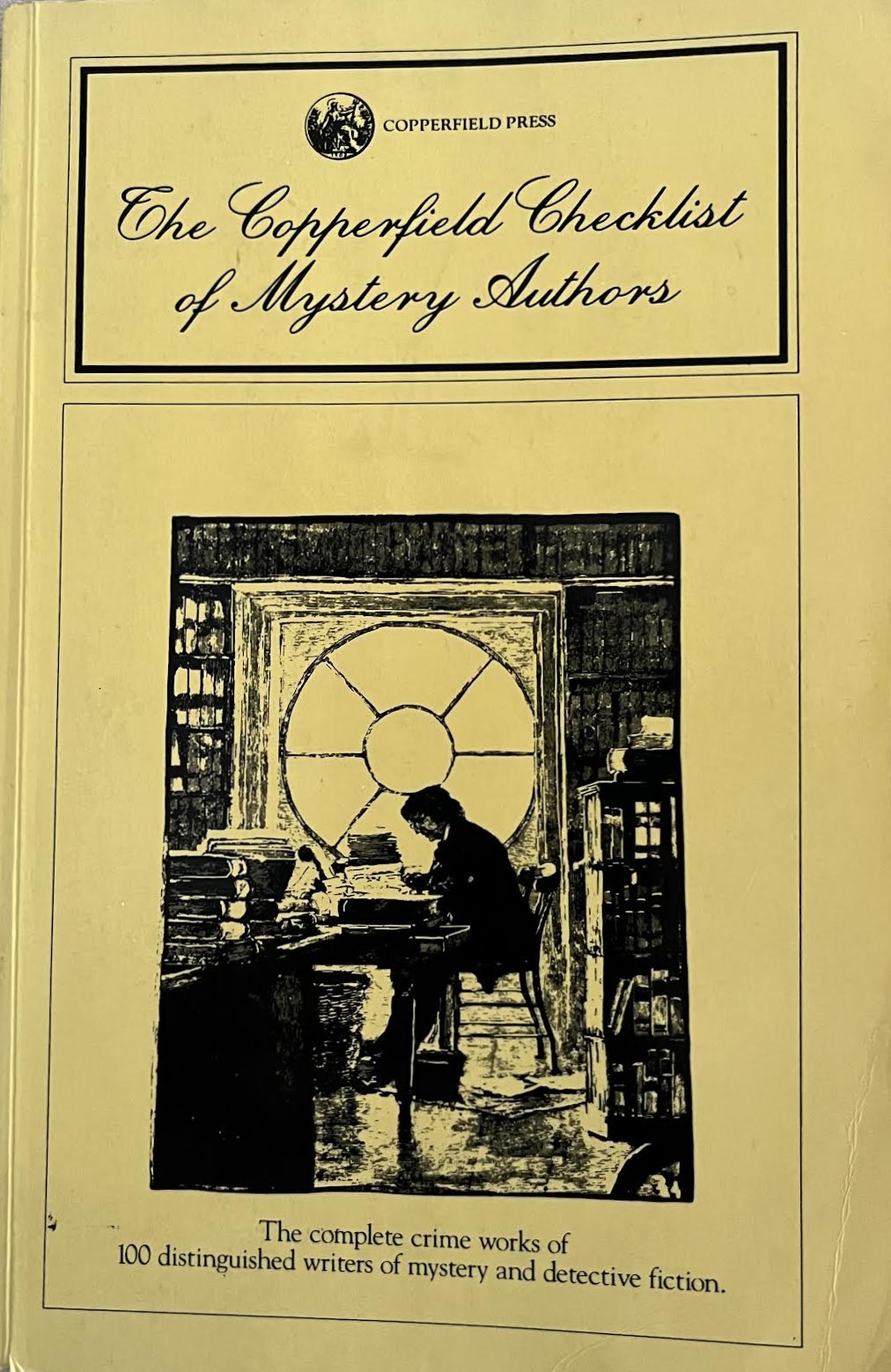
The Copperfield Checklist of Mystery Authors


Considering the number of times my books have been packed, moved, culled, and been lost or destroyed by movers since 1987, I have no idea how this little checklist of mystery writers has survived for the last thirty-five years or so. The main thing it has going for it in that department, I suppose, is that it is so slim and lightweight that I can always find a place to tuck it away - and forget about it for another few years.  

Anyway, this morning I decided to thumb through it again, and got to wondering about some of the mysterious authors on the checklist that I've never read. Keep in mind that even in 1987 many of these authors were already considered pioneers in the mystery genre, and most had extensive back catalogues to explore. 

QUESTION: Are you very familiar with any of these names, and which would you recommend as a place to begin exploring the list? 

  • Catherine Aird (1930-  )
  • Margaret Allingham (1904-1966)
  • Charlotte Armstrong (1905-1969)
  • Josephine Bell (1897-1987)
  • Anthony Berkeley (1893-1970)
  • Earl Derr Biggers (1884-1933)
  • Nicholas Blake (1904-1972)
  • Christianna Brand (1907-1988)
  • John Buchan (1875-1940)
  • W.R. Burnett (1889-1982)
  • Gwendoline Butler (1926-2013)
  • Leslie Charteris (1907-1993)
  • Elizabeth Daly (1878-1967)
  • Dorothy Salisbury Davis (1916-2014)
  • Mignon G. Eberhart (1899-1996)
  • Nicolas Freeling (1927-2003)
  • R. Austin Freeman (1862-1943)
  • Andrew Garve (1908-2001)
  • Jonathan Gash (1933-  )
  • Cyril Hare (1900-1958)
  • H.R.F. Keating (1926-2011)
  • Richard and Frances Lockridge (1898-1982) (1896-1963)
  • Philip MacDonald (1899-1961)
  • John Rhode (1884-1965)
  • Arthur V. Upfield (1888-1964)
  • Henry Wade (1887-1969)
  • Sara Woods (1922-1985)
These represent about half the checklists/bibliographies in the book. I'm in pretty good shape when it comes to having read the other, generally better known, writers in the book, but I draw a blank on the ones listed. I suppose the good news is that a lot of their work must be in the public domain by now and available on Project Gutenberg for downloading. 

Where should I begin? Any thoughts?

Thursday, December 21, 2023

Sometimes You Can Only Shake Your Head: A Sad Two Days in Literary History

F. Scott Fitzgerald

F. Scott Fitzgerald December 21 marks the eighty-third anniversary of author F. Scott Fitzgerald's death in Los Angeles at age forty-four. Not as often mentioned these days is that one of Fitzgerald's fellow authors, Nathanial West, would die in a traffic accident along with his wife Eileen the next day while returning to Los Angeles from an aborted hunting trip in Mexico - most likely to attend Fitzgerald's funeral. West caused the accident that claimed their lives on that fateful trip by absentmindedly blowing through a stop sign.


Nathanial West

West and Fitzgerald became close friends as fellow Hollywood novelists, and he is best known for his novels Miss Lonelyhearts and The Day of the Locust. Eileen, as it turns out, died only four days before the Broadway play My Sister Eileen, a play based on her sister Ruth McKenney's 1938 memoir of the same name, had its hugely successful opening night in New York. She and West had only been married for about six months at the time of their deaths.

The book became the source of many other works, including the Broadway play, a musical, a radio play, two movies, and a CBS television series that aired in 1960. Sadly, Eileen lived to see none of this.

Eileen McKinney West

Wednesday, July 05, 2023

Is Michael Connelly More Popular Than Louise Penny or Craig Johnson or...


Some of you may have noticed that I keep separate bibliography tabs at the top of my Home Page for ten favorite authors of mine - along with an eleventh tab listing all the Pulitzer Prize for Fiction winners by year. In looking over my "Last 30 Days" recap that Blogspot provides, I've often wondered if the number of page views for each of the author tabs accurately gauges current reader interest in this small group of writers:

  • Michael Connelly - Bosh series, Lincoln Lawyer series - 63
  • Louise Penny - Gamache series - 45 
  • Craig Johnson - Longmire series - 40
  • Ian Rankin - Rebus series - 40
  • James Lee Burke - Robicheaux series - 33
  • Larry McMurtry - Lonesome Dove - 31
  • Ruth Rendell - Inspector Wexford series - 30
  • Elizabeth George - Inspector Lynley series - 26
  • Ann Cleeves - Shetland series,  Vera Stanhope series - 20
  • Ann Tyler - quirky standalones - 18
I suspect that the readers most likely to stop by Book Chase do so because they see some of the titles I've reviewed. That would have a lot to do with why Ann Tyler is at the bottom of this small sample. Too, Larry McMurtry and Ruth Rendell are both deceased now, so I would expect some drop off in interest in their body of work now that they won't be producing new titles for the best seller lists (the out-of-sight, out-of-mind thing). But really, I think this is pretty much what I expected from this particular grouping.

What do you think? Does this 30-day sample accurately reflect who's hottest at the moment among these great writers? (I love statistics, but I know they can "prove" anything.)

Friday, January 07, 2022

Edna Ferber, Detective (Ed Ifkovic Mystery Series)


That so many of my favorite book blogs are authored by fans of series crime fiction has resulted in me now following/reading something near two dozen such series. And because more than a few of those series were several years old by the time I finally became aware of them, the backlists involved are lengthy enough to provide me with years of fun reading to look forward to.

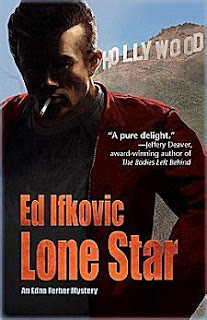
Even so, there's always room for one...or several...more, and that's why I want to ask if any of you are currently reading the "Edna Ferber, Detective" series featured in the latest Mystery Scene magazine (number 170). Ed Ifkovic began using author Edna Ferber as a fictional detective in 2009 and has averaged almost a novel per year since then:

  • Lone Star (2009)
  • Escape Artist (2011)
  • Make Believe (2012)
  • Downtown Strut (2013)
  • Final Curtain (2013)
  • Cafe Europa (2015)
  • Cold Morning (2016)
  • Old News (2017)
  • Mood Indigo (2018)
  • Run Cold (2019)
  • Indian Summer (2020)


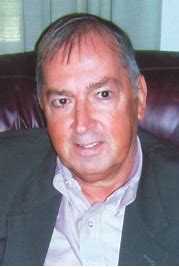
Series Author Ed Ifkovic

According to the Mystery Scene article, the novels jump back and forth between the various decades of Ferber's life and career, so it doesn't sound as if there is any particular benefit to reading them in order. That said, I did decide to take a look at the series via its first book because that one is set during the filming of Ferber's novel Giant in 1955. Elizabeth Taylor, Rock Hudson, and others involved in the movie are included as characters in Lone Star, but the primary focus is on actor James Dean because the murder victim in the story is a woman who has accused Dean of fathering her child. 

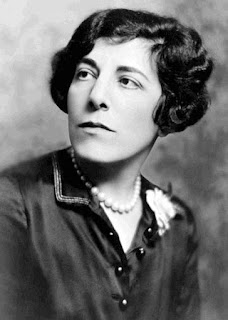
Edna Ferber in 1928

Edna Ferber (1885-1968) was the author of numerous novels, plays, novellas, and short stories. Among her most famous were the Pulitzer Prize winning So Big (1924), Showboat (1926), Cimarron (1930), and Giant (1952). I particularly admire the dedication in her 1938 autobiography: "To Adolph Hitler, who has made me a better Jew and a more understanding human being, as he has millions of other Jews, this book is dedicated in loathing and contempt." 1938, this was.

I have a vague recollection of seeing this series mentioned on another book blog, and I know that the books are not going to be new to all of you, so please do let me know what you think of them.

Monday, August 09, 2021

The Writer's Library - Nancy Pearl & Jeff Schwager


The Writer’s Library: The Authors You Love on the Books That Changed Their Lives
is a collection of author interviews compiled by Nancy Pearl, “America’s favorite librarian,” and Jeff Schwager, a noted critic of books, movies, and theater. What makes the interviews such compelling and entertaining reading for avid readers is that each of them focuses on the influence that particular books have had on the various writers throughout their entire lives, but especially during their formative years.


The twenty-three authors, all but one of whom was interviewed in person, are:

Jonathan Lethem Laila Lalami

Louis Alberto Urrea          Jennifer Egan

T.C. Boyle Susan Choi

Andrew Sean Greer Madeline Miller

Michael Chabon                 Maaza Mengiste

Amor Towles Louise Erdrich

Dave Eggers Laurie Frankel

Viet Thanh Nguyen Jane Hirshfield

Richard Ford Siri Hustvedt

Charlie Johnson Vendela Vida

Donna Tartt Russell Banks

                Ayelet Waldman


(Just in case you are curious, the Donna Tartt interview was conducted via email.)


I was fortunate that several of my favorite authors are included on the list, but as it turned out, I enjoyed the thoughts of those authors with whom I was previously unfamiliar as much as I did those of my old favorites. In their shared introduction to the book, Nancy and Jeff address the book’s title and their interview style/intent this way:


“Thus the title, The Writer’s Library. Not necessarily the writers’ physical libraries, but the libraries they carry around in their hearts and minds; the books that have shaped their tastes, their psyches, the subject matter that fascinates them, the craftsmanship that fills them with envy, the stories that have resonated so deeply that they feel like stories they themselves have lived. For in telling us about the books that informed their lives, they would tell us the stories of their lives.”


And, in almost every instance, their plan worked brilliantly. The interviews are all very conversational in style with the exception of the emailed one with Donna Tartt. That interview reads more like a monologue than an interview, and as such, it suffers in comparison to the other twenty-two in the book. 


Among my favorite quotes from The Writer’s Library are these:


“Someone once said that history gives you the facts, and fiction gives you the truth of the facts.” - Nancy Pearl, interviewing T.C. Boyle


“Life is too short for bad books.” - Michael Chabon 


“The mark of a great novel is that it is engaging as a story, it feels organic in it composition, and yet the way in which all the various components interact creates an infinite number of harmonic combinations in the service of meaning. That’s why different readers of great works can discover different ideas, form different emotions, draw different conclusions, and support the validity of their impressions by pointing to various elements of the text. The best books don’t mean one thing.” - Amor Towles


“…short stories are something that to me are perfect because they have sort of the grace and insight of a poem and the narrative of a novel but, you know, much shorter, so you can have your fix in twenty or thirty minutes with a great short story.” - Viet Thanh Nguyen


“There’s not much crossover, you know. When I give readings, I don’t see any black faces out there, and I think to myself, Couldn’t I just have a couple of black readers, please? Because I, you know, I read black writers - I read everybody. I write black characters. I think that the nature of identity politics has bled into literary outcomes. The whole worth of literature is that it’s trying to show us we’re less distinct from each other than we thought we were.” - Richard Ford


“Reading fiction can move us into new places and provide new perspectives on the world. It can create an expansion of consciousness and serve as an intimate form of knowledge. This has been forgotten in our culture because the imaginary is regarded as soft, feminine, and unserious.”  - Siri Hustvedt


“It is what you read that matters and that you read not to shore up your own smug beliefs but to press yourself beyond them. Books become us. They are literally embedded in our nervous systems in memories. Those memories shift over time, but they form us nevertheless.” - Siri Hustvedt


“…I think that in addition to everything that fiction does to entertain and enlighten us, it needs to make us better people, give us insights into, or at least empathy for, other people.” - Nancy Pearl during her Charles Johnson interview


So there you, have it, a taste of what I most enjoyed in the twenty-three interviews. I found the book largely to be inspiring and comforting in the sense that, perhaps, my lifetime of reading has done some actual good and has made me a better person that I would be if I had not been a reader all my life.


Bottom Line: Reader, beware! Your TBR list is going to grow exponentially if you read The Writer’s Library. By my count, and considering the possibility of a duplication or two, I added some 88 individual books and/or authors to my own. 


Jeff Schwager

Nancy Pearl

Friday, March 26, 2021

Larry McMurtry - Dead at 84


Larry McMurtry in one of his several Booked Up store locations in Archer City (I think this was taken on the Saturday that the author was liquidating most of the stock in his several locations throughout the city, an event I attended along with hundreds of others from all over the world).

I have been around long enough now that I've been reading some of my favorite authors for twenty, thirty, forty, or even fifty years. That means that I'm starting to lose them one by one now, and yesterday I lost one of the guys I've been reading for over fifty years, Larry McMurtry.

I discovered Larry sometime in the late sixties, back in the days when his connections to Houston were more obvious than they would be in his later years. He was a graduate of the city's Rice University and set some of his earliest novels in Houston. But it was after Larry decided to open up one of his bookstores near the old SPCA dog pound inside Loop 610 that I really felt connected to the man. I don't know how often he manned the cash register himself, but I ran into him there on several Sunday afternoons over the years, and I found him to be quite the bookseller. Depending on the number of shoppers in his little bookshop, Larry was always willing to talk books and book-searches with me until I found just the right thing to make my 25-mile drive to Booked Up worth the frustrating traffic that had to be negotiated to get there. 

According to the beautifully written obituary in the New York Times, Larry McMurtry died (very appropriately) in his Archer City, Texas, home from congestive heart failure on March 25.

He will always be remembered, of course, for the Pulitzer Prize winning Lonesome Dove, but he also wrote books (many of which became classic movies) like: The Last Picture Show, Terms of Endearment, Horseman Pass By (the movie version was called Hud), and others. Six of his novels were set in Houston: Moving On (1970), All My Friends Are Going to Be Strangers (1972), Terms of Endearment (1975), Somebody's Darling (1978), Some Can Whistle (1989), and The Evening Star (1992). 

Fans of the wonderful characters in Lonesome Dove will be pleased to know, too, that McMurtry added to their legend in three 1990s novels: Streets of Laredo, Dead Man's Walk, and Comanche Moon. 

It broke my heart a little when Larry McMurtry decided that he had published his last book, but that feeling is dwarfed by the realization that he is really gone now. Gone but never forgotten.


The middle shelf is home to most of my Larry McMurtry books, but the book I'm proudest to own is a first printing of Lonesome Dove. That one sits on a different shelf along with a couple of other first printings of some of his earlier books. 

Tuesday, March 23, 2021

Reavis Wortham & Joe Lansdale: In Conversation


I'm about halfway through Reavis Wortham's Burrows right now, and I'm enjoying it just as much as I enjoyed reading The Rock Hole, the first book in Wortham's Red River Mystery series. But that got me to wondering just who Reavis Wortham is and how I managed to miss his books for so long. I knew that Reavis is from North Texas, but that was about it...so I was pleased this morning to find this conversation that Wortham had on YouTube in January 2021 with another of my favorite Texas writers, Joe Lansdale. 

If you've read neither of these writers yet, you don't know what you're missing. Granted, I may "get" them more easily than someone who didn't grow up in Texas in the mid-twentieth century, but both these guys are such brilliant storytellers that I think you really need to take a look at their work. I'll be surprised if you don't fall in love with their writing. 

Lansdale is best known for his Hap & Leonard series (and the fairly awful TV series made from the books), but my favorite of his is a standalone called Paradise Sky. 

I've been reading Lansdale since the early eighties, but Wortham is much newer to me (his first novel was published in 2011) so I was surprised to hear him talk about a second series he already has into its fourth book. Lansdale is one of the more prolific novelists out there, and it looks like Wortham's output is adding up quickly. If you have the time - and patience - to listen to these guys until they get wound up, what they have to say about writing, publishing, their influences, etc. is really interesting. 


Tip: Around the 40-minute point of the conversation, the guys discuss the "woke culture," censorship, racism, realism, honesty, etc. 

Friday, February 05, 2021

"The Crime Fiction Series That Defined The Last Decade"

Michael Connelly

Someone, probably his daughter, posted 
on James Lee Burke's Facebook page yesterday a link to a crimereads.com list from November 2019 listing what the writers of the piece consider to be the crime fiction series that define the decade of the 2010s .  Limiting the list to only ten guarantees that some really successful series are going to be left out, but I was just as surprised to learn that I haven't read a single word of some of the ones that did make the cut even though I probably already read way too much crime fiction. 

The ten crime series chosen are presented alphabetical order rather than being ranked:

  • Michael Connelly's Harry Bosch Series 
  • Tana French's Dublin Murder Squad Series
  • Sara Gran's Claire DeWitt Serie
  • Greg Iles's Natchez Burning Trilogy
  • Philip Kerr's Bernie Gunther Series
  • Craig Johnson's Walt Longmire Series
  • Attica Locke's Highway 59 Series
  • Adrian McKinty's Sean Duffy Series
  • Louise Penny's Inspector Gamache Series
  • Don Winslow's Border Trilogy
The most interesting thing to me is that despite three of my favorite crime series of all time being included on the list, there are also four that I've barely ever heard mentioned anywhere despite all the book blogs and review magazines that I regularly read. And then come the three I consider to be either mediocre or which have been forever spoiled for me by learning more than I needed to know about the authors via their Twitter rants. (I confess to finding it difficult to completely separate an author's personality from their work, and I wish I were not that way.)

I'll start with the three series on the list that I look forward to reading  something new from every year - and have for a long time in each case: Michael Connelly's Bosch, Craig Johnson's Longmire, and Louise Penny's Gamache.  If I'm still around to see it happen, I will take the termination of any of these three as a personal loss and will grieve accordingly. Seriously.

Next up, are the four I'm unfamiliar with: the series by French, Gran, Kerr, and McKinty. I'm sure that each of these deserve inclusion on a list like this one, and I'll be looking closer at them very soon, so there goes my reading plan for February and March.

Finally, there are the series by Winslow, Isles, and Locke. Locke's is still one that I read, albeit much less enthusiastically as time goes by. I really love her main characters, but the later books have become so saturated with concerns about racism that I've almost lost interest in them. Locke is a fellow Houstonian and the Highway 59 corridor she uses as a setting for the series is one with which I am well-familiar, but because of their strong focus on racism, they have become a little bit predictable now. I hope she fixes that soon, and I'll keep seeking out the new books, but I feel myself coming closer and closer to my first abandonment of one of her books.

As for Winslow and Isles, I can't go there anymore. Both, especially Winslow, have revealed aspects of their souls that would have better  remained hidden from the reading public. Winslow's Border series is very good...if a little long and overwritten at times...but I really don't care now if he adds to it. I confess even to having given away the entire series a while back just because seeing the man's name on my shelves irritated me. (You don't have to say it, I know that's a little extreme...but it worked for me.) Isles is a little more moderate on Twitter than Winslow (and so is 99.999% of the rest of the world), but I was not fond enough of the first volume of his trilogy to seek out the others even beforehand. They are very long - and too socially heavy-handed - to suit my reading tastes. I prefer at least a little subtlety with my sermon, thank you, Mr. Isles. 

The best part about the Crime Reads posting is that it includes a much longer list of "honorable mention" series. That's where I found some of the ones like James Lee Burke's Dave Robicheaux series that I would have sworn would have been in the top ten, along with lots of other popular series and a whole bunch more I'm not familiar with at all. 

Now, I can't wait to do some exploring amongst that group of also-rans because I suspect there are some real gems to be found there. 

James Lee Burke


Wednesday, December 23, 2020

Mad at the World: A Life of John Steinbeck - William Souder

According to its publisher, William Souder’s Mad at the World is the first “full-length biography of the Nobel laureate to appear in a quarter century.” As someone who has been reading John Steinbeck’s work for decades, I knew surprisingly little about the author’s personal life or the “story” behind even his best known works. That is no longer the case because Souder’s biography deals in depth both with Steinbeck, the man, and everything of consequence that he wrote during his lifetime attempts to avoid the demands of his ever-growing fame. 


John Steinbeck was not a man who had a lot of close friends, and he could be quick to discard the ones he did have. He was an egocentric man who took criticism of his work personally, meaning that those who dared to criticize him (even it was part of their job) often suffered the consequences of being shut out from his life for having been so bold. Even as a boy, he was always the outsider who seemed to prefer his own company to that of others. He was obsessed with his writing, but considered himself such a gift to women that he spent much of his time drinking and womanizing. He even had such little self-awareness at times that he bragged of his countless conquests to drinking buddies and former lovers - often even in writing. Steinbeck was married three times, producing two sons by his second wife. That neither son seems to have ever had much good to say about their father is telling. That they were bitter about their upbringing is an understatement.


Some of his best ideas, including some of those responsible for his most famous and best-received books, came from ideas, diaries, articles, stories, and the like, that others shared with him. Generating new ideas seem to have been Steinbeck’s biggest obstacle, but what he did with those ideas, even the ones previously abandoned by others, is unarguably brilliant. Never a man to be much impressed by money and fame, Steinbeck grew more and more unhappy with his life as fame and fortune found him. His problem was that money went through his hands even more quickly than it came to him. Year after year, he had to borrow money to pay the taxes on the previous year’s income even when he had a fortune coming in from book sales, Broadway plays, and movies.


But that is not all there is to know about John Steinbeck. As Souder puts it:


“What’s clear is that his mind was aflame from an early age, and that certain impulses fell into place and took hold of young John Steinbeck, a boy who could not conform, who could not tolerate a bully, and who believed that somewhere within the solitude he craved there was a world that could be rendered sensible and fair. These tendencies were hard to reconcile and hinted at a difficult but consequential life ahead.”


Steinbeck’s best work came from his anger at what he saw all around him in California’s Salinas Valley. He was sickened by the way immigrant crop-pickers were treated despite their importance to the entire country, and when the Great Depression resulted in the valley being inundated with starving people from other states, he did his best to publicize their plight. But even then, because he struggled so greatly to know where to start, Steinbeck had to look “outside of himself” for the idea that would turn into The Grapes of Wrath. Still, he hoped that the book would fall from the bestseller lists within six months so that he could be forgotten forever.


Bottom Line: Mad at the World succeeds in humanizing the man responsible for some of the best, and best known, books of the last century. That John Steinbeck was not a particularly likable man can hardly be disputed, but the importance of the books he produced over a relatively short lifetime is equally indisputable. His “instinct for privacy…bordered on pathological” and although he tried to hide it, he often suffered from depression. John Steinbeck was a man driven to write but totally unprepared to handle the success his writing would bring. Mad at the World leaves me wondering if he ever had a truly happy day in his life.


William Souder

Wednesday, October 21, 2020

Bill Bryson Calls It Quits - No More Notes from Small Islands

Bill Bryson (photo from The Independent)


I've seen several articles these last few days in which author Bill Bryson has announced his retirement. I wasn't all that surprised when Philip Roth made a similar announcement at age 79, but I have to admit that the 68-year-old Bryson's announcement does surprise me. I just can't imagine a man of his talent calling it quits at so young an age.

As shown from this Bryson quote reprinted in The Guardian, Bryson is enjoying life right now and feels not the slightest urge to "pick up his pen" ever again:

 “I don’t know how much of this is pandemic-related [but] I’m really quite enjoying not doing anything at all. For the first time in literally decades I’ve been reading for pleasure and I’m really enjoying it. Whatever time is left to me on this planet I’d like to spend it indulging myself, rather than going out and trying to cover new territory.”

[...]

“I was worried, as I think most writers would be, that maybe I would run out of things to do in my leisure time, or that I would just miss having an occupation, professional distractions … but so far that hasn’t been the case,” he said. “The world is full of lots of other things you could do that are enjoyable without any of the pressures that come with trying to do these things as a job.”

I see from my notes that I've been reading Bill Bryson books since 1989, beginning with Neither Here Nor There, but that I haven't read him since 2018 when I enjoyed One Summer so much. In all, I've read eleven of Bryson's books, but a little digging this afternoon shows me that, with a little effort to find them, I still have quite a few Bryson books to look forward to - especially since most of the ones I've read are among the author's travel books.

Bryson's travel books include:

  • The Palace Under the Alps
  • The Lost Continent
  • Neither Here Nor There
  • Notes from a Small Island
  • A Walk in the Woods
  • I'm a Stranger Here Myself
  • In a Sunburned Country
  • Bill Bryson's African Diary
  • The Road to Little Dribbling 
 He's also written several science books, a memoir, and some history in recent years:

And there are a few others, including several language books.

If this is truly the end of the line for Bryson, I'm going to miss him. Let's hope that maybe he'll discover that he just needed a nice long break before he finds his second wind. 

(The three highlighted titles link to reviews previously posted here.)

Sunday, September 27, 2020

And Nine Months Later...

Fitzgerald

Faulkner

Now, maybe I'm the only one who finds this observation to be oddly funny, but I could not resist sharing it with the rest of you. According to one of the calendars I use, Stephen King, F. Scott Fitzgerald, William Faulkner, and T.S. Eliot all had birthdays last week:

  • King - September 21,1947,
  • Fitzgerald - September 24,1896,
  • Faulkner - September 25,1897, and
  • Eliot - September 26,1888.
And this week, it's these:
  • Donna Leon - September 28, 1942,
  • Miguel de Cervantes - September 29, 1547,
  • Truman Capote - September 30, 1924,
  • Daniel Boorston - October 1, 1914,
  • Graham Greene - October 2, 1904, and
  • Gore Vidal - October 3, 1925.
"So what," you say? Well, for some reason my mind immediately decided to do the math, and I realized that means they were all likely conceived sometime during the Christmas/New Year's holiday season some nine months earlier. So, as readers, let's all be grateful for the good spirits (pun intended) of those long-ago holidays. 

'Twas the season...

Capote


Greene