Sunday, October 04, 2020

The Vanishing Half - Brit Bennett


Every year, a handful of novels gets hyped by the media and celebrity-readers so much that the books can’t help but stand out from the crowd. Eventually it starts to seem as if everyone is reading the book or planning to read it, and that you can’t go anywhere books are sold without seeing it prominently on display. Brit Bennett’s The Vanishing Half is one of this year’s books that received that treatment. And as so often is the case, this one turns out to be considerably over-hyped, even to the point that it is a disappointment to readers who were led to expect so much more than the novel actually delivers. 

The premise of The Vanishing Half is an intriguing one. Picture a small settlement in 1950s rural Louisiana populated exclusively by a group of black people who have not only segregated themselves from whites but even from darker-skinned blacks. The blacks in little Mallard, Louisiana, look down upon darker-skinned blacks without any sense of irony in the way they do everything possible to exclude those darker than themselves from Mallard. Certainly, no resident of Mallard would ever consider marrying one of them. And the results are obvious to the eye. 

Identical twins, Desiree and Stella Vignes were both so beautiful and so light-skinned that the residents of Mallard couldn’t help but be proud of them. Proud of them, that is, right up until the moment the sixteen-year-olds decide to run away to New Orleans. And then, fourteen years later, when one of the twins suddenly shows up in Mallard – with a little girl, who some swore was so black that she was almost purple, in tow – the townspeople are not at first sure how to react. But react, they do, eventually welcoming Desiree back into the community while treating her daughter as an outcast barely worthy of their attention. 

Now, people wonder when Stella will come home. Stella, however, has been passing for white for over a decade, is married to a wealthy white man who has no idea who she really is, and has a daughter of her own. She has no idea that her sister is in Mallard, and she really doesn’t care. Passing herself off as white has not been as easy as she thought it would be, and the pressure is changing Stella into someone she barely recognizes. 

T
he first half of The Vanishing Half, during which Desiree and Stella grow up, run away to New Orleans, and then begin to live their separate lives is the kind of page-turner that I expected from the hype surrounding the book. But the second half of the novel, seen mostly through the eyes of Desiree’s daughter Jude and Stella’s daughter Kennedy, is not all that riveting even as the reader begins to anticipate what will happen when the two girls eventually cross paths – as you know they surely will. That the girls happen to stumble upon each other in Los Angeles and then again in New York is just asking too much of the reader. And the result of those encounters is so predictable that I found myself only reluctantly returning to the novel to see what was going to happen next. I have to believe that if Bennett (left) had not changed points-of-view midway through The Vanishing Half that it would have been a stronger novel – one with more to say about the anxieties of the day of trying to pass for white and how that made the abandoned black relatives feel about themselves and the person who had abandoned them. 

Bottom Line: if I were rating The Vanishing Half by awarding the usual stars, I would give the first half of the book five of them, but I would limit the second half to two. Bennett is obviously a talented writer, and a good storyteller, but this one is like reading two separate books, and it left me disappointed that it is not the book it could have been.

Thursday, October 01, 2020

Book Chase: The October 2020 Reading Plan (Unlikely as It Is That I Can Stay with a Reading Plan for Long)

 I finally got back into a solid reading groove in August and September, and even closed out the month of September with twelve books read and reviewed. I haven't hit that number in a while, and was surprised to have it happen again this year, of all years. I'm wondering if my flitting from book-to-book may have actually resulted in me finishing more books than I do when I'm reading them only one or two at a time. 

One thing for sure about doing it this way is that there is always a book or two to enjoy no matter what mood I may wake up in on any given day. I try to read very different books when I read several at a time because that's about the only way I can keep them all straight in my mind sometimes, but that said, these are the ones I'm reading going into the month of October:

This is one of several books that I learned about in the last few weeks from reading other book blogs. I'm reading this one via audiobook and enjoying the reader's various voices and accents a lot. She really makes the characters come alive, and makes it easy to keep all of them straight in my head as I listen. This one brings together the daughters of Dr. Jekyll, Dr. Moreau, Mr. Hyde, Dr. Rappaccini, and the young lady put together by Dr. Frankenstein (or maybe by Adam Frankenstein, the monster). They are trying to figure out what their outlaw fathers are doing before it's too late to stop them. It doesn't hurt that Sherlock Holmes and Dr. Watson are on the same team.

Despite the rather cheesy cover of this one, I'm finding it to be a largely factual representation of what went on at the Carnton house during and after the Battle of Franklin (Tennessee) during the Civil War. I've visited the house on several occasions, along with the graveyard that sits nearby, and it is very easy for me to picture where the action in the novel is taking place. Most of the main characters are historical figures, and it has been interesting and fun to see how their fictional representations react to the situations in which Alexander places them. Thankfully, this is not a romance-novel version of the Civil War even though there is a real-world romance at the core of the novel. I discovered the book via a video live-stream from Carnton itself.

I'm not much of a Sean Hannity fan, but I bought a copy of this one after I discovered it included what seems to be a pretty good summary of the history of socialism and marxism and how they differ. I'm reading it rather slowly because I really have to be in the right mood for it - and that's not always easy considering the daily bombardment of political propaganda from both sides we have to endure right now. I didn't realize until I got it home that the book has been signed by Hannity, who is turning out to be a better writer than I expected he would be. This is not the first time I buy a book at Target only to discover later that it's a signed copy. Target doesn't seem to be very consistent about labeling signed copies as such.

I've had kind of a strange relationship with this book for a few weeks now. I got hold of a library e-book copy early on but had to return it before I could even read the first page because the queue was so long. I got back at the end of the line and found myself almost two hundred places back. But just when I had given up on ever getting my hands back on the book, I spotted it among four books that were being made available to everyone in the system if they agreed to only a 7-day checkout period. I've had it two days now, and I'm about 25% of the way through it, and liking it a lot. Most of you already know that it's the story of twin very-light-skinned blacks who run away from home at age 15 or 16. One of them decides to disappear to live the rest of her life as white - and the other twin feels abandoned. I do have to pick up the pace or I'm not going to finish it in time - again.

This is the eighth Bruno Johnson book in the series, and I've only read one of the previous ones (I think it was number six). Putnam, though, swears that this works as a standalone, and I'm taking him at his word. I'm only about 20% of the way in, but I'm finding that to be true, and I'm starting to really get into the plot. Bruno is a black former cop who is working a sting operation with the police, and it's such a big secret that he's walking a fine line with his friends still on the force, especially those who disliked him beforehand. Bruno Johnson is a brilliant character, and Putnam keeps adding layers to his make-up. This one is said to be the last of the prequels, so Bruno Johnson number 9 will probably be taking place in the present. That's a lot of prequels, isn't it? (This is a review copy.)

I put off starting this one a couple of days ago when The Vanishing Half so unexpectedly dropped into my lap for seven days. It's going to be the first one I go back to as soon as I get The Vanishing Half to the point where I'm not at risk to have it yanked back to the library before I can finish it. The Birdwatcher features a detective on Britain's Kentish coast who is also an avid birdwatcher. Apparently, he's got a problem with something that happened in Northern Ireland when he was a child. And now, that old problem has followed him to Kent.

I have Well-Behaved Indian Women and a non-fiction title from Philip Roth on the burner already as the next two up as I finish something from up above. But I just got notice from the library that two rather popular titles (Anxious People by Fredrik Backman and Craig Johnson's Next to Last Stand) have to be picked up by Tuesday or I lose my place in line - a recurring problem for me. That means I either need to start reading four books a week pretty soon, or some of these are going to be postponed. But that's a problem I can live with, I think.

Wednesday, September 30, 2020

Cyrano de Bergerac - Edmond Rostand


At the risk of sounding like a bit of a fool, I have to say that I was surprised at how much I enjoyed reading Edmond Rostand’s 1897 play Cyrano de Bergerac. The version of the play that I read was translated by Lowell Bair and first published by Signet Classics in 1972. My surprise came from not having particularly enjoyed either movie version of Cyrano that I’ve seen, and assuming that was the play’s fault rather than the fault of the two movies. 

The unrealistic plot of Cyrano de Bergerac, as it turns out, is precisely what makes it so charming. Imagine what has to be the greatest swordsmen in French history (the play is set in 1640), a man who can write poetry aloud while in the midst of a swordfight for his very life. Such a man would be a romantic hero in any country of the period, but because Cyrano has also been blessed with one of the longest noses in French history, he is not exactly having to fight off the women. 

Our hero is, in fact, madly in love with his first cousin, Roxanne. Roxanne, though, is the kind of woman who can only imagine herself ever falling in love with a handsome man – and in Cyrano’s friend Christian, she finds just what she is looking for. Unfortunately for Christian and Roxanne, Christian’s ability to creatively express his feelings is at the opposite end of the scale from his good looks. If Roxanne ever figures out just how dull-witted the man is, she is certain to ban him from her life. And that’s where Cyrano comes in. 

Cyrano’s ability to write a love letter is exceeded only by his ability to kill eight or ten men in a single swordfight. Christian obviously needs help (probably in both areas), and Cyrano is willing to write his love letters as a way of himself staying close to Roxanne. The beautiful Roxanne, though, has attracted more than two suitors (even though she doesn’t even realize that Cyrano is one of them), and that complicates the plot considerably. 

Cyrano de Bergerac
is dramatic; it is funny; and its puns (especially those regarding Cyrano’s nose) are brilliant. The play’s final act is obviously overly-melodramatic, but actually, it’s really no less realistic than the rest of the play. The same theater-goers who laughed their way through most of the play probably never thought they would be leaving the theater in tears when the final curtain closed, but I’m willing to bet that’s exactly what happened to many of them. The fictional Cyrano de Bergerac is an unforgettable character, and even though the play’s author believed the play to be a literary disaster, it turned out to be the one that made Rostand (left) famous – and has kept him that way.

Monday, September 28, 2020

Nobody Hitchhikes Anymore - Ed Griffin-Nolan


Ed Griffin-Nolan is definitely right about one thing. There is a feeling of kinship among those who have ever hitchhiked, even if for only one memorable trip in their relative youth. The memories created by thumbing your way from one state to the next are so vividly implanted that veteran hitchhikers enjoy talking about them even decades later – and they love hearing the stories of others who have experienced the road up close and personal the way hitchhikers, by definition, experience it. I still sometimes think about the time me and another soon-to-be-eighteen-year-old hitchhiked about 275 miles from our home in Southeast Texas to New Orleans on a spur-of-the-moment whim. And that’s why I was initially so intrigued by Griffin-Nolan’s Nobody Hitchhikes Anymore

Ed Griffin-Nolan and a buddy hitched – roundtrip – their way from New York to California in 1978, and they still talk about that trip whenever they get together. Now, some forty years later, Ed decides to do it again, but this time he will be out there on his own and he will be flying back to New York when he arrives in San Francisco instead of hitchhiking home via a different route. Ed is 62 years old now, and he really doesn’t know what to expect, but if the sign he uses to attract the attention of potential Good Samaritans is any indication (“Nobody HitchHikes AnyMore”), he already knows that the art of hitchhiking is not what it used to be. The man, however, is still optimistic: 

     “Who will pick you up? Everyone asks me that question. 

      …How could I possibly know how to answer when the answer was to be found in the future, out on the sides of dozens of roadways? Who, indeed, will pick me up? The tease, the adventure, the allure of hitchhiking is that I wake up not knowing who will give me a lift today, and my ride wakes up not knowing who I am either.” 

What follows is an account of some of the most fulfilling days on the road imaginable, days when the kindness and spirit of America are obvious as people drive out of their way to extend their ride so they can leave Ed at a better spot from which to begin the next leg of his journey. But there are also days when the author is passed by by hundreds and hundreds of vehicles before he snags his next ride. There are days when he is picked up by drivers angry with the world and ready to tell him all about it. And there are days when he sits off-and-on in the same McDonald’s so long that he is able to pick out all the regulars: 

     “McDonald’s has been a haven for hitchhikers for as long as I’ve been thumbing rides. Bathrooms, free water, shade, air conditioning, electricity to charge a phone, wi-fi to check on the world back home – what’s not to like? Plus, they now serve the Egg McMuffin all day long. 

     McDonald’s is, for better or worse, a melting pot of cultures. People come to America now already knowing our brands…I hear conversations in Russian, Chinese, and Spanish. In yuppie coffee shops, sometimes the only international flavor is the macchiato.” 

Bottom Line: With the exception of the author’s insertion of political asides into his narrative, Nobody Hitchhikes Anymore is a fun read – especially if you yourself have experienced some of what he describes. At first the political asides are mildly distracting more than anything else, but near the end of the book they become heavy-handed enough to become more an irritant than a distraction, especially some of the points Griffin-Nolan attempts to make in the book’s epilogue.

Sunday, September 27, 2020

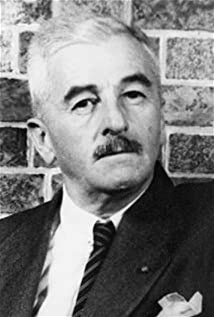
And Nine Months Later...

Fitzgerald

Faulkner

Now, maybe I'm the only one who finds this observation to be oddly funny, but I could not resist sharing it with the rest of you. According to one of the calendars I use, Stephen King, F. Scott Fitzgerald, William Faulkner, and T.S. Eliot all had birthdays last week:

  • King - September 21,1947,
  • Fitzgerald - September 24,1896,
  • Faulkner - September 25,1897, and
  • Eliot - September 26,1888.
And this week, it's these:
  • Donna Leon - September 28, 1942,
  • Miguel de Cervantes - September 29, 1547,
  • Truman Capote - September 30, 1924,
  • Daniel Boorston - October 1, 1914,
  • Graham Greene - October 2, 1904, and
  • Gore Vidal - October 3, 1925.
"So what," you say? Well, for some reason my mind immediately decided to do the math, and I realized that means they were all likely conceived sometime during the Christmas/New Year's holiday season some nine months earlier. So, as readers, let's all be grateful for the good spirits (pun intended) of those long-ago holidays. 

'Twas the season...

Capote


Greene

Saturday, September 26, 2020

Rogue Protocol (Murderbot #3) - Martha Wells


I can’t help but feel a little confused by the third book of Martha Wells’s “Murderbot Diaries.” It’s not the plot or the characters that confuse me, though. It’s more a question of why the whole book - all 158 pages of it - was not simply tacked onto the ending of the previous book – also of about 150 pages – and published as the novel it was meant to be. As it is, Rogue Protocol breaks almost no new ground either plot-wise or character-wise, and I doubt that I would have stayed with it all the way through if I had picked it up as a standalone novella. It was tough enough, at times, to do that anyway because I started to feel as if I were reading a story I had already read, and that only the names of most of the characters had changed.  

Murderbot is still trying to gather evidence against GrayCris Corporation, the cut-throat company that is so willing to murder its competitors in the name of increased profits. Murderbot is still officially a rogue SecUnit on the run, and as such, he’s forced to live in the shadows. Still, most often by teaming up with other artificial-intelligence creations, he manages to make his way from planet to planet without being captured. 

That doesn’t mean that it’s been easy, or that it’s going to be, because Murderbot’s big weakness keeps getting him in trouble. He still has a soft spot in his “heart” for humans, and he keeps stumbling into situations where several rather naïve human scientists have to be protected from the evil GrayCris Corporation. And, since Murderbot is heading in the same direction, he finds it impossible to keep himself from taking the humans under his wing – whether they always realize it or not. 

But all of that is part of the problem I had with Rogue Protocol. Wells assumes that all of her readers are already going to have Murderbot’s backstory, so she doesn’t spend much time developing the book’s newest characters (granted, they are only passing through, anyway) or the backstory. Consequently, Murderbot does not come across as nearly the compassionate and ironically funny character he is in the first two books in the series. And then there’s yet another claustrophobic jaunt down long hallways dotted with dangerous intersections, as Murderbot frantically tries to get his humans to safety while fighting one combat bot after another. 

The best part of Rogue Protocol is Miki, the little bot that just wants a friend like himself. Even as Miki is recklessly throwing his body into every battle alongside Murderbot (despite being hopelessly overmatched), he’s more concerned with hurting Murderbot’s feelings than with the danger to himself. He loves his humans, and they love him, but Miki truly treasures his first friendship with someone “like him.” 

Bottom Line: It seems that the publisher of the Murderbot Diaries made more of a business decision than a literary one with the way the company handled Rogue Protocol. This one could, and probably should, have been the second half of its predecessor, Artificial Condition, even though it would have probably seemed a little repetitive that way. As it was, two Murderbot Diary novellas and one Murderbot Diary novel were published in 2018, rather than what could easily have been two novels.

Martha Wells