Wednesday, October 21, 2015

Attica Locke and Harry Hunsicker Discuss Writing (and their new books) at The Texas Book Festival

Authors Attica Locke & Harry Hunsicker
For my second session of this year’s festival, I walked way out to the “Texas Tent” for a presentation entitled “Trouble in Texas” that featured writers Attica Locke and Harry Hunsicker.  Locke was born and raised in Houston’s inner city and Hunsicker in one of Dallas’s suburbs, and their books are largely set in those two cities.  Locke, however, is currently involved in the hit television series Empire (a show which I’m only vaguely familiar with because I’ve seen the promos run between innings of baseball games) as both a producer and a scriptwriter. 

In fact, both began the session by trashing the growth patterns of their respective cities in comparison to that of Austin.  Locke commented that in Houston if someone finds an empty spot they “pour concrete on it” and Hunsicker that neither Houston nor Dallas have any respect for the historical buildings located within their boundaries.  Sadly enough, they are right.  In addition, Locke’s father ran for mayor of Houston in 2009 and, according to Ms. Locke, that was an ugly, ugly experience for the family. 

Neither of the authors pulls any punches in their novels.  Rather, they portray life in their home cities as they and their families experienced it first hand.  Surprisingly, though, both Locke and Hunsicker say that they have received very little negative feedback from readers in Dallas and Houston (probably because their readers understand and agree with them).  I get the impression that they are both striving for the “reality” they remember, but clearly both novelists often drift into noir fiction.  Locke’s novels can be very dark and intimidating because the Houston of the past that she portrays was not always a great place to live if you were black or Hispanic.  Hunsicker’s work is not nearly as bleak as Locke’s, but it seems to be a throwback to the days of Chandler and Hammett – and I love it for precisely that reason. 

Attica Locke first came to my attention with the 2009 novel Black Water Rising, a book that features a young Civil Rights Movement veteran and new lawyer called Jay Porter.  The story begins with an incident drawn from one of the author’s own childhood experiences in which a cry for help is heard while her family is enjoying a boat ride along Houston’s Buffalo Bayou.  For the young black men aboard the boat, the question as to whether or not they should respond to the plea for help is an issue touching on both their common sense and their individual codes of morality.  The novel captured Houston’s atmosphere so perfectly that I was able to recapture vivid memories of that era. 

Locke was at the festival to promote her third novel, Pleasantville, which finally continues Jay Porter’s story.  She mentioned at the festival that she was very reluctant to write any kind of sequel to Black Water Rising because of her fear that she could not possibly match the quality of that first book in another that used the same cast of characters.  The author seems to be a bit insecure about her immense talent, even going so far as to say that she “talks to someone every week about that.”

Harry Hunsicker is the author of two series set in Dallas.  His first three books feature Lee Henry Oswald, a man whose very name is certain to cause him problems in a city still scarred by one of the most infamous political assassinations in American history. The main character of Hunsicker’s three most recent books is John Cantrell – ex-cop, ex-DEA contractor.  I have read parts of both series and was entertained by both because the books are well plotted, funny, and intricate enough to satisfy mystery fans like me who prefer their mysteries to have lots of action and atmosphere.

Hunsicker was at the festival to promote his latest novel, The Grid, which is the third John Cantrell novel.  Very surprisingly to me, the author did not spend much time discussing his new book and seemed to prefer speaking of more general literary topics.  He even had some very informed and pointed questions for Attica Locke and seems to be a real fan of her writing. 

Hunsicker still works as real estate appraiser in the Dallas area, and he attributes that job, because it took him to parts of the city very different from the more affluent section of the city in which he spent his youth, as the source of his awakening to what the city of Dallas is really like.  He quipped that he was going to be a “literary writer for about a week” before he realized literary writing is not a strong suit of his.  His fans should be thankful that instead of putting down his pen forever, Mr. Hunsicker decided to try a different approach to his storytelling.

Both writers remarked that they do not “believe in” writer’s block and that, as Ms. Locke puts it, writer’s block “is just the inner critic not thinking the work is good enough.”  Hunsicker added that, “writer’s block is just a writer being self-indulgent.”  He suggests just sitting down and writing five sentences of “whatever” because usually one of the sentences is going to be “pretty good.”  And, according to him, there’s your kick-starter. 

Interestingly, and probably because her father is an attorney, Locke was asked if her first name had anything to do with the Atticus character in Harper Lee’s To Kill a Mockingbird (the answer is no).  But it was the follow-up comments regarding the recent publication of the “new” Harper Lee novel that both authors made that intrigued me most about this part of the conversation.  Both of them feel very strongly that Harper Lee has been taken advantage of and can’t possibly realize how much her legacy has been damaged by release of the rather ordinary Go Set a Watchman.  They both feel very badly for Ms. Lee.


All in all, this was another great presentation and I ended up bringing home copies of both their books.  My TBR pile is growing ever higher as we speak…but I suppose that if you have to have a problem, that’s a good one to have.

Post #2,594


Tuesday, October 20, 2015

Margaret Atwood Presentation at 2015 Texas Book Festival


Official Texas Book Festival Photo - Author Margaret Atwood 
It was such a beautiful morning in Austin, showing all the signs of an approaching autumn season, that I really hated to head indoors immediately for my first session of the 2015 Texas Book Festival.  But my reluctance disappeared when I remembered that I was there an hour early for one reason: to attend Margaret Atwood’s presentation on her latest novel, The Heart Goes Last.  At this point, I’m going to have to admit an embarrassing thing about my reading relationship with Atwood; I have never read her.  As in Never Ever.  And how that happened, I can’t explain.  After all, I have several of her books around the house (and now I own a signed copy of The Heart Goes Last).  Heck, I’ve had a first edition copy of Cat’s Eye on my shelves since February 1989 when it was first published.  I know that she’s a major writer of our times, etc., but somehow or another I’ve never read her.  Weird, I know.

As a reflection of Atwood’s literary prestige and popularity, her presentation was one of the few given inside the chambers of either the Texas Senate or the Texas House of Representatives.  (The vast majority of the presentations are made in rooms located in the basement area of the building or outside under the cover of large tents.)  The line was long and moved slowly into the lower level of the House meeting area, and I was convinced that I would be moved to the upstairs gallery despite having been lined up for a bit over an hour, but I got lucky and was one of the last dozen or so to be able to squeeze in downstairs.  So I was off to a good start.

Margaret Atwood is everything I heard she was: funny, personable, bright, energetic, opinionated, adventuresome, and well-versed on the changes in bookselling.  Kelly Luce, the session moderator, began the session with a series of interesting questions to Atwood but made sure to save some time at the end for what turned out to be several really good questions from the audience.  First up, of course, was a question about the new book.  Atwood mentioned that The Heart Goes Last, which is 306-page novel, actually began as a series of short stories for Playboy magazine (she laughed about the magazine’s recent announcement that it would no longer focus on nude pictures, meaning that people really will be buying it for the “articles” now) but that her publisher finally said to her “why not make this into a real book.”  From there, the author went on to discus the serialization techniques of Charles Dickens, mentioning as a side note that she had once been allowed to sign her name with the very quill pen Dickens used to write his books, and pointed out that some of Dickens’s books were changed to suit the feedback he got from his weekly readers (especially regarding his extra attention - as the book evolved - to those characters which were proving to be the most popular).
 It was while discussing her own writing techniques and the structure of her books that Atwood most often showed her rather self-deprecating sense of humor.  For instance, when discussing how a writer “suffers” for her art, she said that she “had a little bit too much fun because I know you should suffer.  And I did.  But not too much…you don’t want to suffer too much at my age.” 

Here are a few other interesting tidbits that I managed to jot down during the presentation:

·      Atwood is not an “outliner” of novels and stories.  As she put it, she prefers to see them “grow up.”  She went on to remark that teachers of her work can see the structure because they have the whole book in front of them to teach from, while she never had that advantage during the writing process.

·      She is a fan of “fan fiction” and gave a brief history of fan fiction, including the fact that it’s been around forever, mentioning that Don Quixote was covered by dozens of “fan writers” hoping to cash in on the book’s characters – and that some of Shakespeare’s writing could be characterized as fan fiction.

·      Atwood mentioned two interesting projects of which she is a part.  The first involves her re-writing of Shakespeare’s The Tempest and the second is one in which she has written one, of what will eventually be 100 novels or stories, that will be sealed up for 100 years before they are “opened” and made available to the public.  The work is sealed away in Oslo, Norway.

·      The author took note (as so many authors have before her) of the setting and mentioned that she heard “laws are made here.”  She went on (again, as usual) to speak of the Texas laws that she wishes she could change from her seat in the chamber: penal laws, women’s right issues, etc.  No surprises here, and I found myself starting to tune her out, so I was happy when she moved on to something else.

·      Atwood closed the session by addressing public libraries and how important they are to society.  Interestingly enough, the library issue was brought up by a questioner in the audience who mentioned the many millions of dollars Austin is spending to build a new library while, at the same time, the current library sits largely empty and unused.  She considers access to books in libraries to be a “cornerstone of democracy” and said that the coke-addled mayor of Toronto was finally pushed out of office on that issue alone.  Apparently, he wanted to cut library funding and the voters were having none of it.


I enjoyed the session most, I think, because of the access that Atwood allows to her feelings and personality.  She is open, sometimes blunt, and pretty much always interesting.  And this time around, I’m certain that I’ll be reading a few Margaret Atwood novels…starting with The Heart Goes Last.

Post #2,593


Monday, October 19, 2015

Travels with Charley

I first read Travels with Charley in the mid-seventies, long before I heard any rumblings about how John Steinbeck fabricated many of the incidents and conversations included in this memoir about his solitary travels across the country.  I found that first reading to be so fascinating that I remember praising the book and recommending it to friends for weeks after I had finished it.  So I was both curious and a little afraid to see how I would feel about the book after reading it again some four decades later.  Well, I am happy to report that I still love the book, even knowing what I know now about some of it being fiction rather than Steinbeck’s actual travel experiences.

Steinbeck began his journey in September 1960 from his Sag Harbor, New York, home and stayed on the road for the next eleven weeks (with the exception of one brief interlude to meet his wife in Chicago, during which, from the sound of it, he stayed in a rather posh hotel).  During those weeks he made his way through some 33 states (although a few seem to have been really rushed) where he spoke with as many people as possible about the social upheavals and politics of the day.  Steinbeck left Sag Harbor and drove to Maine before turning west toward Seattle.  From Seattle, the author turned southward to visit his old haunts in California, traveled across the American Southwest, and sped through much of Texas before driving through most of the Deep South, turning northward again in South Carolina for his return trip to New York.

America was experiencing turbulent and dangerous times in late 1960, an ugly period vividly portrayed in that portion of Travels with Charley in which Steinbeck recounts what he observed in New Orleans when that city was trying to integrate its public schools.  This is likely to be the most memorable and disturbing part of the entire book for most readers because of how clearly it reminds us that our not too distant past can never truthfully be dubbed “the good old days.”  It was not even close.  The incident was so ugly, in fact, that it effectively ended Steinbeck’s journey even though he was still a long way from home.


I admit to being a little disappointed that Steinbeck misrepresented the origin of some of what he claims happened in Travels with Charley mainly because it makes me wonder if he simply set out with a specific agenda in mind and made sure that he got the answers that supported his own views about the social condition of the country.  Even in my first reading of the book, I found some of the conversations between the author and those he happened upon to be a little stilted and unrealistic.  At the time, I wrote that off as simply Steinbeck’s failure to remember the exact words used (he did not use a recorder) in those conversations.  But even now that much has been exposed about the author’s methods, I can say that I both enjoyed the memoir and recommend it to others.  I do, however, rate it a full star lower now than I did the first time around.

Post #2,592


Friday, October 16, 2015

Down and Out in Georgetown, Texas: Misadventures at theTexas Book Festival

I do it every year...forget to make a hotel reservation before leaving Houston for the Texas Book Festival.  Did it again this year.  And the same thing happens every single time.  No one seems to have a decent room in or close to Austin for both Friday and Saturday night.

First I stopped in Austin, then I tried Pflugerville, then Round Rock, then Georgetown.  In Georgetown I messed up bad by settling for a two-star type hotel that could give me both nights I needed in a non-smoking room.  I booked, paid up, and walked to the far end of the place to settle in.  Let's just say that I wish I'd had a cigarette of my own to mask the horrendous odor coming from the room...and to burn the three or four bedbugs I immediately spotted on the bedding.

So I went back to the desk, asked for a refund, and headed north again.  But the refund is not likely to come because the clerk behind the counter, a traditional Mr. Patel, said he would only refund one night because I had "soiled" the room already by going inside and removing the bed cover.  But he assures me that within five business days I will have credit for the second night.  I assured him that I would contest the charge...all of it...if that did not happen.  We parted on less than friendly terms.  (My fellow Southerners, have you noticed that the Patels own and run at least half of the "independent" hotels in the South?  When did that happen...and I'm not being racist: I swear that the vast majority of them share the Patel surname.)

Anyway, here I am at a new Holiday Inn Express in Salado, Texas, a historical little town almost all the way to Temple.  So I'm only about 65% closer to the Austin than I would be sleeping at home tonight.  Live and learn?  I won't count on it. 

Tomorrow is bound to be a better day.  I'm counting on it.

Heading to Austin for the Texas Book Festival...and I'm Off

I'm about to walk out the door and point the car toward Austin where the 20th annual Texas Book Festival begins tomorrow morning.  It's only a three-hour drive, but I'm going to make a couple of other stops along the way so this will be a rather leisurely drive.

I do hope to check in over the weekend with an update or two, but that's only if the WiFi gods smile down upon me.  But I'll be back on Monday for sure with (I hope) a few bookish experiences and stories to share with everyone.

On the road again...Sing it, Willie.


Thursday, October 15, 2015

Deep South

I have been a fan of Paul Theroux's travel writing for a long time, particularly enjoying the way his work allows the reader to become so totally immersed in worlds that would otherwise forever remain a mystery.  Via his books, I have traveled by train, boats, and automobile to places I am unlikely ever to see with my own eyes.  And along the way, I've learned a lot about people, places, and myself.

But this time around, Theroux has written about a region of the U.S. that I know quite well, the section of the country that has come to be called the "Deep South."  I was born in East Texas (a part of Texas that is far more Deep South than it is Southwestern United States), have extensive family roots in Louisiana, and have taken close, leisurely looks at the states the author travels through in Deep South.  As a result, I wish that I could have a long, personal conversation with Theroux because, while I do not think that his assessment of the South is all that far off, I find myself wondering about some of his conclusions and wanting to tell him what he may have missed. 

Theroux is largely sympathetic to the plight of the Deep South, its generational poverty and hopelessness disturbs him - and it should.  He rightly lambasts charities like the one run by the Clintons for sending hundreds of millions of dollars to Africa when the same problems they are focusing on in that continent exist in their own back yards.  He is particularly hard on the Clinton foundation because of the way that it ignores the problems so common in Bill Clinton's own home state of Arkansas.  As he points out, most agencies working on domestic poverty and education issues have budgets in the hundreds of thousands, not in the hundreds of millions.

But at the heart of Deep South, as it should be, is the issue of race relations, and I think that Theroux nailed it here.  From my own observation and interaction (as a white man not much younger than the author) in little towns in Alabama, Mississippi, Georgia, and South Carolina, I came to similar conclusions about the white-black relationship in those places.  On the surface, based solely on the behavior that outsiders are allowed to see (and what Southerners want to believe about themselves) the relationship between the two races is better today than it ever has been.  Scratch that surface a bit though, and there is still much hidden suspicion and animosity on both sides.  Prejudice towards, and fear of, each other is very common to both whites and blacks in the region, something that will not be entirely overcome for decades to come, if ever.  Such is the nature of human beings.

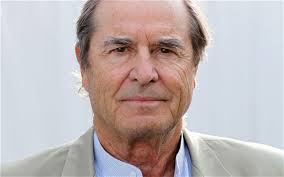
Author Paul Theroux
Where I think Theroux is a bit off in his observations is in his impression that the American South is home to few books and readers.  This is a point that the author returns to several times, and it is one that, in my estimation, he over-simplifies.  While I am not surprised that he found few readers and even fewer filled bookshelves in the homes of the Southerners he came to know, Theroux seems to have forgotten that he was most often spending his time with people who have little discretionary income to spend on luxuries like books - and that they have little ready access to books whether they want them or not.  Books, after all, are seldom a high priority item for people living below or near poverty level.  In only slightly larger cities than the ones Theroux spent most of his time in, I have managed to have casual, "bookish" conversations with the people I randomly met along the way.  I have seen people dining alone and reading a book to kill the the boredom; I have visited tiny libraries and talked books with librarians and patrons; and I have visited many literary landmarks in the region.

This is a rather small quibble with Theroux's overall impression of the Deep South.  But, as I say, I would love to sit down with him some day over a beer or two so that I could perhaps tell him some of the things that his Southern friends did not tell him during his four seasons of travel among them, things that I think would temper some of the conclusions he has come to.

Post #2,589