Showing posts with label Online Classes. Show all posts

Sunday, June 27, 2021

Notes from "The Secret of Great Mystery and Suspense Fiction" (The Great Courses) - Part 2


This is Part 2 of the notes I took for myself while watching the 36 lectures from The Great Courses class on "The Secret of Great Mystery and Suspense Fiction." While I took the notes primarily as a checklist for my own reference, a list I could choose books and authors from for a long time to come as I more deeply explore the genre, I hope that others might find it useful in their own reading.

Nordic Noir and Mystery:

  • Maj Sjöwall & Per Wahloo - Swedish co-writers (1965-1975) of a ten-book series featuring police detective Martin Beck
  • Jo Nesbó - Norwegian author of the Harry Hole series
  • Henning Mankell - Swedish author of the Kurt Wallander series
  • Hanne Wilhelmsen - Former Norwegian Minister of Justice and author of the Ann Holt books

Latin American Mysteries:
  • Leonardo Padura Fuentes - Cuban author of the "Havana Quartet", Havana Blue, Havana Gold, Havana Red, and Havana Black
  • Paco Ignacio Taibo II - Spanish/Mexican author of the Hector Belascoaran Shayne series, including The Uncomfortable Dead (2004)

Japanese Mysteries:
  • Edogawa Ranpo - author of surrealistic mysteries
  • Seicho Matsumoto - author of the realistic mysteries featuring Inspector Imanishi
  • Soji Shimada - author of over 100 mystery novels, including The Tokyo Zodiac Murders
  • Natsuo Kirino - novelist best known in the mystery genre for the novels Real World and Out
  • Fuminori Nakamura - Award winning author best known for Evil and the Mask and The Gun

African Mysteries:
  • Kwei Quartey - Ghanan author of police procedurals featuring Inspector Darko Dawson, including Wife of the Gods and Children of the Street
  • Mukoma Wa Ngugi - Kenyan poet and author  best known for Nairobi Heat
Female Mystery Writers:
  • Dorothy Hughes - 1940s author of "Domestic Thrillers" such as The Blackbirder (1943) and In a Lonely Place (1947)
  • Evelyn Piper (pen name of Merriam Modell) - best known for Bunny Lake Is Missing (1957)
  • Vera Caspery - best known for Laura (1942) and Bedelia (1948)
  • Margaret Millar - Canadian wife of Ross MacDonald (pen name of Kenneth Millar) best known for The Invisible Worm and Beast in View
  • Stella Remington - former Director General of MI5 who writes well received spy thrillers

As in the first list I posted, these are hardly the only authors featured in "The Secret of Great Mystery and Suspense Fiction" lectures. I've confined the two lists almost exclusively to writers who were entirely, or relatively, new to me so that I can use the list for my own future mystery and suspense reading choices. Hopefully, there is something here that others can also use for that purpose. I highly recommend the entire lecture series to anyone interested in the topic; it's fun, entertaining, and instructive.

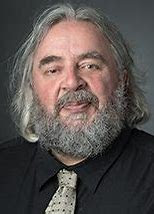
Course Lecturer David Schmid

Thursday, June 17, 2021

Notes from "The Secret of Great Mystery and Suspense Fiction" (The Great Courses) - Part 1


I finished The Great Courses class called "The Secret of Great Mystery and Suspense Fiction" the other day, thirty-six lectures that totaled close to nineteen hours in all. At first I skipped around a bit, but after I started watching the lectures in the order in which they are numbered, their interconnectedness made it easier to understand the evolution of mystery and suspense novels as it was being presented by the lecturer. I highly recommend the course to anyone who has access to it; it is well worth the time required.

Whenever a name, a book, or a concept was new to me I made a few brief notes that I want to share here, partially for my own record-keeping, but mostly in hopes that some of you might discover a new author by scrolling through the names and comments shown below:

Mystery milestones:

  • Father of Detective Fiction: Edgar Allan Poe
  • Mother of Detective Fiction: Anna Katherine Greene
  • Author of First Detective Series: Ebenezer Gryce
  • First Fictional American Detective: Amelia Butterworth novels begun in 1878 by Anna Katherine Greene

Relating to Other Early Fictional Female Detectives:
  • Harriet Vane - created in 1930 by Dorothy L. Sayers
  • 1972 novel Private Eye by P.D. James
  • Kate Delafield - first lesbian detective - created by Katherine V. Forest in 1984 when she began the Kate Delafield series

Important Contributors to Native American Mysteries:
  • Linda Hogan: Mean Spirit - 1990
  • Sherman Alexi: Indian Killer - 1996
  • Mardi Oakley Medawar: Murder on the Rez
  • Tony Hillerman

Some Groundbreaking European Mystery Writers:
  • Ferdinand von Schirach: German author of The Collini Case
  • Bornhard Schlink: German author of the "Self Trilogy")
  • Jakob Arjouni: German author of Kismet and Brother Kamal
  • Carlo Emilio Gadda: Italian author of That Awful Mess on Via Merculana, the "anti-detective novel" written in 1957
  • Leonardo Sciascia: Italian author of the Sicilian novels The Day of the Owl (1961) and Equal Danger (1970)
  • Andrea Camilleri: Italian author of The Shape of Water and the Inspector Montallbano series
  • Manuel Vasquez Montalbon: Spanish author of An Olympic Death and the Detective Pepé Carvalho books

Notable African-American Mystery Writers:
  • Chester Himes: 1950s writer of "absurd" mysteries set in Harlam
  • Barbara Neely: author of the Blanche White novels
  • Walter Mosley: prolific author best known for his Easy Rawlins novels
  • Valerie Wilson Wesley: writer of the hardboiled "Hayle novels" such as When Death Comes Stealing
  • Attica Locke: author of the "Jay Porter novels" set in Houston

Notable American Latino Mystery Writers:
  • Rolando Hinojosa: author of novels such as The Valley (1973), Fair Gentlemen of Belkin County, Korean Love Songs, Partners in Crime (1985), and Ask a Policeman in addition to the Rafé Buenrostro detective novel series
  • Rudolfo Anaya: author of the Sonny Bacco four-book series
  • Lucha Corpi: Eulogy for a Brown Angel (a Detective Gloria Demasco book), Cactus Blood, Crimson Moon, and Death at Solstice
  • Hector Tobar: The Tattooed Soldier
These notes cover about half of what I jotted down while watching the lectures. I plan to prepare a second post that will cover "Nordic Noir and Mystery," "Latin American Mysteries," "Japanese Mysteries," "African Mysteries," and "Women Mystery Writers." In the meantime, I hope you find something here that leads your mystery reading in an unexpected direction or two.

Course Lecturer David Schmid


Wednesday, April 21, 2021

The Great Courses: Mystery & Suspense Fiction (36 Lessons)

TV Screen Shot from "The Return of the Classic Detective," Lesson 10

Many library systems around the country make the online service called Kanopy available to its library card holders. With the exception of one short time-blip of a few weeks when the county decided Kanopy was just not in its budget, my library has given its patrons limited use of the service for the last 2-3 years. We are, however, limited to four movies, documentaries or series per month, so I assume that there may be different tiers on Kanopy depending on how much a library is willing to pay for the service. 

But four has always been plenty for me with the exception of the months when two or three of my movie choices turn out to be so bad that I can't finish them. Honestly, though, the real reason I keep coming back to Kanopy every month is that the service also offers quite a few educational courses from the Great Courses franchise. The good news is that each Great Course - even those that include as many as thirty-six  individual lessons - counted as only one selection against my allotted four. But Kanopy got even better after I received an email saying that my library no longer counts a Great Course as even one selection. In practical terms, that probably doesn't mean much since I have never gotten through more than one of the courses in a calendar month anyway, but it does make it possible for me now to fearlessly sample the courses without the risk of squandering my four selections in the process.

And,  that brings me to a course I'm doing there right now called "Mystery & Suspense Fiction," a thirty-six-lesson class that covers the history and evolution of both genres from their beginnings to 2016 (when the lectures were filmed). Each of the lessons are about thirty-five minutes long, and they are all presented by the same lecturer, Professor David Schmid, a man to whom I can gladly listen for all  twenty-one hours of "Mystery & Suspense Fiction." 


David Schmid is a New York Professor of English and Political Science


To this point, I've listened to eleven of the lessons, including: Murder in Cozy Spaces, African American Mysteries, Nordic Noir, The Sidekick, and The Criminal. 

The full course encompasses:

  1. Mystery Fiction's Secret Formula
  2. The Detective Is Born
  3. The Criminal
  4. The Sidekick
  5. Detecting Clues
  6. Case Closed? The Problem with Solutions
  7. The Locked Room
  8. The Dime Novel
  9. Murder in Cosy Places
  10. Return of the Classic Detective
  11. The City Tests the Detective
  12. The Private Eye Opens
  13. African American Mysteries
  14. The Femme Fatale
  15. The Private Eye Evolves
  16. Latino Detectives on the Border
  17. The Lady Detective
  18. Violence Waits in the Wings
  19. Violence Takes Center Stage
  20. Psychopaths and Mind Hunters
  21. Police as Antagonist
  22. Police as Protagonist
  23. Native American Mysteries
  24. The European Mystery Tradition
  25. Nordic Noir
  26. Japanese and Latin American Mysteries
  27. Precursors to True Crime
  28. True Crime in the 20th Century
  29. Historical Mysteries
  30. Spies, Thrillers, and Conspiracies
  31. Female-Centered Mystery and Suspense
  32. Poetic Justice
  33. Courtroom Drama
  34. Gay and Lesbian Mystery and Suspense
  35. Adapting the Multimedia Mystery
  36. Mysterious Experiments
I've already learned a lot about mysteries and how they've evolved over the centuries, and I highly recommend the class to other fans of either genre. If you are into mystery and suspense, as so many book bloggers and readers are, this one is not only great fun; it helps you appreciate the genre even more.

If any of you try this or one of the other Great Courses - or already have- I would love to hear what you think of them. 

Thursday, February 25, 2016

John Green's Crash Courses on Literature...Take a Look

In another case of "better late than never," I stumbled upon John Green's "Crash Courses on Literature" a couple of days ago (sadly, it appears that John has not added new courses to the 24 on YouTube since some time in 2014).  I've only watched a couple of them, but I can tell you that even if you already know a good bit about what John is speaking on, the mini-lessons are fun to watch.  Dang...wonder why he gave up on them.

Anyway, here's an example that will also lead you to the rest of the Crash Course videos.  This is one of two lessons on Mary Shelley's Frankenstein:

Tuesday, December 11, 2012

Open Yale Courses - "The American Novel Since 1945"

I've long dreamed of living in some university town where I would be within walking distance of a school that encouraged people like me to monitor lectures and classes that appealed to them.  In my case, these would most often be in the areas of  world literature and American history.  Houston is home to several good schools (Rice University, The University of Houston, St. Thomas University, among them) but none of them are easy for me to get to  - nor, as far as I know, do they allow casual monitoring of even their largest classes.  So, no joy there.

But guess what?  I have discovered that lecturers from the best universities in the world are willing to come to my house to deliver personal lectures free of charge.  No travel expenses, no college fees, and, of course, no college credit.  Materials are suggested, but whether you purchase them is entirely up to you.  Sounds perfect to me because, at this point, I'm not after a degree.  I'm simply looking to have some fun by learning strictly for the sake of learning.

This, for example, is a lecture series from "Open Yale Courses" that I plan to start soon on "The American Novel Since 1945."  This screen shot provides a course overview and shows the first five lectures of a series of twenty-six.

Click on this screen shot to see a more readable version

Think about this for a minute...twenty-six lectures totaling almost 21 hours of clock-time.  Can you imagine what this would have cost you just a few years ago, or what it would still cost if you took such a class on-campus?  Here's a link to the complete page for those who want to take a closer look - please do let me know if you decide to listen to some of the lectures and what you think of them.

This is just the smallest tip of a very large free learning iceberg.