Showing posts with label Memoirs. Show all posts

Thursday, June 11, 2026

Bookish (2025) - Lucy Mangan


Lucy Mangan’s Bookish: How Reading Shapes Our Lives is Mangan's follow-up to 2018’s Bookworm: A Memoir of Childhood Reading, which covers the author’s childhood reading influences and experiences. Bookish picks up with Mangan’s teenage reading years and concludes in what the author calls her middle-age ones (she is 52). 

“If we stop reading, if we stop putting ourselves in other people’s shoes, if we stop considering their situations, relationships, reactions, choices and morals, if we stop exercising ourselves imaginatively, if we stop asking ourselves, ‘What if…?’ and ‘What would I …?’, then we cut ourselves off from inward avenues of growth, exploration, adventure."

 Lucy Mangan is a dedicated reader whose relationship with books goes far deeper than all but the most dedicated of readers can imagine, so Bookish is as much a love letter to books, authors, bookstores, libraries, and publishers as it is a memoir. I get the impression that when Mangan is not reading, she’s thinking about reading as she anxiously makes her way through the day’s assigned tasks. 

It is not surprising that Mangan depended heavily upon her reading to prepare and guide her through the stages of adulthood: falling in love and finding a life partner, beginning a career, motherhood, and the ultimate grief that accompanies so much of anyone's lifetime. In addition, the book explores topics such as “formative novels,” genre fiction, “reading the canon,” dystopias, “studying the classics,” guilty pleasures, romance novels, crime fiction, and creating "a library of one’s own.” 

My own favorite chapter of Bookish is its tenth, entitled: “A Library of Ones Own: Curating a Book Collection.” It is great fun to experience Mangan’s joy and “all is right with the world” feeling as she turns a small outbuilding behind the family’s second home into a personal library and hideaway all her own. The amount of physical labor involved in sorting and shelving 10,000 books, much less all the labor that preceded the shelving, was staggering, but I can easily imagine the grin on Mangan’s face as she worked and envisioned what the finished space would become. 

But even the most avowed of book collectors, sooner or later, has to face the fact that enough is enough, and that there will never be enough space to keep every book that comes into their lives. So with a goal of culling at least five percent of the books she moved to her new library, Mangan approaches the purge this way:

“So the great culling of my mid-forties began. It was a long job and it couldn’t be subcontracted out, because the decisions could only be taken by one individual- me, hi! - one individual book at a time…I held each book in my hand and wordlessly communicated with it…If we still had something to say to each other, if we still had a connection, the book stayed. If there was silence, I thanked it for its service, wondered who the killer had turned out to be after all and pitched it into the charity box."

 If the above paragraph is a little bit like an arrow to your heart, Bookish is for you. You will get Lucy Mangan and consider her a kindred spirit, a friend you haven’t met yet. 

Tuesday, June 09, 2026

Future Boy (2025) - Michael J. Fox & Nelle Fortenberry


 Michael J. Fox was only 23 years old in 1985 when he pulled off one of the craziest Hollywood stunts of all time. For about three months, beginning on January 15, 1985, Fox worked simultaneously on two major projects: completing the third season of Family Ties during the day while shooting his scenes in the first Back to the Future movie at night. He managed this by working five days a week from roughly 10 a.m. to 6 p.m. on Family Ties before being hustled over to the movie set for several more hours of work. It didn’t hurt that Michael was only 23 years old and fearless.  

In Future Boy, Michael tells us how he managed to pull it off.

Michael J. Fox (the “J” was added to his name because another Michael Fox was already registered with the Screen Actors Guild) caught the acting bug in Canada during junior high school, and by age 15 he had landed a major role in a Canadian sitcom called Leo and Me. By age 18, he had dropped out of school for good and moved south to the U.S. with about $3,000 in his pocket. Michael was not exactly an overnight success although he did manage to pick up guest shots on a few television shows like Lou Grant and Palmerstown U.S.A. 

But still, a few years later Fox was near penniless, had sold his furniture to buy food, and even sometimes used dumpster diving as a way to find free food. He finally caught his big break with Family Ties, but memories of those early days were still fresh enough that Fox was determined to take advantage of every opportunity that presented itself. So, feeling young and invincible, he jumped with both feet into the work schedule that would ultimately turn him into a superstar. 

And he did it.

Future Boy is particular fun for fans of  Back to the Future or Family Ties, but even those who only know Fox because of his more recent pubic struggles with Parkinson’s will respond to the actor’s likable and heartfelt approach to the memoir. Reading Future Boy is akin to sitting across the table from Fox while he tells you stories about those three months - and that he uses an often-humorous, self-deprecating approach to his casual storytelling makes it all the better. In addition to Fox’s stories, the memoir includes some fresh interviews with cast and crew members, including an account of Fox’s remarkable relationship with Eric Stoltz, the actor he replaced in the role of Marty McFly after Stoltz had already completed five or six weeks work in the role. 

Michael J. Fox is an easy guy to pull for, and this glimpse into his behind the scenes life makes for fun reading. Now, though, I wish he would give us a similar look at how he has managed to deal with Parkinson’s for the last thirty-five years. 

Christopher Lloyd and Michael J. Fox (11-19-22)

Saturday, February 28, 2026

Dirtbag, Massachusetts: A Confessional - Isaac Fitzgerald


I am a fan of memoirs, reading at least a dozen of them every year for the last decade or so. Sometimes I know a little (or a lot) about the author before beginning a memoir; sometimes I’ve never heard of the author at all. Isaac Fitzgerald was most definitely not someone I knew of before picking up Dirtbag, Massachusetts, and the more I read of the confessional essays that make up Fitzgerald's memoir, the easier it was to see why that was. 

Dirtbag, Massachusetts begins with Fitzgerald’s unconventional Boston childhood. As he puts it, Fitzgerald’s birth had the potential to destroy not one, but two families because although his parents were married when he was born, it was not to each other. That his parents managed to get together after Fitzgerald's birth at all, much less make a long, often loud, life together for so long is a whole other story in itself. Fitzgerald, a fairly accomplished juvenile delinquent filled with the inner guilt that so often comes with a strict Catholic upbringing (believe me, I know), would eventually leave Boston for the West Coast - where he became an even more accomplished adult delinquent, someone always living on the edge of what most would call acceptable society.

What follows is Fitzgerald’s unapologetic account of the years he spent boozing, doing drugs, bartending, bar bouncing, and working in San Francisco’s porn industry - both behind and in front of the cameras. If nothing else, Dirtbag, Massachusetts is a frank revelation of one man’s lifestyle choices and how he survived (not necessarily overcame) each of them. And he would do it all over again - with pleasure. This is not one of those memoirs where an author wants the reader to learn from the his mistakes. This is one of those memoirs where an author simply wants to entertain and impress the reader with his experiences. 

It’s all very readable, and this reader is happy that Fitzgerald is somewhat of a success today, married and able to make a living from his writing without having to rely on “day jobs” to keep him afloat. But for me, reading Dirtbag, Massachusetts was a little like eating cotton candy. After I was done, I wondered what all the fuss was about.

Sunday, October 01, 2023

Don't Tell Anybody the Secrets I Told You - Lucinda Williams


I first became a big fan of Lucinda Williams music after stumbling upon some of her early recordings. I remember being immediately taken by her stunning voice and phrasing. Back then her music was hard to find, but I put together a decent collection of her LPs and CDs, and then after I learned that Williams had deep roots in my part of Louisiana, and that she spent some early, musically formative, years around Houston and Austin, I wanted to learn more about her. My digging around, however, usually left me with more unanswered questions than I had when I started digging for answers. Now via her Don't Tell Anybody the Secrets I Told You,  Lucinda Williams fills in most of the blanks for me. 

Because she had lived in twelve different cities by the time she was eighteen, lots of places can lay claim to having played a significant role in the life of Lucinda Williams. Born in Lake Charles, Louisiana, Williams lived in Mississippi, Utah, and Georgia before she was five years old. She then spent a year in Santiago, Chile before returning to Louisiana for her pre-teen years, and even lived for a few months in Mexico before bouncing around for the next two decades between New Orleans, Fayetteville (Arkansas), San Francisco, Houston, Austin, New York City, San Francisco, Los Angeles, and Nashville. 

Lucinda Williams was born to an academic father and a mother who suffered from mental illness all of her life because of the horrible sexual abuse she suffered as a child. Williams's father would eventually become a well respected writing teacher and poet, and he recognized his daughter's rebellious spirit early on, even to supporting her when she decided never to return to high school after being expelled for skipping school in order to march in peace and racial justice protests. As a result, Williams educated herself by sitting in on many of her father's creative writing workshops and befriending some of the most famous and creative writers of the day. 

"When I say, "I'm a southerner," many people think, "That must mean you're racist, you're this, you're that." There are all these stereotypes associated with being southern, which is a whole problem in and of itself. I think that's why my dad instilled in me, 'We are southerners, and we have to fight the people who think that all southerners are racist, all southerners are hicks, all southerners are stupid.' That's how I was raised. That's my South."

Nowhere is this influence more apparent than in Williams's poetic song lyrics. As confirmed in Don't Tell Anybody the Secrets I Told You, her songs are largely autobiographical in nature, most of them being based on real life emotional experiences she was having with the men who were in her life at the moment (she has been happily married to Tom Overby since 2009). In the memoir, Williams includes the lyrics to many of her most personal songs and explains their often surprising origins. 

Don't Tell Anybody the Secrets I Told You offers an intimate look into the mind of a creative artist not afraid to her expose her feelings to the world. It is an honest look at who Lucinda Williams considers herself to be today at 70 years of age and how she got to be that way. My only regret is that the memoir does not address the stroke that Williams suffered in 2020, a stroke severe enough to rob her of her ability to play guitar for three years. Maybe that's another book. But she's back and she's healthy now, and I'm grateful for that.

Lucinda Williams (wikipedia photo)

Saturday, August 05, 2023

Review: Where I Come From by Rick Bragg


I recently found myself in the mood for an audiobook and, as it turns out, I could not have chosen a more perfect one to fit my mood than Rick Bragg's 2020 collection Where I Come From. And just to top it all off, Bragg himself is the perfect reader/narrator for this collection of columns originally published in the likes of Southern Living and Garden & Gun magazines. The book, in fact, turns out to be one of the best memoirs I've read this year.

Rick Bragg grew up in rural Alabama, and he only has to open his mouth for people to figure that out. The man's heart took its first beats  in Alabama, and it still beats strongest when he is somewhere in the Deep South. (A word of advice: Listeners to Bragg's narration should not expect him to get the job done quickly. Southerners don't work that way. So, please, for your own sake, resist the temptation to kick up the man's verbal pace to 125% - or more - on your listening device. You'll soon learn to appreciate the author's pace and how much it adds to his substantial storytelling charm.)

The collected columns are all very personal ones addressing everything from what Harper Lee and her book mean to Southerners and the world, to his deep love for Tupperware, to the most satisfying way to kill fire ants (especially the ones that have already claimed their pound of flesh from your legs), to sharing a series of fictional letters he has written to Santa over the years in an attempt to stay on the fat man's "good list." And those are all great.

But I got some of my best laughs at the author's thoughts on his experiences of being solidly locked inside Atlanta's terrible traffic jams, his wonderfully comic takes on his mother's behavior and opinions, his sincere love of mongrel dogs, and his banteringly competitive relationship with his brothers. Bragg shares a talent usually only found in the best of comedians; he can make you laugh out loud because of his willingness to expose the silliness and absurd behavior of himself and those closest to him - all the while making you laugh with those people, not at them.

Where I Come From is a reminder that we are pretty much all alike, and how important it is these days to be able to laugh a little bit at ourselves. Don't read this one...let Rick Bragg read it to you.


Monday, July 10, 2023

Review: Dirty Chick: Adventures of an Unlikely Farmer by Antonia Murphy


It would be difficult to find two people more unlikely to take easily to the farming life than Antonia Murphy and her husband Peter as they were in the early 2000s. The couple lived in ultraliberal San Francisco and were totally into the lifestyle; the only farm animals they ever saw were found in the meat department of their favorite grocery store. But somehow the Murphys found the courage to go for it. 

Both Peter and Antonia were into sailing, so they felt comfortable packing up their worldly goods and heading off to an entirely new world and life via sailboat. First, they made their way through Mexico and Central America, then across the Gulf of Panama, down to Ecuador, and finally, across the Pacific to New Zealand. By the time they arrived in New Zealand to begin their new lives, Antonia was six months pregnant with their first child. Then a few years later their son was born with major genetic developmental disabilities, and the Murphys decided they needed to relocate to a more self-sustaining lifestyle in a rural part of the country. 

As it turns out, the family found a lifestyle that perfectly suited their wants and needs. Probably most importantly, little Silas was taken under the wing of an entire community of diverse New Zealanders who loved him and respected him for who he was. And that's when the real fun begins.

Upon arrival, the Murphys hope to learn about animal husbandry and living off the land, and to be fully accepted and acclimated into the little community in which they've moved. Luckily, a small farm becomes available for a twelve-month lease when that farm's owners decide to move to Germany for a year. The transplants spend the next year learning the farming ropes, meeting neighbors, and becoming a loved and integral part of the community. Almost before they know it, the Murphys are owners of nineteen farm animals (a goat, sheep, chickens, alpacas, turkeys...but purposely, no pigs) - and a lease that expires in just two months leaving them no place to go. 

Largely because Antonia Murphy writes with such a good sense of humor and irony, Dirty Chick is a fun memoir to read. The only warning I will give more "squeamish" readers is that Murphy does tend to focus on the scatological aspects of farming life. Farming can be, and usually is, a dirty business, one in which farmers are often up to their elbows in natural substances they would otherwise avoid at all cost. It's this kind of thing, however, that more easily shocked Antonia as she adjusted to farm life, and it is her lessening aversion to such things over the months that gauge her transformation from urbanite to farmer - so I get it.

The memoir ends with a short epilogue that sums up everything nicely, but it was written nine years ago, and I was curious about what has been going on in Antonia Murphy's life since 2014. I'll leave it up to the curious to Google her, but color me surprised...big time. 

(I discovered Dirty Chick via Jeane's review on her always interesting book blog Dogear Diary. Jeane's review can be found at this link.)

Tuesday, December 28, 2021

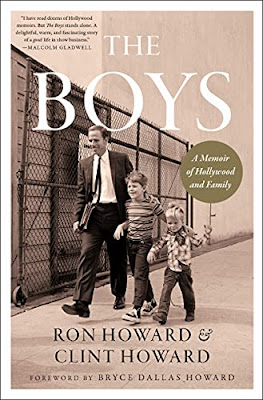
The Boys - Ron Howard & Clint Howard


I’m four or five years older than Ron Howard, but when I see him or watch one of the movies he’s directed, I feel like I almost grew up with the guy. For those of us of a certain age, our relationship with “Ronny” Howard began with the still wonderful-to-watch The Andy Griffith Show, but that was far from Ron Howard’s first venture into movies and television. That is, however, where the Ron Howard clean-cut image began taking form before being further strengthened by smash hits like the George Lucas film American Graffiti and the hit television series Happy Days. Ron Howard seemed to us to be the ideal All-American boy even though some may have suspected that the image was just too good to be true.


Well, they were wrong. Ron Howard really was the All-American boy he appeared to be on film. And strangely enough, before I read The Boys, the new biography/memoir by Ron and Clint Howard, I ran across quite a few negative comments saying that The Boys makes for pretty boring reading. Why? Because all the love in his family, their work ethic, and their success in the business became too plain vanilla to hold a reader’s attention for a whole book. They were hoping for some dirt on the Howard family, and they were obviously disappointed not to find much of it there. (I do have to believe that some of the book’s harshest critics quit reading before Clint Howard opened up about his alcohol and drug abuse problems, however.)


The Boys is co-written by the Howard brothers, although Ron, as you would expect, gets the bulk of the page count. That doesn’t, however, mean that Clint does not contribute to the flow of their memoir. In fact, the contrasting views of the two authors combine to tell a family story that neither of them could have come close to telling as accurately or as movingly on their own. 


And it’s pretty much all there. Both men cover their individual careers in some detail, offering stories and insights that only they are privy to. Ron hits all the highlights, especially his Andy Griffith Show, Happy Days, American Graffiti, and Music Man highlights. He also explains where, and when, his great desire to become a movie director originated, and how lucky he considers himself to be that he was able, ultimately, to live his true dream. Clint Howard’s work will likely surprise some readers because he has accumulated some 200 movie and television credits since he began acting as a toddler, including, of course, the Gentle Ben television series. Clint whole heartedly embraces his status as a character actor, and it has translated into a career that has served him well for over fifty years now. 


Personally, what I find most compelling about The Boys is learning about the personal sacrifices that the Howard parents made so that their boys could find and earn their places in life. Those sacrifices were numerous, and as it turns out, they were well worth it.


Bottom Line: The Boys will be of particular interest to fans of Ron Howard’s acting and movie directing talents but, really, the best thing about the book is the way the boys credit their parents for their success. That Jean and Rance Howard were able to give their sons a relatively normal upbringing while working in an industry that so often destroys families is remarkable. The critics are right: with a couple of exceptions, this is a feel-good book…just what I needed as we close out a year like the one 2021 turned out to be.


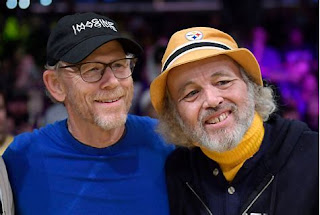
Ron & Clint Howard


Friday, October 29, 2021

Cost of Living - Emily Maloney


Emily Maloney’s Cost of Living is a series of essays that, when taken as a whole, comprise an interesting memoir of the author’s intimate experience with America’s healthcare system. First as a patient, and then as a caregiver herself, Maloney offers a behind the scenes look that will be probably be disconcerting and scary to some readers while confirming the darkest fears of others who have had a little more experience with how the system works in this country.


For Emily Maloney, it all started when she tried to kill herself as a nineteen-year-old. Maloney’s attempt at taking her own life may have been unsuccessful, but it left her saddled with an enormous medical debt for treatment that she would struggle to pay off for years to come. The failed attempt also meant that Maloney would be seeing mental health doctors and taking a series of psychiatric drugs for years — treatments and drugs that sometimes seem to have done as much harm as good. Ironically enough, in order to pay off her past healthcare debts and to be able to continue affording her ongoing treatments, Maloney decided to work in the healthcare industry herself.


What she learned firsthand about billings and collections, hospitals, emergency rooms, medical staffs, and pharmaceutical companies is enough to make anyone uneasy about dealing with the system. Maloney’s essays do not paint a pretty picture. She speaks of patients and insurance companies being gouged by the purposeful uncharging of doctors and hospitals determined to maximize profits. She tells us about the burned out staffs so common to emergency rooms and the minimal level of care that most patients ever receive in them. She speaks to the indignities and dangers of being treated in a training hospital or emergency room. And using her own experiences with large pharmaceutical companies as background, she gives a thorough indictment of the waste and borderline illegal practices that make medicine so expensive to those who desperately need it for their survival. 


Bottom Line: Cost of Living certainly offers a bleak look at the US healthcare system. While what Emily Maloney has to say about the system will not come as a surprise to most people who have had to deal with major health problems of their own or those of family members, it will serve as a warning to other more fortunate readers who have yet experienced it all for themselves. It will open some eyes. Despite her shaky start in life, the author has achieved much, and it would be interesting to hear her story in a more traditionally constructed memoir that focuses on how she did it. 


Emily Maloney


Review Copy provided by Henry Holt & Company

Cost of Living to be published on February 8, 2022 

Monday, August 02, 2021

Go West, Young Man - B.J. Hollars


Go West, Young Man
, B.J. Hollars’s account of the Oregon Trail road trip he shared with his six-year-old son, Henry, will be a fun read for anyone who enjoys similar road trips of their own. Smartly, Hollars spends a substantial amount of time in this travel memoir exploring his evolving relationship with Henry (who, if he is even half as precocious as his dad portrays him to be here, is quite the character) as the long hours in the car began to wear a bit on both of them. It didn’t hurt, too, that I read Go West, Young Man during my own 5,000 mile road trip with my nineteen-year-old grandson. As we came upon some of the landmarks highlighted in the Hollars book, I knew what to expect, which landmarks to explore more deeply, and was happier and happier that my grandson was enjoying the trip — and (supposedly) my company — as much as I had hoped he would.


B.J. and Henry were on a mission to rediscover America, both as the country was in the past and the way it is today. And they did it the hard way. They usually camped out along the way, very rarely breaking up the camping routine by a hotel stay or a night spent in the home of friends. And I suspect that the occasional thunderstorm or heavy winds they endured and conquered will likely turn out to be some of their strongest memories of the entire trip. 


Father and son met their goals: they completed the Oregon Trail together and they met enough people along the way, including cross country truck drivers, to get a good feel about both the things that still bind Americans together and the things, mostly political, that so destructively divide those same Americans today. Mr. Hollars used the trip as a means of educating his young son to the realities of the exploitive nature of America’s move west, and what he has to say on the subject is a disturbing reminder of how destructive the westward migration of settlers was to the native peoples already there. 


Bottom Line: Go West, Young Man is fun. I think it’s a little heavy-handed at times on the guilt trip associated with the author’s reaction to how terribly our native peoples were treated by white settlers of the day, but there are plenty of reasons — and takeaways — to read this fun travel memoir. I have to admit that I particularly enjoyed reading about the author’s interface with Henry during such an extended road and camping trip, but I also learned much about the key spots along the Oregon Trail and how important it was to this country’s westward expansion. I recommend this one to all the road-trippers out there. You’ll enjoy it.


B.J. Hollars

Review Copy provided by Publisher

Monday, July 05, 2021

Tracks - Robyn Davidson


Robyn Davidson did something as a twenty-seven-year-old back in 1977 that would be almost impossible today: she and her four camels made a (mostly) solo 1700-mile trek from Alice Springs, Australia all the way across the Australian desert to the Indian Ocean. As Davidson puts it in her postscript to the 2012 edition of Tracks:


“Could such a journey be made in the same way now? No, absolutely not. There would be many more people out there with many more ways of keeping tabs on you, more red tape to hold you back,  more no-go areas, more fences, more vehicles, more control. New communication technology would make it impossible to get lost no matter how hard you tried.”


Things have changed so much, in fact, that Davidson admits to finding it “painful and difficult” to revisit that part of Australia at all. But back in the day, things were much simpler, if not more primitive, in nature. Davidson had grown bored with the life she was living, especially with the several jobs she had by then experienced and with her various studies. She was more of a loner than any of her friends and family, and very much enjoyed her own company. So, what could be more natural for a young woman like her than six months or so spent all alone in literally the middle of nowhere?


There was one slight problem, however. Davidson knew that the best way to make it across such a wide expanse of desert was with the help of camels. And she knew nothing, absolutely nothing, about camels other than that she wanted to capture three or four of the wild desert camels, break them, and train them as pack animals. Easier said than done, of course, so Davidson ended up working eight months for a man who promised to teach her everything she needed to know and to pay her by giving her two fully-trained camels of her own. What Robyn Davidson experienced in Alice Springs makes up over one-third of Tracks, and very little of it is pretty. The Alice Springs that Davidson endured for those months was so racist and misogynistic that she suffered from severe depression much of the time she was there preparing for her great adventure.


But what an adventure it turns out to be.


In order to make the trip possible at all, Davidson did something that must have felt to her as if she had just sold her soul to the devil. For four thousand dollars, she agreed to allow a National Geographic photographer to join her along the way three or four times so that the magazine could do an expansive article on her and her trip through the desert. It was only with that money, however, that she was able to outfit herself with the equipment she needed to survive in the desert on her own. And despite what started out as a rocky relationship between her and the photographer, her trip may have ended disastrously without his help. At the very least, her experience was changed for the better. 


Bottom Line: Tracks is quite an amazing true adventure story, and Robyn Davidson was very frank about everything she saw and experienced during her journey. It is a book I strongly recommend to readers who enjoy reading about what I generally classify as “long walks” taken by one or two brave people who want to experience the planet in a way so few of us will ever manage to experience it for ourselves. There is also a movie version of Tracks by the same title out there, and it is sometimes pretty good despite failing to give much of a real sense of what Davidson went through in order to prepare for the trip or just how tortuous her days sometimes were. Even though the movie ticks off most of the milestone boxes of Davidson’s great adventure, it really comes nowhere near to meaningfully telling what her experiences were like. Do yourself a favor; read the book first.  

May 1978 National Geographic cover featuring Robyn Davidson's adventure


Thursday, April 01, 2021

The Good Hand: A Memoir of Work, Brotherhood, and Transformation in an American Boomtown - Michael Patrick F. Smith


I spent most of my working-life in the oil industry. Be it in the U.S. or in some foreign country, I spent my days thinking about oil prices, drilling costs, and where the company would find replacement barrels for whatever volume of oil we would produce and sell that year. I often wondered what the industry must have been like in those early boomtown days during which so many people dreamed of getting rich by discovering black gold on their property - as so many did - but I never expected it to be like that again. And then, along came the new drilling techniques that made much of North Dakota into something very much like the boomtowns of yesterday.


I had to, however, watch from afar instead of being on the ground to see and experience it for myself; that’s why, books like Michael Smith’s The Good Hand fascinate me so much. I’ve read a few books about what happened in North Dakota after the oil companies showed up with what must have seemed to be unlimited amounts of cash to throw around. Some of the books were novels about the horrifying crime problems that resulted, and how the locals dealt with becoming second class citizens in their own hometowns. Smith’s The Good Hand, as its subtitle (A Memoir of Work, Brotherhood, and Transformation in an American Boomtown) indicates, is a nonfiction look at the mixed curse/blessing that descended on North Dakota when it finally became economical for Big Oil to extract the hard-to-get oil reserves that had been trapped there forever. 


By the time he arrived, the thirty-something-year-old Smith was a decade older than most of the men with whom he was competing for a limited number of oil field jobs. Smith, who considered himself an actor and musician above all else, came to North Dakota from New York City with $3,000 in his pocket, no job, and no place to live. He knew nothing about the oil industry or how dangerous oil field work is. What he found on the ground was appalling, but to his credit, Smith stuck it out - all the while burning through the cash he came with - until he got a job with a trucking company that moved drilling rigs from one location to the next. That he survived the on-the-job training in pretty much one piece, and that he eventually earned the respect of the experienced field hands is only part of his story.


The Good Hand is also the coming-of-age story of a man trying to get that job done before he turns forty. By the time that Smith leaves North Dakota, he is a changed man, a better man than he would have been if not for the experience. But it is rough going, and not everyone that Smith comes to know during his months in the oil patch will fare as well as he does. Some will be terribly injured or even killed, some will succumb to a life of drugs and alcohol abuse, some will end up in jail or prison, and some will just end up spinning their wheels with nothing to show for the effort. Saddest of all, though, is what happens to small-town North Dakota when an army of criminals, sex abusers, prostitutes, and already-broken people descend upon the state in huge numbers. Suddenly in the minority, the locals often get so caught up in the hustle and what they see as their own once-in-a-lifetime opportunity to get rich that they end up ruining their lives.


Bottom Line: I experienced The Good Hand in its audiobook version. The audiobook is narrated by the author who does a decent enough job of it, but what makes the audio version outstanding is how Smith intersperses his own music and songs throughout his narration. Smith is such a genuinely talented musician, singer, and songwriter that his haunting songs contribute to the mood and tone of the book to such a degree that I ended up listening to the entire book even though I also had a hardcopy in hand. For the best experience with The Good Hand, I think that’s the way to go. 


Michael Patrick F. Smith

Wednesday, January 13, 2021

I'll Be Seeing You: A Memoir - Elizabeth Berg

Elizabeth  Berg’s I’ll Be Seeing You is, I can tell you from recent experience, an accurate reflection of what it feels like to watch a parent become less and less capable of taking care of themself  over a number of years. If you are lucky enough to have a parent live into their late eighties and beyond, what Berg describes in this heartfelt memoir is inevitable. It is only a matter of time before child and parent are required to switch roles, and the formerly-protected becomes the protector. 


My favorite quotation, in fact, from I’ll Be Seeing You comes from the book’s prologue:


“I think as long as a parent is alive, it’s easier to feel young. It’s easy to feel that in some respects you are still being taken care of, even when it becomes more you who takes care of them.”


Berg takes the reader through almost a year of transition for her parents, October 2010-July 2011, during which they were forced to come to the realization that they could no longer live in the family home they had enjoyed together for four decades. As Berg and her siblings learned, however, realization comes a good bit before acceptance, and even after her parents have moved into an assisted living arrangement, they refuse to sell the family home because they still hope to return there someday. 


The experience that Berg describes is a very emotional one that was not helped by her father’s Alzheimer’s diagnosis. The author was, I think, somewhat surprised by her mother’s resentment that if not for her husband’s mental problems, she, at least, would still be living at home. As her mother found it harder and harder to hide her feelings from her children, they began to resent the way she was treating their father - even, it seems, to worry about whether she was taking proper care of their father. Things were said, feelings hurt, and relationships damaged. 


The sad part is that all of it was perfectly normal, maybe even healthy in the long run. 


Those who have not experienced this situation yet with their own parents - and those in that situation right now - can benefit from a memoir like I’ll Be Seeing You because they will see that what they are feeling, but may be reluctant to say out loud, is all very normal. It is part of the cycle of life that none of us like to think about, but it is something that more and more of us are going to experience. So why not listen to what those who have already been there have to say?


I would have liked to have heard more from Berg’s sister, the child who lived close enough to their parents to be their day-to-day caretaker. The author is quick - and she does it several times - to credit her sister as being the one who went the extra mile for their parents. And that is good to see. Having been the “local” in my father’s case, I know that that experience is a completely different one from the one those who live hours away have. And I wouldn’t have missed it for the world, because the years I spent in that role brought me closer, and to a better understanding, of my parents than I would have otherwise ever managed. 


If you see this coming into your own life soon, do read I’ll Be Seeing You. It will help.


Elizabeth Berg

Saturday, December 12, 2020

A Mind Spread Out on the Ground - Alicia Elliott

Maybe I expected too much from Alicia Elliott’s memoir A Mind Spread Out on the Ground. Maybe it’s my fault that I found the book so frustrating and, in the end, more confusing than enlightening. I wanted (still do want) to learn more about how North America’s indigenous people live today and whether the reservation system has been overall a good or a bad thing for them. As it turns out, this is not the book to answer that kind of question despite Elliott’s complaints that whites do not bother to wonder what their lives are like today. 


A Mind Spread Out on the Ground is a memoir centered on the dysfunctional family that Alicia Elliot had the misfortune to grow up in. Elliot, whose mother is a white Catholic and whose father is a Canadian Mohawk, grew up in a home where her mother was institutionalized once or twice a year on average when the mentally ill woman’s bipolar depression became too much for Elliot’s father to handle. What the author so frankly reveals about her childhood is as disturbing as it is sad: the constant hunger, living largely on whatever junk food was available, a case of head lice that lasted more than a decade, being accepted by neither whites nor indigenous schoolmates, etc., but what she describes is a function of poverty not exclusive to indigenous Americans or Canadians. 


As readers learn, this is largely a book about depression and those who suffer from it either directly or indirectly. The book’s title, in fact, is a translation of a Mohawk phrase for depression in which such a person is described as having a mind “literally stretched or sprawled out on the ground.” According to Elliott, indigenous people suffer disproportionately from depression, and that is because of the colonialism her people are still suffering from to this day. And, she says, until her people “decolonize” their minds, the problem will not go away.  


Even so, Elliott does not seem to expect all that much, for instance, to result from today’s efforts to make the publishing world more obviously reflect real-world diversity because “diversity is a white word.” As she puts it in a quote attributed to a Tania Canas essay of that title:


Diversity is about making sense of difference “through the white lens…by creating and demanding palatable definitions of ‘diversity’ but only in relation to what this means in terms of whiteness.”


Elliott says, “That is the crucial problem with the push for ‘diversity’ in publishing…’diversity’ is not about letting those who aren’t white make whatever art matters to them and their communities.” She goes on to say that, “It’s the literary equivalent of ‘ethnic’ restaurants: they please white people because they provide them with ‘exotic’ new flavours, but if they don’t appease white people’s sensitive taste buds they’re not worth a damn.” 


Alicia Elliott’s frustration and anger is obvious in her words, attitude, and accusations even when she momentarily turns her biting sense of humor on herself to make a point about how her childhood memories are different from those of most people, “…my childhood itches. This makes sense, since I had head lice for over a decade. My relationship with head lice was, until recently, the longest relationship I’d ever had.”  


The book’s anger is understandable when one considers the generational impact of Canada’s and America’s genocidal approach to their indigenous peoples. The despair and low self-expectations passed from one generation to the next, according to Elliott, continue to plague these people. And she is angered that those who even acknowledge that “awful things” were done in the past expect people like her to forgive and move on with their lives. I’m not convinced she is right about that, but I can understand why she believes it.


Alicia Elliott

Saturday, August 01, 2020

Kissing Fidel - Magda Montiel Davis

Magda Montiel Davis made a terrible mistake in 1994 when she exchanged a formal kiss on the cheek with Fidel Castro during the reception at a Havana conference attended by hundreds of Cuban émigrés. Before the kiss, Montiel Davis was a respected member of her Miami community as founder of one of the largest immigration law firms in Florida. She and her staff provided an important service to immigrants from all over the world who needed entrance visas into the U.S. and/or exit visas from their home countries. After the kiss, she was a woman with a price on her head.


Anti-Castro Cubans in Miami would never forgive Montiel Davis for showing that level of respect for the one man in the entire world they most despised, and they were determined to ruin her business and the lives of her entire family in order to make her pay for her sin. Some, however, would be satisfied with nothing less than her death – and they were prepared to make it happen.


Kissing Fidel, subtitled “A Memoir of Cuban American Terrorism in the United States,” is Montiel Davis’s account of what happened to her and her family during the several months following the infamous kiss she exchanged with Castro. Montiel Davis shares with readers what it was like to receive thousands of threatening phone calls and notes, how it felt to hear herself denounced on local radio and television stations, how terrifying it could be to read newspaper editorials ranting about her, and how frustrating it was to be abandoned by the bulk of her legal staff when she needed them most.


Magda Montiel Davis
Magda Montiel Davis was a victim of “cancel culture” before there was such a term. What happened to her was terrifying and effective, but one can only imagine how much more effective the campaign to ruin her life would be today with all the social media weapons that can be used against anyone making a similar “mistake.” Montiel Davis is a brave woman, especially, it seems, when she is angry, and she got very, very angry about the treatment she and her family were receiving. She fought back; she persevered; and, in the long run, she won. But it was not easy, and it left scars.


“Whoever fights monsters, said Nietzsche, ”should see to it that in the process he himself does not become a monster.”  As quoted at the beginning of Part Three of Kissing Fidel)


The anger that helped so much to get Montiel Davis through her ordeal, she admits, came dangerously close to turning her into the kind of person she does not want to be. Yet, there were several occasions on which she seems to have let her desire for personal revenge override her better self. To the author’s credit she shares that side of the story as well.


Bottom Line: Kissing Fidel is an interesting memoir, one set inside a large community of Castro-regime survivors with which most people outside of South Florida are not particularly familiar. What happened to Montiel Davis and her family is heartbreaking and wrong. Sadly, the same thing is all too common today, and getting worse.


Review Copy provided by Publisher for Review Purposes 

Tuesday, May 05, 2020

Blood: A Memoir - Allison Moorer


On the day that their estranged father shot and killed their mother on the front lawn of their little Alabama house before doing the same to himself, Allison Moorer was just fourteen years old and her sister, Shelby Lynne, was almost eighteen. What happened on that August 12, 1986, morning may not define their lives, but it forever changed who they were and who they would become. Allison Moorer’s Blood: A Memoir is their story.

           
“There are parts of a heart that can never heal once they are broken. There is no glue that will hold.” (Allison Moorer, page 14)


Blood is Allison Moorer’s book of memories, and as such, it is told from her point-of-view, but one of the book’s most touching parts is the short “Foreword” written by her older sister, Shelby. Shelby has also written about her parents and their marriage but she says that she “always wondered where Sissy was in it.” She realized that each of them always had their own memories about living with their parents, but that in her memories Allison is always “in the background.” Now having read her sister’s book, Shelby knows exactly where Allison was all those years ago:

            “While I was trying to protect Mama and watch our failing parents’ every move, Sissy was there scared, worried, alone, suffering, and I never knew it. She was there hanging back, hanging tough, watching, observing, worrying, testing the waters of her world, waiting…We were together.”

There is no doubt that the sisters know where each other are now. They are best friends, bonded forever by what they endured and experienced as children. Somehow, even though they can never forgive their father for taking their mother from them when she was only 41, neither of them hate the man. Instead, they hate what he did.

Allison Moorer’s father was an alcoholic who felt that he had married the most beautiful woman in the world. And he was a jealous man, one convinced that there was a man “around every corner” who wanted nothing more out of life than to steal his wife away from him. He wanted, and he had because his wife couldn’t stop him from taking it from her, the authority to “approve her every action.” But according to Moorer, although never diagnosed as such, her father may have had other issues. She almost hopes he was bipolar, schizophrenic, or suffering some other kind of borderline personality disorder because she does not want to believe that it could have been just plain old “meanness” that made him “erase” her mother the way that he did.

Allison Moorer and Shelby Lynne may have survived the trauma of their teen years, but they did not come out of the experience whole. They are, and will always be, emotionally scarred by the actions of the first male role model in their lives, an impatient, angry man who was disappointed in himself and his failure to earn an independent living for his family. Moorer recalls how, “He always seemed to have something on his mind. I was always careful about what I said around him. I never wanted to bother him and risk him directing his anger at me.” As the older sister, it seems Shelby was not so fortunate, and she was more often struck by their father. One of the saddest segments of Blood is the barely-two-pages-long one titled “What happens when you hit your daughter” detailing how a daughter’s personality will forever be changed for the worse by an abusive father who strikes her – especially when it comes to how she deals with every man with whom she will have any kind of relationship for the rest of her life. Those two pages are among the most difficult to read pages I’ve ever encountered in my life.

Bottom Line: Allison Moorer and Shelby Lynne are lucky to have had music in their lives to help them through the most difficult days of their childhood and their adulthood. Both women have enjoyed successful music careers - although Shelby seems to struggle to see it that way sometimes - in the music industry, but even their music is influenced by the childhood trauma they suffered. Blood tells the story of two remarkably strong women who are always there for each other, two women determined not to repeat the all too common mistakes of their parents. They are trying to break the cycle for good.