Showing posts with label Classic. Show all posts

Saturday, September 30, 2023

Wifedom: Mrs. Orwell's Invisible Life - Anna Funder


Despite being completely mesmerized by Anna Funder's devastating take on the life of George Orwell, I'm still not sure how best to categorize Wifedom: Mrs. Orwell's Invisible Life because of how often this biography skates right up to (and maybe just across) the line where it has to be said that the book morphs into novelization. So is it part standard biography and part novelized biography? Wait a minute, though, because there's still more to consider. Wifedom also combines strong elements of literary criticism, sociology, and feminist-leaning women's studies that even further differentiate it from any biography I've read before. There's a whole lot going on here. 

Anna Funder spent several years studying the books and papers of George Orwell and his first wife Eileen Blair, and it was only after multiple readings of Orwell's own account of his participation in the Spanish Civil War that Funder finally realized that Eileen Blair herself was in Spain at the exact same time. The way that Orwell and his previous biographers had managed so successfully to mask Eileen's presence in Spain during those months made Funder determined to learn more about Eileen O'Shaughnessy and her marriage to Eric Blair (real name of George Orwell).

And what Funder learned is not pretty.

It all boils down to the fact that without Eileen Blair, there would have been no George Orwell as we generally think of him today. Orwell, whose sex life seems to have bordered upon that of a sexual predator, saw Eileen as a free source of the labor he could not afford to pay for: housekeeper, cook, typist, researcher, editor, farm manager capable even of digging out the family septic tank, and backup sex partner. Upon Eileen's death at age 39 while pregnant with his child, Orwell finally realized and admitted, if only to himself, how important she had been in his life. His response? Not long after Eileen's death, Orwell initiated marriage proposals to several women until he finally found one willing to take on Eileen's role.

Sadly, Eileen Blair may have been her own worst enemy, even to neglecting her own health in favor of Orwell's needs and never demanding support from him when she most needed it. No doubt, the "patriarchy" of the times made it difficult for women to compete directly with men, but Eileen had the money and skills to leave Orwell any time she wanted to; she chose not to do so.

While I still admire Orwell's two classic novels (1984 and Animal Farm), and always will, I will from now on find it impossible ever to think of the author in terms other than that of the classic jerk - even for his times - that George Orwell proved himself to be. And I will always wonder why Eileen O'Shaughnessy put herself through it all.

Wifedom: Mrs. Orwell's Invisible Life is a stunner of a biography, one I will not be forgetting. 

Anna Funder (publisher site photo)

Friday, December 24, 2021

The Ox-Bow Incident - Walter Van Tilburg Clark


As it turns out, Walter Van Tilburg Clark, who was a thirty-one-year-old English teacher at the time, struck literary gold in 1940 with the publication of his debut novel The Ox-Bow Incident. The novel was made into a major motion picture starring Henry Fonda, Dana Andrews, and Harry Morgan in 1943, and today Tilburg’s novel is considered a classic of its type. 


Most readers will be familiar with plots similar to the story Clark tells in The Ox-Bow Incident even before they pick up the book for the first time. Tales about a group of cattle rustlers being chased down and lynched by a posse of local vigilantes have been played out in countless novels, movies, and television shows for near one hundred years now. The stories are usually rather gut-wrenching ones even when those being hanged from the nearest big tree really are the bad guys. But when mistakes are made, and innocent men are rashly killed by a mob of executioners, the stories truly are heartbreaking.


What makes The Ox-Bow Incident so different from most of the others is the emphasis Clark places on the motivations of the twenty-eight men who band together to chase down the men they believe have killed a local ranch hand while in the process of running off with forty head of cattle. The novel is both a character study and a hard look into the power of a mob to carry men to places they would never otherwise be willing to go. Even as the posse is being pulled together, the novel’s narrator makes this observation:


“Most men are more afraid of being thought cowards than of anything else, and a lot more afraid of being thought physical cowards than moral ones. There are a lot of loud arguments to cover moral cowardice, but even an animal will know if you’re scared.”


Then, a few pages later, the narrator points out how the local men are being pushed into riding with the posse by having it pulled together out in front of the local saloon rather than inside it:


“…a lot of these men must be fixed so that nothing could turn them off unless it could save their faces. The women were as stirred up as the men, and though a lot of them would have been glad if they could keep their own men out of it, that didn’t make any difference. When a man’s put on his grim business face, and hauled out a gun he maybe hasn’t used for years, except for jack rabbits, he doesn’t want to go back without a good excuse.”


It is inevitable. Twenty-eight men, led by two or three bloodthirsty types who always enjoy bullying and fighting anyway, are going to risk their own lives to chase three or four unidentified men into the blizzard that is fast descending upon them all. Most of them don’t really want to be part of a lynching, but only the town’s two preachers (one of them white, the other black) have the courage to speak up about what they are doing. The riders already assume the guilt of those they are chasing, and they do not intend to bring them back to town for a jury trial. The posse will be judge, jury, and executioner — and no one is going to stop them. Guilty or not, someone has to die tonight.


Bottom Line: While Clark’s moral arguments can get a little longwinded and a little repetitive as several of his characters attempt to find the moral courage to refuse to join the posse and to persuade others to do the same, the pace with which the posse finally forms helps build the tremendous tension readers feel as the book reaches its climax. What happens at that point, and what happens in its immediate aftermath, is heartbreaking for all concerned. Walter Van Tilburg Clark hit a home run his first time at bat.


Walter Van Tilburg Clark


Sunday, October 31, 2021

We Have Always Lived in the Castle - Shirley Jacksom


If you enjoy writers like Stephen King, Neal Gaiman, or Richard Matheson, I have some great news for you. Shirley Jackson, who was an absolute master of psychological suspense and horror fiction, did it better than any of them. And despite dying of a progressive heart illness in 1965 at just 48, Jackson left behind a relatively substantial body of work for readers to explore and enjoy. 

One of my own Shirley Jackson favorites is her last novel, 1962’s We Have Always Lived in the Castle, which critics have dubbed a “gothic mystery.” In approximately 150 pages, depending on which edition you read, Jackson creates a weirdly believable small-town world in which jealous townspeople finally find an opportunity to get even with the rich family in town that has for generations made all of them feel so inferior. And one night they get their revenge in spades.


The story begins when “Merricat” Blackwood, one of two sisters living in the Blackwood family home introduces herself this way:


“My name is Mary Katherine Blackwood. I am eighteen years old, and I live with my sister Constance. I have often thought that with any luck at all I could have been born a werewolf, because the two middle fingers on both my hands are the same length, but I have had to be content with what I had. I dislike washing myself, and dogs, and noise. I like my sister Constance, and Richard Plantagenet, and Amanita phalloides, the death-cup mushroom. Everyone else in my family is dead.” 


Merricat, our narrator, then begins a flashback of a few months duration describing the last time she went into town to pick up library books and a few groceries for her and her sister. It is obvious from the way that she is treated in town, that the townspeople see Merricat as something strange and a bit horrifying, and that they feel free to torment her right up to the point where they draw the line at physical abuse. Merricat has so little self-awareness that her inner thoughts and compulsive rituals mark her as a target even for the children living in town. 


Back at home in the fenced-in Blackwood family estate, we learn that some six years earlier the Blackwood family suffered a tragedy that only three of them survived: Merricat, her older sister Constance, and the girls’ Uncle Julian. The survivors have been completely isolated from their neighbors ever since, with the exception of Merricat’s quick Tuesday runs into town for supplies and new library books. The townspeople, while not particularly upset about the number of people who died that night, believe that what happened was not an accident. And because making someone pay for what happened is the easiest way for them to feel superior to the Blackwoods for the first time in their lives, they jump all over that opportunity when it suddenly presents itself.


Bottom Line: We Have Always Lived in the Castle is a mystery that only gradually reveals its truths as each layer of the relationship between the sisters is peeled back. Some of the secrets are revealed through Julian’s rambling memories even though it is apparent that the man’s mind is no longer what it once was. But it is only when a wildcard character, the ruthless cousin of the girls’, moves into the Blackwood estate that their world finally blows up. Neither they, their cousin, or the people in the town will ever forget what happens next — and none of them will ever be the same.  


Shirley Jackson

Happy Halloween!

Sunday, August 29, 2021

And Be a Villain - Rex Stout


Rex Stout’s Nero Wolfe series is the first detective series I remember getting myself hooked on. The good news back then (the mid-sixties) was discovering that the series had started years before I was born (with 1934’s Fer-de-Lance), so there were already lots of Nero Wolfe books for me to enjoy. Even better, Stout kept writing new ones every couple of years right up until his death in 1975, so for a long time there was always another new Nero Wolf story to look forward to. And as I’ve just been reminded, author Robert Goldsborough added another sixteen Nero Wolfe/Archie Goodwin books between 1986 and 2021, meaning I have even more Nero Wolfe material to explore now than I ever imagined. 


As I began And Be a Villain, I had vivid memories of the Nero Wolfe and Archie Goodwin characters and the amusing relationship that developed between them over the years. Theirs was/is much more than an employer/employee relationship; the men respect each other, care for each other, and are real friends. That, in fact, is part of what makes their verbal sparring so much fun. But even though this is not the first time I’ve read And Be a Villain, I remembered very little about it’s actual plot, so reading it now was almost like reading it for the first time.


Nero Wolfe is almost literally an “armchair detective” — and he’s a good one. Wolfe is a large man (I picture him as someone approaching a weight of 300 pounds) who refuses to leave his New York City apartment for any reason. Archie Goodwin, considerably younger than Wolfe, and a whole lot more agile, does all of the leg work involved in a Nero Wolfe investigation. In the meantime, Wolfe happily follows his own schedule of meals at specific times and two daily sessions with his beloved orchids. 


This time around, popular radio talk show host Madeline Fraser has had the unthinkable happen during one of her live broadcasts. A guest has dropped dead on-air after taking a sip of  from a soda provided by one of the show’s sponsors. All the police know for certain is that someone slipped cyanide into one of the bottles, and that this particular guest drew the unlucky bottle. It is exactly the kind of case that appeals to Wolfe, and because he has a large tax bill due just when his cash flow is at a low point, he offers his services to the radio network and the show’s sponsors on a contingent basis. If he solves the case before the police do it — or if the police solve it only because of a Wolfe-provided clue — he cashes their $20,000 check. If he fails, they get the check back.


But when Wolfe gathers up all the principals involved with Madeline Fraser’s radio show, he makes his first discovery: they are all lying — maybe not all for the same reason, but each and every one of them is holding something back. And that’s a fatal mistake, because now Nero Wolfe is ticked.


Bottom Line: And Be a Villain (1948) is the thirteenth Nero Wolfe mystery, and by this time fans of the series were familiar with the Wolfe and Goodwin characters. Feature films based on the Rex Stout characters had been produced by 1948, and television was going to make Nero Wolfe a household name in various TV series over the coming decades. The Nero Wolfe novels are usually not very long, but they are always satisfying. Fans of character-driven mysteries will particularly enjoy them, I think, but the mysteries are always solidly constructed ones that readers will also enjoy trying to solve before Wolfe gives them all the answers. 


Rex Stout

Thursday, September 10, 2020

Is Late-Onset ADD a Thing?

I'm starting to wonder if it's possible to develop a case of ADD behavior late in life. I've been finding it difficult to actually sit down and read for more than a few minutes without stopping all of a sudden to do one or two other things that suddenly spring to my mind. If that were not bad enough, at the same time that my reading-pace has slowed way down, my book-acquisition-pace seems to be accelerating. 

Everywhere I turn, people are talking about books, and I'm jotting down their recommendations as fast as I can. Is there more book-chatter out there these days  because of the pandemic? I mean, it's great whatever the cause, but this is getting serious now. Just today, for instance, I watched a livestream from the Carnton house in Franklin, TN, and came away from that with at least half-a-dozen new books on the Civil War that I really, really need to read. And soon.

As of this morning, I was only actively reading two books, both very slowly, as it turns out: Sean Hannity's Live Free or Die, a book that is much better written than I had expected it would be, but is also pretty depressing and scary; and Philip Jose Farmer's science fiction classic To Your Scattered Bodies Go, a book I've read twice before and loved. I am also starting at least two others today by choosing one of the four western novels in the beautiful Library of America volume The Western that arrived in the mail last week. The classic novels are from the 1940s and 50s, but I don't remember ever reading one of them despite remembering three of them well as favorite movies. 

The second one, which I've already started, is Julie Gray's The True Adventures of Gidon Lev: Rascal, Holocaust Survivor, Optimist. I have had an electronic review copy of this one for a few weeks, and now seems like the time to read it. Lev was one of approximately 15,000 children sent to the German concentration camp near Prague called Térézin. He and 91 other children survived the experience. Julie Gray was reluctant to take on this project when Lev first approached her with the idea, but now the two of them are constant companions despite their several-decade difference in age. I am definitely liking what I see in this one through the first three chapters.

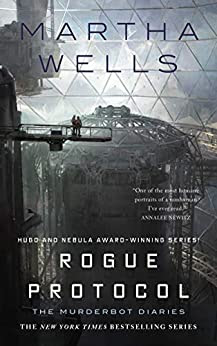
Also, coming into my hands in the last few days are several other books I'm itching to get into: a nice hardcover review copy of Jill McCorkle's Hieroglyphics; Russ Thomas's Firewatching, a book I was lucky enough to win in a blogger's random drawing; and Martha Wells's Rogue Protocol, the third book in her fun "Murderbot Diaries" that I just picked up from my library this afternoon. And that doesn't even count the dozens of others that I'm keeping handy because I just know I'm going to read them all someday. Yeah, right. Oh, and the new Civil War books I heard about this morning on that livestream I mentioned. I'm about to begin the search to grab each of those, too. 

Honestly, I wouldn't have it any other way.


Thursday, February 25, 2016

John Green's Crash Courses on Literature...Take a Look

In another case of "better late than never," I stumbled upon John Green's "Crash Courses on Literature" a couple of days ago (sadly, it appears that John has not added new courses to the 24 on YouTube since some time in 2014).  I've only watched a couple of them, but I can tell you that even if you already know a good bit about what John is speaking on, the mini-lessons are fun to watch.  Dang...wonder why he gave up on them.

Anyway, here's an example that will also lead you to the rest of the Crash Course videos.  This is one of two lessons on Mary Shelley's Frankenstein:

Monday, November 16, 2015

In Dubious Battle

Published in 1936, John Steinbeck’s In Dubious Battle reads like a snapshot from the period in American history during which workers were perhaps at their lowest point ever.  They were suffering greatly because of low wages, an overabundance of unemployed workers willing to work for next-to-nothing wages, and employers who were only too happy to take advantage of the tragic economic situation of the day.  But by actively recruiting workers, union organizers were placing their own lives and those of the workers in jeopardy.  The battle was on, dubious though it may have been.

And along came John Steinbeck to tell the world about it because as he said in his 1962 Nobel Prize for Literature acceptance speech:

            “The ancient commission of the writer has not changed.  He is charged with exposing our many grievous faults and failures, with dredging up to the light our dark and dangerous dreams for the purpose of improvement.”

And, perhaps more in this novel than in anything Steinbeck had written previously, In Dubious Battle does precisely that.

To his credit, Steinbeck exposes both sides for what they are.  On the one hand, employers (fruit growers in this case) are shown as exploiters of the working poor, commonly hiring desperate workers and then callously tossing them away in favor of cheaper labor as soon as the opportunity presents itself to do so.  On the other, union organizers are exposed as the Communist tools they are, men even willing to get workers killed or maimed if that will somehow advance “the Cause.”  In fact, the organizers hope to provoke deadly violence directed at workers in order to fire up the men enough to keep them walking the picket lines. 

The book’s two main characters are Mac and Jim.   When Mac, a veteran union organizer, senses something special in new recruit Jim, he decides to bring him to the apple orchards where fruit pickers are facing an devastating cut in their daily wages.  Jim is a true apostle of the cause and, as Mac teaches him the organizing techniques that work best, Jim aches to be more directly in the cause - and constantly implores Mac to “use him.”  At one point, after suffering an injury that leaves him somewhat out of his head, Jim somehow manages to take over the strike, a change that makes Mac very nervous:

            Jim said softly, “I wanted you to use me.  You wouldn’t because you got to like me to well.”  He stood up and walked to a box and sat down on it.  “That was wrong.  Then I got hurt.  And sitting here waiting, I got to know my power. I’m stronger than you, Mac.  I’m stronger than anything in the world, because I’m going in a straight line.  You and all the rest have to think of women and tobacco and liquor and keeping warm and fed.”  His eyes were as cold as wet river stones.  “I wanted to be used.  Now I’ll use you, Mac.  I’ll use myself and you.  I tell you, I feel there’s strength in me.”


In Dubious Battle may not be one of John Steinbeck’s most popular or highly acclaimed novels, but it is a powerful one, one that deserves to be read today because it offers such a clear look into America’s not too distant past.


Wednesday, September 02, 2015

Les Misèrables Parody by Sesame Street


This is an amazingly well done parody version of Les Misèrables.  When did Sesame Street start doing things like this?  This one was apparently produced by PBS some time in 2013...but surely it's not part of the regular Sesame Street show for toddlers, is it?

Post #2,551

Thursday, March 21, 2013

Pride and Prejudice


Jane Austen struggled to get Pride and Prejudice finally into print.  Finding a publisher was not easy (she even considered self-publishing), but she did not give up.  During the years the manuscript sat on her shelf, she reworked it and changed its title from First Impressions to the even more plot-descriptive Pride and Prejudice.  Now, 200 years later, that novel is still one of the best known, and best loved, books in the world.  

Mr. and Mrs. Bennet live with their five daughters in Longbourn, a Hertfordshire town in which nothing is more important to young ladies and their mothers than making the right match.  A man with a fixed annual income is a must, but even better is a handsome man with an annual income.  And the highly competitive (if a bit scatterbrained) Mrs. Bennet is ready to start marrying off her daughters.  This is, in fact, to her husband’s dismay, all the woman thinks about. 

However, the Bennet girls, beautiful as most of them are, face some stiff competition in their little town, and when a military troop makes temporary headquarters there, the game is on.  But it is when two wealthy young men take up temporary quarters in one of the county’s most spectacular homes and, at the same time, a foolish young preacher comes courting the girls that the fun really begins.

Pride and Prejudice, considering its age, is remarkably easy for today’s readers to read and enjoy.  Austen’s witty dialogue and her writing style work as well today as when the book was first published, ensuring that the novel will continue to entertain readers for many generations to come.  It does not hurt, too, that Elizabeth Bennet, the second of the Bennet daughters - and Austen’s personal favorite of all her heroines - is one of literature’s most memorable characters.  Elizabeth, though, is surrounded and supported by a whole cast of characters that interact perfectly to make Pride and Prejudice the very special book that it is. 
There are the wealthy (Misters Bingley and Darcy and their sisters), the super-wealthy (Lady Catherine), the foolish (Mr. Collins and Mrs. Bennet, in particular), a scoundrel (Mr. Wickham), the rest of the Bennet sisters and their long-suffering father, and a town filled with friends and rivals.

New readers are likely to be surprised by how much fun Pride and Prejudice is, but this is precisely the reason so many re-read it on a regular basis.  Jane Austen wrote romantic comedy before there was such a thing.  She was way ahead of her time stylistically, especially when it comes to dialogue, and it all comes together beautifully in Pride and Prejudice.  This one is not to be missed.

Tuesday, January 22, 2013

Moby-Dick Big Read, Chapters 57-63

Moby-Dick Big Read, Chapter 57 Illustration
The early chapters of this seven-chapter section of Moby-Dick are largely devoted to explaining more of what goes on in the typical whaling ship of the period.  Chapter 57, for instance, is devoted to the various carvings on whale teeth and rendering of whale images that the sailers devote so much time to during the crew's downtime.  Chapter 58 describes sailing through a yellow sea of brit, the "minute, yellow substance upon which the Right Whale largely feeds," and Chapter 60 details the make-up and proper handling of the line tied to the harpoons that bind a wounded whale to the small boat chasing it.

That chapter ("The Line") is a reminder of how dangerous a job these men were taking on for so little pay.  Probably because I recently watched a film version of Moby-Dick, I find that coiled rope line to be one of the scariest aspects of nineteenth century whaling.  A man unlucky enough to get in the way of that whiplashing rope (only 2/3 of an inch in diameter, according to Melville) could easily lose an arm, a leg, or even be cut in half.

In Chapter 59, Ishmael describes the excitement on board ship when it appears that Moby-Dick has finally been sighted.  Eerily, when the four chase boats get close enough to see what is ahead of them, the creature turns out to be "the great live squid, which, they say, few whale-ships ever beheld, and returned to their ports to tell of it."  No, this is not going to end well for our boys.

Chapter 61 ("Stubb Kills a Whale") is the one that rips all associated "glory" from the whaling process and paints it in terms that make it all seem so very real - and so gruesomely bloody.  I doubt that anyone can read the following paragraph without be a bit horrified at the picture of a harpooned whale's final moments:
"And now abating in his flurry, the whale once more rolled out into view; surging from side to side; spasmodically dilating and contracting his spout-hole, with sharp, cracking, agonized respirations.  At last, gush after gush of clotted red gore, as if it had been the purple lees of red wine, shot into the frightened air; and falling back again, ran dripping down his motionless flanks into the sea.  He heart had burst!"
As expected, George Cotkin's  Dive Deeper: Journeys with Moby-Dick offers interesting observations and speculations regarding this section of Melville's masterpiece.  Perhaps, because of the paragraph I quoted just above, what strikes me most, however, is Cotkin's explanation of the evolution of nineteenth century whaling techniques into those of today.  Today's whalers have the tools that allow them to harvest whales rather than hunt them and hope to actually take 5% of the ones they chase.  Simply put, the whale does not stand a chance of escape today once it has been chosen for harvesting.  (The need for whaling is beyond me, but I am willing to listen if someone wants to argue a pro-whaling case.  Just comment, below, and we'll begin the conversation.)

With an exception or two, the Big Read narrators do an exceptional job on this group of chapters.  One female reader, however, sounds as if she is reading from inside a hollow pipe, and another one reads so slowly and methodically that I felt much as Ishmael must have felt just before he fell asleep high up in the crow's nest - leaving Stubbs's whale to be spotted by men on deck the Pequod.  My "soul" almost escaped my body while Marcia Farquhar droned on...and on...and on...

Thursday, January 17, 2013

The Lizzie Bennet Diaries

Ashley Clements is Lizzie Bennet
OK, this looks like fun.  Are you ready for a modernized, vlog-style (video log) retelling of Jane Austen's Pride and Prejudice?  Don't be too quick to write it off, because the sample episodes I've watched are quite clever...and funny.  

Each YouTube episode runs somewhere between two and five minutes in length - and the good news is that this thing started almost a year ago, so you won't have to wait for new episodes to be posted for quite a while.  (I think, based on what I see at lizziebennet.com that there are 78 episodes to this point.)  Heck, this thing even has a few of "spin-offs" - and, from what I gather, some of the "characters" participate in various social media outlets - to its credit, so Jane Austen fans should be set for a while.


Per, Wikipedia, these are the spinoffs:

The Lydia Bennet

This spin-off of The Lizzie Bennet Diaries chronicles the adventures and mishaps of the youngest Bennet sister, Lydia. The blog is only maintained whenever Lizzie and Lydia are separate from one another and Lydia cannot appear on the main blog. Lydia begins the videos when Jane and Lizzie are staying at Netherfield. Lydia goes to live with her cousin Mary (Briana Cuoco), who at first is unhappy with Lydia's presence but the two bond as friends. Lydia resumes the blog when Lizzie is visiting Charlotte and has several adventures with Mary and Jane. After Lizzie and Lydia's fight in episode 73, Lydia uses the blog to vent her frustration at Lizzie as well as chronicle her adventures while Lizzie is at Pemberley, including a trip to Las Vegas on New Year's.

[edit]Maria of the Lu

Charlotte Lu begins her new job at Collins & Collins. Her younger sister Maria Lu (Janice Lee) begins a video blog to record her internship with the company.

[edit]Collins and Collins

Mr. Collins's company produces instructional videos in the series "Better Living with Collins and Collins." The first, and currently only, video in the series is "Troubleshooting your Illumination Regulator," in which Maria Lu shows how to operate a light switch and how to fix potential problems with light switches. The second and yet unreleased video in the series is called "Changing Bulbs: A One-Person Job."

To get you started, here's Episode 1.  The dedicated website has a link to "catch up on the story from the beginning," that will save you a bit of time searching for the individual episodes.