Wednesday, June 30, 2021

The Book Chase July 2021 Reading Plan

As another month draws to a close, I've just finished my eleventh June book, Reavis Z. Wortham's The Right Side of Wrong, so ready or not, it's time for me to start looking forward to what my July reading might look like. I see that I ended up reading six of the nine books I expected I would be reading in June (and abandoned two others), plus five others that were not even on my radar thirty days ago. That near 50-50 split has become pretty much par for the course this year. 

Here are my initial picks for July-reading:

I've had a paperback copy of this 1980 travel memoir around for a while, but because I hate movie-tie-in covers with a passion, I've decided to use this cover in place of the one I actually own. Here, Robyn Davidson recounts her "solo trek across 1,700 miles of Australian outback" that she made along with her four camels in 1977 as a 27-year-old. As much as I dislike the cover of the copy I have, I think I would probably enjoy the movie version of this tale, so I'll be looking for a way to watch the 2014 movie soon. 

She's Leaving Home is a 2014 standalone novel from William Shaw, a crime fiction writer whose work I've really come to admire. I found the book in the library while searching for the later books in Shaw's Alex Cupidi series. Those books are proving to be particularly hard to find, and since I was curious about Shaw's standalones anyway, I decided to grab this one while it was available. I did buy a British copy of the third book in the Cupidi series, but I don't expect to read that one in July. 


As everyone probably knows by now, I am a huge fan of the Akashic Books long, long series of crime fiction noir short story collections. There are well over 100 books in the series now, most of them collecting stories all set in one of the various cities around the world. Palm Springs Noir is to be published on July 6, so I really want to get it read and reviewed soon. This fourteen-story collection of almost 300 pages, is edited by Barbara DeMarco -Barrett, a Los Angeles-based writer.


Wednesday's Child (1992) is the sixth novel in Peter Robinson's Inspector Banks series. I'm reading this one as part of my 2021 personal challenge to finally read some of the earlier novels from series that I only started reading at the mid-way point or later. I'm pretty sure I watched a television version of Wednesday's Child sometime in the past, so this one may seem overfamiliar to me once I begin reading it. It begins with the abduction from her home of a seven-year-old girl by a young couple posing as social workers.

The Child's Child is a 2012 standalone novel written by Ruth Rendell under her Barbara Vine pseudonym. The Vine books are generally suspenseful, character-driven thrillers and I've enjoyed many of them in the past. This one is about two adult siblings who put aside their differences to live together in the London home they've just inherited from their grandmother. The siblings manage to get along OK until Grace's brother moves his boyfriend into the house with them. The cover calls this one a "novel-within-a-novel."

I've been fascinated by John Lennon ever since I first heard the Beatles sing a song back in 1964. I always thought he was the most talented of the four Beatles, with Paul McCartney a relatively close second, and I vividly remember the news bulletin that announced his murder during a Monday Night Football game in 1980. This biography by Lesley-Ann Jones promises to "delve deep into (the) psyche of the world's most storied musician - the good, the bad, and the genius."


I picked this one up in late May, and I'm hoping to finally read it sometime in July. It is a series of interviews conducted by Nancy Pearl and Jeff Schwager in which they ask notable authors to talk about "the books that shaped them and inspired them to leave their own literary mark." Among those interviewed are: Russell Banks, T.C. Boyle, Michael Chaben, Louise Erdrich, Richard Ford, Donna Tartt, Viet Thanh Nguyen, Susan Choi, and Jennifer Egan.


I've become a Ragnar Jónasson fan this year, and I'm looking forward to reading his standalone novel The Girl Who Died. Some of you have already read this one (the latest one, I think that is available in the US), and from what I can tell going in, the plot sounds almost claustrophobic in the sense that a young woman who wants to get a fresh start in life decides to move to one of the most isolated villages in all of Iceland - a village in which a grand total of ten people live. She finds herself an outcast there with no way out.

I suspect that only five or six of these eight are going to be read before the end of July, and I'm looking forward to learning which other books I'm not even thinking of right now will cause that to happen. In addition, I'm still reading three or four short stories per week from Wastelands: The New Apocalypse

It's hard to explain why, but the first day of every new month always fills me with a new enthusiasm. The ringer in July is that I am also hoping to finally hit the road for a couple of weeks to do more exploring in states like the Dakotas, Utah, New Mexico, Iowa...maybe even Wyoming again. I'm keeping my fingers crossed that I feel safe and confident enough to stay in hotels again by mid-July. If not, no trip.

Monday, June 28, 2021

The Lone Ranger and Tonto Fistfight in Heaven - Sherman Alexi


Sherman Alexi’s 1993 collection of short stories is one I will long remember. The only other work of Alexi’s I had read to this point was his serial killer novel Indian Killer, so I didn’t know at all what to expect from his short stories. But from its title, The Lone Ranger and Tonto Fistfight in Heaven (which disappointingly turned out to be the title of one of the stories I liked least in the whole book), all the way through its twenty-two stories, this collection is special. 


One of the surprises I got from the collection is that it contains two or three stories that are probably as good as any short story I’ve ever read. Another surprise is that the collection contains a couple of stories that are definitely among the worst, and least comprehensible, short stories I’ve ever read. As I said…a memorable collection. The interrelated stories in The Lone Ranger and Tonto Fistfight in Heaven are very dark, and many of them are filled with despair, but they are sometimes laugh-out-loud funny, too. The stories are structured and placed within the book in a way that shares snapshots into the lives of several recurring characters throughout their lifetimes. In style, they veer all the way from the brutal realism to fantasy and magical realism, a style that almost always requires a more patient reader than I will ever be. 


The despair in the stories largely comes from watching the innocence and hopes of young Native American children turn into a passive lack of hope for the future by the time they are in their early teens. The humor springs from the clever coping mechanisms that so many of the mature characters use to make their daily lives tolerable. But lurking in the background, always,  are the addictions to drugs and alcohol that eventually control the lives of so many of the characters the book’s readers first meet as children. 


Here are a few examples of Alexi’s style and tone:


“It’s hard to be optimistic on the reservation. When a glass sits on a table here, people don’t wonder if it’s half filled or half empty. They just hope it’s good beer.” (From “The Only Traffic Signal on the Reservation Doesn’t Flash Red Anymore”)


“While Victor stood in line, he watched Thomas Builds-the-Fire standing near the magazine rack talking to himself. Like he always did. Thomas was a storyteller that nobody wanted to listen to. That’s like being a dentist in a town where everybody has false teeth.” (From “This Is What It Means to Say Phoenix, Arizona”)


“Victor and Thomas made it back to the reservation just as the sun was rising. It was the beginning of a new day on earth, but the same old shit on the reservation.” (Also from “This Is What It Means to Say Phoenix, Arizona”)


“Still, he drank his coffee straight today. In other yesterdays he poured vodka into his cup before the coffee was finished brewing. ‘Shit,’ he said aloud. ‘Nothing more hopeless than a sober Indian.’” (From “All I Wanted to Do Was Dance”)


Bottom Line: Stories like these, written by an author who observes the culture from the inside (Alexi is himself a member of the Spokane tribe and grew up on the reservation) are more revealing than anything ever likely to be produced by some sociologist or governmental bureaucrat. Books like The Lone Ranger and Tonto Fistfight in Heaven should be required reading for any outsider who believes he can solve the problems of such a unique culture by throwing money or platitudes at it. Sadly, I doubt that it was read by many/any of them. These stories, of course, were written almost thirty years ago, but there is still a lot to be learned from them and others like them. 


Sherman Alexi photo from book's back cover

Sunday, June 27, 2021

Notes from "The Secret of Great Mystery and Suspense Fiction" (The Great Courses) - Part 2


This is Part 2 of the notes I took for myself while watching the 36 lectures from The Great Courses class on "The Secret of Great Mystery and Suspense Fiction." While I took the notes primarily as a checklist for my own reference, a list I could choose books and authors from for a long time to come as I more deeply explore the genre, I hope that others might find it useful in their own reading.

Nordic Noir and Mystery:

  • Maj Sjöwall & Per Wahloo - Swedish co-writers (1965-1975) of a ten-book series featuring police detective Martin Beck
  • Jo Nesbó - Norwegian author of the Harry Hole series
  • Henning Mankell - Swedish author of the Kurt Wallander series
  • Hanne Wilhelmsen - Former Norwegian Minister of Justice and author of the Ann Holt books

Latin American Mysteries:
  • Leonardo Padura Fuentes - Cuban author of the "Havana Quartet", Havana Blue, Havana Gold, Havana Red, and Havana Black
  • Paco Ignacio Taibo II - Spanish/Mexican author of the Hector Belascoaran Shayne series, including The Uncomfortable Dead (2004)

Japanese Mysteries:
  • Edogawa Ranpo - author of surrealistic mysteries
  • Seicho Matsumoto - author of the realistic mysteries featuring Inspector Imanishi
  • Soji Shimada - author of over 100 mystery novels, including The Tokyo Zodiac Murders
  • Natsuo Kirino - novelist best known in the mystery genre for the novels Real World and Out
  • Fuminori Nakamura - Award winning author best known for Evil and the Mask and The Gun

African Mysteries:
  • Kwei Quartey - Ghanan author of police procedurals featuring Inspector Darko Dawson, including Wife of the Gods and Children of the Street
  • Mukoma Wa Ngugi - Kenyan poet and author  best known for Nairobi Heat
Female Mystery Writers:
  • Dorothy Hughes - 1940s author of "Domestic Thrillers" such as The Blackbirder (1943) and In a Lonely Place (1947)
  • Evelyn Piper (pen name of Merriam Modell) - best known for Bunny Lake Is Missing (1957)
  • Vera Caspery - best known for Laura (1942) and Bedelia (1948)
  • Margaret Millar - Canadian wife of Ross MacDonald (pen name of Kenneth Millar) best known for The Invisible Worm and Beast in View
  • Stella Remington - former Director General of MI5 who writes well received spy thrillers

As in the first list I posted, these are hardly the only authors featured in "The Secret of Great Mystery and Suspense Fiction" lectures. I've confined the two lists almost exclusively to writers who were entirely, or relatively, new to me so that I can use the list for my own future mystery and suspense reading choices. Hopefully, there is something here that others can also use for that purpose. I highly recommend the entire lecture series to anyone interested in the topic; it's fun, entertaining, and instructive.

Course Lecturer David Schmid

Friday, June 25, 2021

When We Were Young & Brave - Hazel Gaynor


I was drawn to Hazel Gaynor’s When We Were Young & Brave because of the novel’s focus on a facet of World War II I’ve read so little about: what happened to the expatriate school children who were suddenly trapped in countries like China after Japan declared war against the US and Britain. Gaynor’s novel explores what happens to the mostly British students at the China Inland Mission School after that school for the children of missionaries and diplomats falls under the control of China’s Japanese invaders. 


Gaynor begins with a 1975 prologue written by Nancy, a forty-something-year-old woman who is looking back on her experiences as a ten-year-old student in the Chefoo School more than thirty years earlier. The rest of the story is told in alternating flashback chapters written from the points of view of Nancy, the child, and Elspeth, one of the school’s young teachers. 


“…our war wasn’t one of battles and bombs. Ours was a war of everyday struggles; of hope versus despair, of courage against fear, strength over frailty. For all the time we spent under the control of the Japanese regime, without any certainty of when — if — it would end, not one of us could be sure which side would win. So we simply went on, rising and falling with each sunrise and sunset; forever lost, until we were found.” (page 242)


The story begins in December 1941 when Nancy is only ten years old. She and her best friends, Sprout and Mouse, by this time have already been separated from their parents (missionaries working hundreds of miles away in inland China) for the better part of a year. All told, 124 children have remained at school for the Christmas holidays, along with a handful of teachers and missionaries, because the Sino-Japanese war has made it so dangerous to travel across the country to their parents. According to the headmaster, the boys and girls are composed of “ninety British, three Canadians, five Australians, two South Africans, eighteen Americans, three Norwegians, and three Dutch.” Most of the students began their internment as children; by the time they are rescued in August, 1945, they would be young adults.


Over the four years of their confinement by the Japanese army, the children and their teachers experience a steady decline in housing conditions, medical treatment, and food quantity and quality. No matter how bad things get, however, the dedicated teachers and staff, who continue to school them on a daily basis, manage to shelter the children from truly understanding the fragility of their existence. For almost five years, the courageous teachers substitute for the parents that are missing in the lives of these children who, by the end of 1945, can barely even remember life at home with their families. 


Bottom Line: When We Were Young & Brave is a touching and inspirational story about a small group of students and teachers suddenly placed into a life-or-death situation for which they are totally unprepared. Their reality changes from one day to the next, but they find a way to cope with whatever is thrust upon them. However, despite the atrocities they suffer over the years, Gaynor tells their story in a way that seldom leaves the reader with a real sense of the terror and brutality of life in a Japanese prisoner of war camp. When We Were Young & Brave has more the feel of a good YA novel than one written for adults looking for an understanding of what the experience was really like for those who experienced it. 


Hazel Gaynor

Wednesday, June 23, 2021

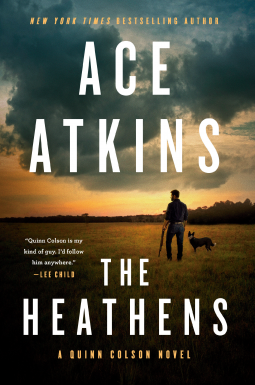
The Heathens - Ace Atkins


The Heathens
is the eleventh novel in Ace Atkins’s Sheriff Quinn Colson series. The series began in 2011 with The Ranger, and Atkins has added a new novel to the series every year since the first one. That is a fairly standard schedule for most series authors, but the remarkable thing about Atkins is that he has been able to keep to his book-a-year schedule even after having been tapped by the Robert B. Parker estate to continue Parker’s outstanding Spenser series of books. Since 2012 Atkins has added ten new novels to that forty-nine-book series. 


As The Heathens opens, Sheriff Quinn Colson is in a good place. He and Maggie have a new baby girl, and Quinn is closer than ever to Brandon, Maggie’s little boy. Maggie, a nurse, and the children have brought new life to the old family farm Quinn has lived on his whole life. Now almost forty years old, Quinn is a genuinely happy man for the first time in his life. Some things, however, never change — and the Byrd family is one of those things. It seems like something is always going on with the Byrds that requires the sheriff’s attention. If it’s not Gina Byrd, a drug addict who regularly suffers physical abuse at the hands of the men in her life, it’s TJ, Gina’s sixteen-year-old daughter, who is accused of petty theft or fighting again. 


But it won’t be so simple this time. Now, Gina Byrd has disappeared, and after her body is found and TJ and her boyfriend Ladarius become suspects in the murder, the teens and TJ’s nine-year-old brother hit the road, always just barely one step ahead of the law. The problem is that Quinn is not the only one chasing them — and not all the chasers are interested in keeping the kids alive long enough to figure out exactly what happened to Gina Byrd. 


Among the chasers is Lillie Virgil, a former deputy of Quinn’s who is now a U.S. Marshal. Unlike Quinn, Lillie is already convinced that TJ and Ladarius are guilty of murder and she is determined to catch up with them. So while Lillie chases the teens from state to state, Quinn investigates the case from Tibbeha County, Mississippi. And the more he learns, the more he is convinced that TJ and Ladarius had nothing to do with the murder of TJ’s mother. The problem is that someone very much wants to see TJ and Ladarius dead rather than in a jail cell. Now, he and Lillie need to catch up with the runaways before their Bonnie-and-Clyde-like chase ends up just like the original one. 


Bottom Line: Longtime readers of the Quinn Colson series feel comfortable in the Tibbeha County setting, and they will enjoy again catching up with their favorite characters (even the bad guys). By this point, the sheriff has done much to clean up the county corruption the former sheriff, Quinn’s own uncle, more often than not turned a blind eye to, but there’s still a lot to do. Some things just never seem to change. 


Ace Atkins

Review Copy provided by Publisher

Monday, June 21, 2021

Short Stories from Wastelands: The New Apocalypse (Part 3)


Continuing with my survey of the thirty-four short stories collected in Wastelands: The New Apocalypse, today's post covers the fifth, sixth, and seventh stories in the book. This trio of stories includes one of the type I would just as soon never read again in my life and two others that I really liked.

Is anyone else as bored by Zombie Apocalypse as I am now? It's become so difficult to avoid stories like "Not this World, Not this War" that they have all started to blend together in my mind. The overkill probably results from the huge success of The Walking Dead television series, but I really think it's time for writers to move on now and go back to being a little more creative with their apocalyptic stories. Jonathon Maberry, to his credit, does give "Not this World, Not this War" a nice twist by putting his main character, a military-trained sniper, in a difficult emotional situation when he learns that the zombie hoard coming for him is made up almost entirely of busloads of small children who were being bussed to safety when they got infected with the zombie-bug. That was enough to save the story for me, but I do hope it's the last zombie story in Wastelands. (But I bet it's not.)

"Where Would You Be Now," by Carrie Vaughn, is my new favorite of the seven stories I've read so far. What I like best about this post-apocalyptic short story is that it focuses more on characters and relationships between characters than it does on the cause of the apocalypse or the violence that follows society's destruction. Instead, Vaughn puts her characters in an interesting setting and lets them show the reader who they are in their hearts and souls. Her story is the first one so far that ends on at least a bit of a hopeful note that good people will survive and be able to adapt to their new world. The title of the story is the question that occupants of the medical camp in which the story is mostly set ask each other when they want to relax and get to know each other better. The title ties directly in to the overall mood of the story and its last two sentences: "It doesn't matter. This is where I am." 

The most optimistic story so far is Timothy Mudie's "The Elephant's Crematorium," a story in which no animal has been able to reproduce for the last seven years, including humans. James and Liyana are alone on what used to be an African elephant preserve, and the surrealistic  aftereffects of the war that devastated the planet have made the world around them - and its dangers - completely unpredictable. Liyana is pregnant, but it's not the first time since the war, and James fears that another pregnancy could cost her her life. Liyana's bigger concern at the moment is finding out why small groups of elephants are spontaneously combusting into piles of ashes. Are they doing it on purpose; is it a kind of suicide pact between the animals? After she figures it all out, a remarkable thing happens that leaves both the humans and the elephants better for the bond they form. Even as surrealistic as this story is at times, I enjoyed more than most because its focus on the characters instead of on the customary violence that is at the heart of so much apocalyptic literature. 

These last two stories, because they show more variety than most of the earlier ones, have left me much more hopeful, even enthusiastic, about reading the rest of the collection, and I'm looking forward to reading four or five more of them this week.