Showing posts with label Library Book (2019). Show all posts

Friday, November 15, 2019

Big Sky - Kate Atkinson

Big Sky is Kate Atkinson’s fifth Jackson Brodie novel, a series she started in 2004 with Case Histories. For a while, it seemed that Atkinson had settled into a routine of producing a new Jackson Brodie novel every two years, with 2006’s One Good Turn, 2008’s When Will There Be Good News?, and 2010’s Started Early, Took My Dog. Then nothing. Nothing, that is, until this year’s addition to the series, so you can imagine how excited Jackson Brodie fans were to get their hands on Big Sky. But nine years is a long gap, and even though I had read three of the first four books in the series, it took me a while to recall enough of Brodie’s personal circumstances for the novel to start feeling more like part of a series again than like a standalone novel. 

This time around, Brodie is living in a quiet (as in depressed) British seaside village where he offers his private detective services to one and all  – although most all of his clients are actually of the type eagerly seeking dirt on their spouses for financial gain. Brodie is a man who barely bothers to take care of himself, but he does seem to enjoy the part-time company of his old dog and his sullen teenage son when one of his ex-wives is too busy to care for them herself. At the moment, Brodie is engaged in gathering proof, including lots of pictures, that one woman’s husband is busily cheating on her. This kind of work is so routine to Brodie that he even leaves his son to keep an eye on the cheating couple for a moment while he buys the boy a promised ice cream treat. His routine, though, is about to get shaken up – and it all starts on the day that Brodie stumbles across a suicidal man standing on the edge of a crumbling cliff.

Brodie is also involved in an internet sting in which he impersonates a young girl vulnerable to sexual predators who use the internet to lure children to their doom. Now, after witnessing a young girl climb into a car that stops along the highway to pick her up, and failing to stop the driver after he loses the man’s car in heavy traffic, Brodie is haunted about what he suspects the girl’s fate may turn out to be. Human trafficking is one of the ugliest crimes on the face of the earth, and almost before he knows it, Jackson Brodie is going to find himself trying to deal with some of the most despicable people imaginable. 

Kate Atkinson
Kate Atkinson is not an easy writer for me to read, and Big Sky is not an exception to the rule. As usual, Atkinson spends much of the novel introducing seemingly unrelated characters and telling their stories in dozens of pages. And even though one knows that the author will tie all the loose ends together at some point, it may be hard for readers initially not to feel that they are starting three or four different novels at the same time. This also means that the central character of the book and the series, Jackson Brodie, is not “on stage” as long or as often as one might suspect (and hope) he would be. Atkinson does, as usual, bring everything and everyone together for a satisfying ending, and many of the characters and subplots we meet along the way are memorable ones, so Big Sky is another worthy addition to the Jackson Brodie series. 

I would be remiss if I didn’t also mention Kate Atkinson’s sense of humor, a tool she employs throughout her books. One of my favorite little throwaways from Big Sky begins with a  reference to the girl Brodie watched climb into the suspicious vehicle previously mentioned (she was wearing a backpack adorned with a unicorn):

            “The Girl with the Unicorn Backpack. It sounded like one of those Scandi noir books that he didn’t read. Jackson didn’t like them much – too dark and twisted or too lugubrious. He liked his crime fiction to be cheerfully unrealistic, although in fact he hardly read anything anymore in any genre. Life was too short and Netflix too good.”

I love that.

Bottom Line: Have a little patience, pay close attention to the subplots, and you will really like Big Sky. Grow impatient, let your mind drift too much, and you won’t. 

Wednesday, September 18, 2019

Machines Like Me - Ian McEwan

Machines Like Me is Ian McEwan’s cautionary tale about a future that we just may not be ready for when it finally arrives. Synthetic humans (robots) are coming and they may be far smarter than we are when they get here. That may not sound like much of a problem, but what happens when the robots figure that out and become bored with us and our human limitations. Will they have the patience to put up with us or will they decide to take over for our own good?  

McEwan ventures into the alternate history genre here to explore some of the what-ifs of the accelerating pace at which we are introducing artificial intelligence and robotics into our everyday world. The novel is set in a 1980s version of the world very different from the one recorded by the history books. Margaret Thatcher is driven from office in disgrace after badly losing the Falklands War; John Lennon is alive and well and the Beatles are still a band; and the Brighton hotel bombing this time does manage to kill a British prime minister (Thatcher’s successor). Oh, and Jimmy Carter wins a second term, John Kennedy survives his trip to Dallas, and novelist Joseph Heller finds fame with a book he titles Catch-18. You get the idea.

Charlie Friend, thirty-two years old and single, takes great pride in the fact that he doesn’t have to answer to any boss. Charlie lives alone in a London apartment where he sits in front of his computer all day long buying and selling stocks, earning just enough to cover his day-to-day needs. He is not the most ambitious guy in the world, and when he learns that what he earns from day-trading stocks is just below the wage of the average Londoner, Charlie is proud that he is doing that well without having to answer to anyone. He is not the type to worry much about his future. Now, though, Charlie is falling in love with Miranda, the student who lives in the flat above his - even though she does not seem to feel the same way about him. But after blowing all the money his recently deceased mother left him on one of the world’s first synthetic humans, Charlie may have just stumbled onto a way of binding Miranda to him. He lets her help him design the personality of Adam, the near-perfect physical specimen who will now be sharing Charlie’s flat. 

Ian McEwan
Miranda, as it turns out, has secrets of her own, secrets that she can’t hide from someone like Adam who never sleeps and spends all of his spare time researching and learning about the world into which he has so suddenly been thrust. And after Adam warns Charlie that Miranda is not really who she seems to be, things begin to get tricky – especially after Adam declares his own love for Miranda.

Machines Like Me explores whether or not artificial intelligence can ever understand human emotions, motivations, and reasoning. Will it be possible for such a created consciousness to grow beyond the black and white rules it has initially been designed to follow? And if not, how will the inevitable conflict be resolved? What is to be done when our synthetic humans decide that they know what’s good for us better than we do. Which of us crosses the line first?

This quote (page 370 of the Large Print edition) should give all of us, researchers included, something to think about: “They couldn’t understand us, because we couldn’t understand ourselves. Their learning programs couldn’t accommodate us. If we didn’t know our own minds, how could we design theirs and expect them to be happy alongside us?”

Bottom Line: Machines Like Me is a bit frustrating at times because of the long, detailed digressions that McEwan strays into that do not always do much to advance the “discussion” of the potential conflict between artificial intelligence and human intelligence - but the patient reader will be well rewarded for his patience. I suppose that Machines Like Me will be most easily appreciated by science fiction and alternate reality fans, but it is a thought provoking philosophical novel as well.

Monday, September 09, 2019

Dreyer's English: An Utterly Correct Guide to Clarity and Style - Benjamin Dreyer


As copy chief of Random House, Benjamin Dreyer has pretty much seen it all – over and over again. A substantial portion of Dreyer’s new writing guide, Dreyer’s English: An Utterly Correct Guide to Clarity and Style, even reads like a “Greatest Hits” list of the writing errors he has seen repeated most often during his two decades with the publisher. Anyone who writes, and with today’s technology all of us write all day long whether or not we realize it, will learn something from Dreyer’s English. That’s the good news; the bad news is that I can’t imagine a book more difficult to review than “An Utterly Correct Guide to Clarity and Style.” If that chore doesn’t bring all your grammatical insecurities to the forefront, nothing will.

I knew I still had a lot to learn when the book’s first chapter, “The Life-Changing Magic of Tidying Up (Your Prose),” began with a challenge not to use for a week what turned out to be five of my favorite words: “very,” “rather,” “really,” “quite,” and “in fact.” And my apprehension only increased when Dreyer went on to add “just,” “pretty,” “surely,” “of course,” “so,” “that said,” and “actually” to the list. Dreyer is not saying never to use these words, only that they should be used sparingly if they are to have much of an impact on the reader.

Dreyer, though, is not as strict as this may make him sound because the second chapter of Dreyer’s English is an explanation of why we should ignore some of the written (and unwritten) writing rules we grew up with. (God bless him). Among other things, Dreyer gives us his blessing to:
·     Begin a sentence with “And” or “But,”
·     Split an Infinitive,
·     End a Sentence with a Preposition (see the first sentence of this paragraph),
·     Use Contractions in Formal Writing,
·     Actively Use the Passive Voice, and
·     Use Sentence Fragments (for effect).

Benjamin Dreyer
Dreyer’s English is broken into two distinct parts, “The Stuff in the Front” and “The Stuff at the Back,” with the second part being largely a series of lists (with explanations and tips) of things such as easily misspelled words, the author’s pet peeves, words easily confused by the writer (or spell check) with other words, notes on confusing proper names, and words that should never be used in connection with other words. Part One focuses as much on grammar as it does on style but proves to be as much fun to read as it is instructive because Dreyer so often uses his keen sense of humor to make his points. This section includes my favorite part of the book, a chapter entitled “67 Assorted Things to Do (and Not to Do) with Punctuation.” Somehow, the chapter managed to clarify some of my longtime uncertainties about punctuation at the same time it was making me feel that my grammar might not be as hopeless as I had feared. (So, of course, it is my favorite part of the book.)


Bottom Line: Dreyer’s English is an excellent style and grammar guide, and it is written in such humorous fashion that it is fun to read – what may be a first in the history of books on English grammar. My one quibble with the book, and it is a big one, is the author’s insistence on so often using President Trump in disparaging or negative terms to illustrate poor grammar or his simple dislike of the man and his policies. It was kind of funny the first two or three times, but the first third of Dreyer’s English is so heavily littered with the remarks and examples that they soon become little more than an irritating distraction. Why turn a book on grammar and style into a personal political statement? Thankfully, there are far fewer of these little throwaways in the final two-thirds of the book.

Sunday, September 01, 2019

Sons and Soldiers - Bruce Henderson

I am far from being a World War II historian, but I have a particular interest in the war’s European theatre and have read a few books on the fighting that took place in that part of the world. Still, for whatever reason, I had not heard of the exploits and important contributions to the war effort made in Europe by a unique group of young men known as the Ritchie Boys before picking up Bruce Henderson’s Sons and Soldiers: The Untold Story of the Jews Who Escaped the Nazis and Returned with the U.S. Army to Fight Hitler.

As Hitler’s intentions toward the Jews became more and more obvious, Jewish parents began to scramble for ways to get their families out of Germany and the rest of Nazi-occupied Europe before it was too late. But there were quotas and other delays to deal with in countries such as the United States and Canada. Ultimately, because obtaining visas and otherwise negotiating all of the paperwork involved in that whole exercise was such a time-consuming process, many thousands of Jews wanting to escape never made it. However, many desperate Jewish families were able to get at least their sons to the United States – and many of these brand-new U.S. citizens could not wait to return to Germany to fight the Nazis who had taken so much from them and their families.

Bruce Henderdson
Rather surprisingly (and I’m honestly surprised here because the military does not always work this way), someone in the U.S. Army had the foresight to understand just how big an asset these Ritchie Boys could be if used as interrogators of captured German prisoners. They knew the language, they intimately understood the culture that had spawned their prisoners, and they knew just how to provoke (or trick) those prisoners into revealing much more than they wanted to reveal to their interrogators. And they knew precisely how best to put the pieces of gathered intelligence together in order to do the most damage to the German army possible. 

Ritchie Boy intelligence teams were assigned to all the major combat units in Europe. They jumped out of airplanes in France with the 82ndAirborne, they fought their way from Normandy through Belgium and the Netherlands, and they were deep inside Germany when the war in Europe finally ended. It is estimated that some sixty percent of the intelligence gathered in Europe during World War II originated with the Ritchie Boys. Not only did these men face certain death if captured and identified as German Jews by the German army, they faced a similar threat from U.S. soldiers who often found it difficult to distinguish them from the German infiltrators who sometimes wore the uniforms of captured or killed American soldiers. Despite these special dangers, the Ritchie Boys contributed greatly to the Allied effort to defeat Hitler, and they saved thousands of lives in the process.

Bottom Line: Sons and Soldiers reveals a long-kept secret about a group of young men who deserve much more honor and credit for what they accomplished during World War II than they have received.  Bruce Henderson’s account of the war experiences of six of these men is well researched and reads almost like a war thriller at times. What the Ritchie Boys did was remarkable, and it is a shame that it took this long for a book like this one to be written about them.

Tuesday, August 27, 2019

The Girl in Red - Christina Henry

My Favorite 2019 Book Cover
I have been a fan of dystopian novels for as long as I can remember, but that’s not really what drew me to Christina Henry’s excellent dystopian offering, The Girl in Red. What did it instead was my fascination with the book’s cover art depicting a girl in a red hoodie carrying a large axe over her shoulder as she walked through the forest. It was only at second glance that I even noticed that the forest floor was also the back of a huge black wolf with red eyes. I mean, come on, how cool is that? And for about a month, that cover seemed to be everywhere I looked, so I knew I would be reading this one sooner or later.

Christina Henry is, to say the least, an imaginative author. She has already written a “historical fairy tale” based on P.T. Barnum’s Fiji Mermaid exhibit, two books giving a whole different take on Alice’s Adventures in Wonderland, and a Peter Pan prequel of sorts featuring Captain Hook. In addition, she has a seven-book bestselling fantasy series  called Black Wings featuring an Agent of Death and her gargoyle sidekick. So, this Little Red Riding Hood rewrite fits right in there.

Red, much to the dismay of her Shakespeare-teaching mother, has grown up on dystopian novels and horror movies. And because she has treated those books and movies as an end-of-the-world instruction manual, she is better prepared than most to help her family survive the mysterious virus that is doing its best to wipe out the human race. Red, though, seems to have forgotten the most instructive aspect of all those apocalypse books and movies she’s devoured over the years: surviving the initial life-changing catastrophic event is just the beginning. Now comes the big problem of what people turn into and what they are willing to do to each other in order to survive the aftermath.

But Red has a plan. She, her parents, and her brother need to get to Grandma’s house.

Christina Henry
It’s not safe in the woods, however, and it’s a long, long walk to Grandma’s house. The military is out in force looking to roundup any survivors they find so that they can be moved to  quarantine camps that actually do more harm than good by mixing healthy people with those already infected by the virus. And those are the good guys. The bad guysare the paramilitary groups whose members seem to have little on their minds other than how they can sexually exploit the women and children they run across in the woods. Yes, there are a whole lot of two-legged wolves in the forest but maybe, just maybe, the real Big Bad Wolf is Red, not them. 

Bottom Line: The Girl in Red is particular fun for a couple of reasons: its take on the Little Red Riding Hood fairy tale and the fact that the book’s central character is herself such a huge fan of exactly this kind of novel – upping her odds of postapocalyptic survival. My one quibble with this one is its rather abrupt “25 Days Later” ending that so completely changes the tone of the 291 pages that preceded it. It couldn’t have been that easy, and the ending feels like a little bit of a copout. 

Friday, August 23, 2019

The Eighth Sister - Robert Dugoni


It was only after I read Robert Dugoni’s The Extraordinary Life of Sam Hell that I learned the author is probably better known for the two series that he continues to add to, the David Sloane series (of five books) and the Tracy Crosswhite series (of six books), than he is for his three standalone novels. I was suitably impressed by Sam Hell and decided to explore the author’s backlist a bit. Before I could do that, however, I got sucked in by a brand-new Robert Dugoni spy thriller called The Eighth Sister that has left me more determined than ever to check out the Dugoni backlist.

The Eighth Sister impresses me as kind of a throwback to all those Cold War era spy novels that I’ve read and enjoyed over the years except that it’s a little more cynical than I remember most of those novels as having been. There are the usual agents, double agents, even the semblance of a team-rivalry between the various spy agencies (both domestic and foreign) in this one, but what strikes me as most unusual is Dugoni’s decision to use a 6-foot five black man as his spy hero. After all, it will not be easy for a man like Charles Jenkins to blend into the background in Mexico and Russia, the two countries in which Jenkins works for the CIA. I admit to being a bit skeptical at first but realized soon enough that this kind of challenge makes the Charles Jenkins character even more fun than he otherwise would have been.

Robert Dugoni
Charles Jenkins is in his early sixties and he has not worked for the CIA in decades, ever since becoming so disillusioned with the agency that he walked away from it without a word to his superiors. Jenkins, married with a young son and a baby on the way, now runs a security consulting business that is struggling to fight off what seems to be an imminent declaration of bankruptcy. So, when his old Mexico bureau chief shows up at his door and offers Jenkins a CIA assignment that will pay him enough money to save his business and his home, he reluctantly agrees to take the job. A Russian agent is identifying and killing, one-by-one, a group of seven Russian women (known within the agency as the seven sisters) who have been spying for the U.S. for a number of years. That deadly Russian agent has been dubbed the eighth sister – and the CIA wants Jenkins to find her. 

But when Jenkins does identify the eighth sister, he learns that she is not at all what he expected her to be – nor, it seems, is anyone else with whom he’s been dealing. Now he will be lucky to get out of Russia with his life, much less save the lives of the four surviving sisters.

The Eighth Sister is a fast-paced thriller that turns out to be almost a chess match between Jenkins and the Russian agent who is chasing him across Russia. The two men are so well matched, in fact, that they grudgingly begin to respect each other’s abilities and to plan their next moves accordingly. Jenkins may be a master of misdirection, but after the Russian begins to take that particular talent of his into account he draws closer and closer to the fleeing American. Little does Jenkins know, though, that even if he makes it out of Russia, he will have to face an even more powerful enemy that wants to destroy him.

Bottom Line: The Eighth Sister is a highly atmospheric and well-researched spy thriller that is sure to please fans of the genre. Dugoni’s descriptions of the Russian winter almost gave me frost bite, but I still enjoyed this one so much that I want to explore the Dugoni backlist now more than ever. Good stuff.

Thursday, August 15, 2019

Chances Are - Richard Russo

Richard Russo is one of those writers who has not felt compelled to publish a novel every year just because so many of us have come to expect that from our favorite authors – and his slower pace is reflected in the consistently high quality of his work. Russo, who was first published in 1986 (Mohawk), won the Pulitzer Prize for Fiction some sixteen years later with what was only his fifth book, Empire FallsChances Areis only his ninth novel (he has also published two short story collections, a memoir, and a collection of essays) in a career that now spans something like thirty-five years. And it is one very fine novel.

It’s September, and most of the tourists and summer residents have finally packed up and left Martha’s Vineyard for another year. But three sixty-six-year-old men, friends since they first met as college freshmen, have decided to spend a weekend on the island catching up and reminiscing about the experiences they shared in the crazy 1960s. The men are still close friends but have not been together for ten years, so there is a lot to talk about. The real question is how willing they are to share some of the secrets they’ve been hiding from each other.

Lincoln is now a commercial real estate broker in Las Vegas where he lives with his wife, the mother of his six children. As he tells it, he is financially comfortable now, but he was a much richer man in 2008 before the crash. Consequently, Lincoln is under some pressure to sell the Martha’s Vineyard property he inherited from his mother. Teddy is an academic who runs a tiny press for a university in Syracuse and has discovered that he is very good at fixing things – especially broken books. Mickey, who lives in nearby Cape Cod, is a musician who fronts a regionally-popular band and enjoys much the same lifestyle that he has lived since he was in his twenties.  Of the three men, he is the one who seems to have changed the least since they went to school together in Connecticut.

Richard Russo
However, there is someone missing from this reunion, and all three men feel her absence deep down inside themselves. Jacy was the sorority girl they were all in love with, each of them secretly hoping that he would be the one Jacy chose to spend the rest of her life with – despite how guilty they still feel about having been so willing to betray the trust and friendship of the other two Musketeers if that’s what it took to win Jacy’s love. But then, in 1971 during their last weekend together, Jacy disappeared from the island, never to be heard from again, and that kind of betrayal became unnecessary. 

What, though, happened to Jacy? Her disappearance was never solved, and when Lincoln starts asking questions about that weekend, disturbing answers begin to surface.

Chances Are, despite the unsolved mystery it centers itself around, is not really a mystery novel. Rather, it is a literary novel that depends on its exceptionally well-developed characters to keep its readers turning pages. Russo proves himself to be such a master of misdirection here that his readers are certain to be fascinated as the author subtly reveals one clue after the other about who Lincoln, Teddy, Mickey, and Jacy are and how they became those people. And, too, this one has one of the most satisfying and well-written endings that I’ve read so far this year. Chances Are is one I’ll be recommending to my friends for years to come.

Sunday, August 11, 2019

The Lost Girls of Paris - Pam Jenoff

After reading three novels by Pam Jenoff, I’ve rather reluctantly come to the conclusion that the author is a romance novelist disguised as a writer of historical fiction. That kind of thing is far enough from my reading tastes that I’m not sure why it took me this long to figure it out. The romance around which The Winter Guest is built is integral to the plot, so I never wondered why it was there. But in rereading my 2011 review of The Things We Cherish, I see that the romance in the “present day” section of the novel struck me as a waste of precious pages that could have been far better used to advance her core plot. And now, there’s The Lost Girls of Paris, a novel that has an implausible romance as a key element of its 1944 section and an equally silly one in its 1946 section. 

But that’s hardly my main problem with Lost Girls. No, this one commits what I consider to be the mortal sin of novelists: Instead of showing me what happens in the book’s climax, Jenoff tells me what happened– all in a brief recap.  A build-up of over 350 pages suddenly comes to a screeching halt in the book’s last two or three pages; that’s just not right, and I still feel cheated. 

So, what’s The Lost Girls of Paris about? Well, it does have the kind of plot that could have resulted in an excellent piece of historical fiction. Grace Healey, a young woman  late for work, stumbles upon a lost suitcase in 1946 Grand Central Station. She knows she shouldn’t do it, but Grace indulges her curiosity long enough to open the suitcase for a quick look – and then walks away with the photographs of twelve young women she found inside.

Pam Jenoff
Grace, who lost her husband in an accident shortly before he was to be deployed to his WWII duty station, feels a kinship with this group of women that she can’t explain to herself. But it is only when she figures out who the suitcase belongs to, and that the twelve women were all deployed out of London into Occupied Europe to help prepare France for the Allied invasion, that Grace realizes that she will not be able to rest until she figures out what happened to the women in the pictures. And what she learns is not pretty.

The Lost Girls of Paris follows a familiar pattern for Pam Jenoff novels in that it simultaneously tells two stories set a few years apart through the viewpoints of multiple characters. This time, one of the plots runs through 1944 and the other occurs in 1946, and there are three distinct narrators (Grace; the woman who lost the suitcase; and one of the women whose picture is found in the suitcase). It is an interesting enough book to make me want to learn more about the Special Operations Executive (SOE) authorized by Churchill and the men and women sent behind enemy lines to sabotage and otherwise subvert Germany’s attempt to conquer the world. That’s something I want to learn more about even though (or maybe, especially because) the novel’s characters are so poorly developed that they never quite seem like real people in real danger. I'm disappointed because this one could/should have been so much better than it is.

Thursday, August 08, 2019

Furious Hours: Murder, Fraud, and the Last Trial of Harper Lee - Casey Cep

Most readers know that Harper Lee only wrote one book, the classic To Kill a Mockingbird, and that she suffered from a complicated kind of writer’s block for the rest of her life. That the rather infamous Go Set a Watchman was published in July 2015 really doesn’t change that fact, becauseWatchman is really nothing more than Lee’s failed first attempt at having a novel published. She was asked to re-write Watchman from the point of view of Scout as a child and to limit the book’s plot to an incident from the 1930s. She did so, and the rest is history. So, Go Set a Watchman is just the failed first draft of To Kill a Mockingbird, and I wish it had never been published. And considering the state of her health in 2015, I have to wonder if Lee truly realized what publishing that failed manuscript would really mean to her legacy– or if she even realized it was being published at all. 

But the bigger question is why Harper Lee was never able to complete another book. What was she doing all those years between the immediate explosion of Mockingbird and her death? Casey Cep’s Furious Hours: Murder, Fraud, and the Last Trial of Harper Lee provides some of the answers to that literary mystery.   

Furious Hours is really three books in one. The first half of the book details the life and crimes of one Reverend Willie Maxwell, a preacher in rural Alabama who in the 1970s was accused of murdering five members of his family in order to cash in on the numerous life insurance policies he had purchased on their lives. There is little doubt that Maxwell was a serial murderer, but authorities were never able to collect enough evidence to convict him of any of his crimes. Maxwell, however, did not get away with murder. Instead, he was himself shot at pointblank range while attending services for one of his own victims. The resulting trial of Maxwell’s killer was sensational enough that it caught the attention of Harper Lee, and she traveled from her New York City apartment back to Alabama to see what would happen. She believed that she had finally found her next book, and she was hoping that it would be as big as Truman Capote’s in Cold Blood, a book for which she was largely responsible.

Most of the second half of Furious Hours is a concise Harper Lee biography. But it is the kind of biography that seeks to understand its subject’s mental state as much as the simple facts of her life. Harper Lee was a very private person, with a few close friends and colleagues (most of whom never even saw the inside of her apartment in the decades they knew her), and she liked it that way. She refused to talk about To Kill a Mockingbird or what she was currently working on, and even the neighbors who lived on the same apartment building floor as her for years had no idea that she was a world-famous author. She was also a woman who drank to excess (whether this was a cause or an effect of her writer’s block is debatable) and suffered from depression to the extent that her friends and her two sisters worried greatly about her state of mind. According to Casey Cep, “after three dark decades” Lee’s life finally took a turn for the better when she finally admitted to herself that she would never finish the book about the Maxwell murders – or any other book. The relief she felt was obvious to those around her and it showed in her correspondence. 

The final chapter of Furious Hours, titled “The Long Good-Bye,” comprises what I consider to be the book’s third distinct section. This is an accounting of Harper Lee’s final years, including what her life was like after her March 2007 stroke, and it includes the circumstances surrounding publication of the infamous Go Set a Watchman manuscript that in so many ways would have been better off never seeing the light of day.

Bottom Line: Furious Hours is a worthy addition to the study of Harper Lee and her work, and it helps explain why she never completed another book after the overwhelming success she experienced with To Kill a Mockingbird.True crime fans will be intrigued by the utter audacity of a killer like Willie Maxwell, but readers wanting to learn more about why Harper Lee seemed to shut down after Mockingbird are going to find a goldmine here.

Wednesday, August 07, 2019

Pretty Girls - Karin Slaughter


Warning: Karin Slaughter’s 2015 crime thriller Pretty Girls is not for readers who have weak stomachs or especially vivid imaginations. In fact, this one, with its graphic depictions of bondage and torture, makes the run of the mill Stephen King horror novel read like something from the pen of Jane Austen. 

Two decades ago, three sisters, the eldest of them nineteen years old, were part of a close-knit Southern family. Julia was a college freshman living away from home for the first time in her life, and her younger sisters, Lydia and Claire, were still at home with their parents. The girls were growing up, and although their parents were not thrilled about that prospect, their future seemed to be a bright one. But everything changed on the night that Julia disappeared while making the short walk back to her dormitory room from a local bar. Julia was never found or heard from again, and her family came apart at the seams. Lydia and Claire barely acknowledge the existence of the other now and have not spoken for at least twenty years. It is like Julia’s abductor killed the whole family – because he did.

Karin Slaughter
Today, Lydia is a single parent raising a sixteen-year-old daughter of her own and dating the ex-con who lives next door. Claire, on the other hand, is married to a multi-millionaire architect and living the good life in Atlanta. Their worlds and their lives could not be more different. But worlds have a way of colliding, and theirs are about to do exactly that. It is only after Claire suffers a tragedy of her own that she discovers that the life she has been living for the last two decades has been nothing but an illusion. Everywhere she looks, she learns more of the shocking truth – and when the cops and the FBI start threatening her, Claire realizes she can trust no one with what she has learned; she is on her own. 

And then Lydia knocks on Claire’s front door and refuses to leave. 

This is the point in the book where squeamish readers may start second-guessing their desire to continue reading Pretty Girls. Claire soon discovers exactly what happened to her sister all those years ago, and that it also happened to a lot of other girls who looked a whole lot like Julia. What Julia suffered is disturbing on its face, but the graphic details of torture, bondage, and humiliation described by Slaughter bring Pretty Girls to a level of horror that few thrillers of this type even attempt – and this is a long book. Just be warned. 

While I can admire Slaughter’s writing and story-telling skills, I don’t feel right in saying that I “enjoyed” this one or that it “entertained” me. If it had not been an audiobook that I started while on a road trip (and the audio reader makes the torture scenes especially real), I’m not sure that I would have even finished it. But it was one hell of a ride, and I won’t soon forget it – hard as I may try to do so.

Saturday, August 03, 2019

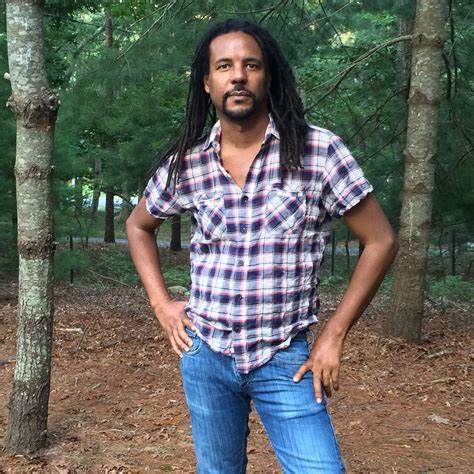
The Nickel Boys - Colson Whitehead

The Nickel Boys is Colson Whitehead’s first novel since the immense success he had with The Underground Railroad.That one won six major literary prizes, including a National Book Award for Fiction in 2016, the Pulitzer Prize for Fiction in 2017, and the Carnegie Medal for Excellence in Fiction in 2017 – not to mention also being longlisted for the Booker Prize in 2017. A lightning bolt like that one is, of course, unlikely ever to strike Whitehead again, but The Nickel Boys is an outstanding novel, and its two main characters are memorable ones.

Elwood Curtis, a young black boy growing up in the Jim Crow era Tallahassee of the early 1960s, lives alone with his grandmother because a few years earlier his parents left him behind like an abandoned piece of furniture when they decided to leave for California in the middle of the night. They didn’t even wake the boy up to say goodbye. But with his grandmother’s guidance, Elwood has done so well that he is now a high school senior who will soon be attending college. However, even hard work cannot always compensate for simple bad luck, and because of one innocent mistake, Elwood is sentenced to a juvenile reformatory known as the Nickel Academy before he ever makes it to the college.

At first, Elwood thinks he may have gotten lucky in being assigned to Nickel because there are no walls around the facility and daily classroom instruction is provided for all of the reformatory’s inmates. He is shocked, however, when he finds that the boys in his class are struggling with the same first-grade primers that he mastered a decade earlier. The reality of the Nickel Academy is that it is staffed by a group of racist predators who seem to enjoy nothing more than beating and sexually abusing the boys under their supposed care. The academy is as segregated as any part of the Jim Crow South, and anything designated – dormitories, the mess hall, classrooms, books, uniforms, food – for use by its black population is definitely second class in comparison to what the white inmates receive. 

Colson Whitehead
Elwood knows, though, that if he just stays out of trouble and does everything asked of him, he will be able to earn an early release from Nickel. And that’s exactly the plan he sets out on right up until the moment he rashly decides to defend a smaller boy being bullied by three or four much larger thugs. Now labeled a troublemaker, Elwood learns firsthand what happens to those boys who are whisked away for punishment in the middle of the night – some of them never to be seen again. Only a few months before his incarceration, Elwood discovered the speeches of Dr. Martin Luther King, and now he relies on King’s message of non-violent protest and perseverance to get him through his roughest days. 

But as Elwood learns the hard way, if he is going to survive his time in Nickel, he will need more help than mere words will ever be able to provide.  He needs a friend he can trust, someone who will watch his back in an environment where neither staff nor fellow academy inmates should ever be trusted. That friend is Jack Turner, a less academic but more skeptical and worldly boy who understands exactly what is a stake in Nickel Academy and needs a friend of his own.

According to Whitehead, The Nickel Boys is based on the Dozier School for Boys that operated in Marianna, Florida, for 111 years before it was finally shut down. The author uses much of what he learned about the brutality of the Dozier administrative staff in his depiction of what Elwood and others endure at Nickel Academy. Whitehead’s message, other than his reflection on life in the Jim Crow era, is that even those who managed to survive incarceration in places like Dozier and Nickel had their lives forever warped by the experience. Few of these boys managed to become the men they otherwise would have been – and for the most part, no one was ever punished for what they did to them.

Thursday, August 01, 2019

Us Against You - Fredrik Backman

Us Against You is Fredrik Backman’s sequel to Bear Town, a book about a remote Swedish town’s utter devotion to its local hockey teams (Junior and Senior). As I pointed out in my review of Bear Town both of these two books are very fragile, in the sense that even one or two key spoilers will tremendously lessen their emotional impact. For that reason, I’m going to be particularly careful not to spoil them for future readers. 

Essentially, Us Against You picks up from where Bear Town leaves off. Bear Town and the neighboring town of Hed are at each other’s throats, mainly because Hed is in the process of stealing all of Bear Town’s best young players, but the animosity and jealousy between the two towns runs much deeper than that.  Bear Town’s junior hockey team has imploded because its star player, a boy everyone believes to be destined for stardom in the NHL, has committed a crime that cannot be ignored – the kind of crime that too many young athletes blessed with superior physical ability expect to get away with because they are so important to their team. Now, opinion in Bear Town is split, and it’s not anything close to an even split. Most of the townspeople want so badly to believe the boy’s denials they pretend that they do even if they don’t. They prefer to blame the victim if, they say, there even wasa victim. And those who dare openly to express a feeling that the player is guilty will learn the hard way that there is a price to be paid in Bear Town for not being a “team player.” 

So, this is not just a war between Hed and Bear Town. Bear Town is suffering its own civil war at the same time.

Fredrik Backman
There are lots of characters in Us Against You, some of them more essential to the main plot than others – but they are all there for a reason. Backman tells the Bear Town story in episodic fashion; short, alternating glimpses of what certain characters are doing separately and together at any given moment. Some of the episodes overlap in real time and others serve to bring the action forward chronologically. The effect of seeing these characters so many times and in so many different settings is that they soon distinguish themselves from one another so clearly that even the minor characters take on lives of their own. 

Us Against You is most definitely a coming-of-age novel, and it’s a good one. But that’s not all it is. Backman explores the meaning of team sport to its fans and asks the eternal question of whether a sport like hockey is just a game to amuse its fans or if it is something more than that. Obviously, to the people of Bear Town and Hed, it’s much, much more than a game; it’s their source of town pride and - be it a good thing or a bad thing – team pride is what distinguishes the citizens of one town from the other. But when team pride becomes this tribal, bad things are going to happen. 

Bottom Line: Us Against You is one of those rare sports books filled with memorable characters ranging all the way from a twelve-year-old boy who will do whatever it takes to avenge his sixteen-year-old sister, to a female hockey coach with zero social skills, to an old woman who has been running one of the town’s few watering holes her entire life, to a hockey coach who believes he would die if he had to leave the game, to a four-year-old girl who is so hockey crazy that she runs away from pre-school in order to practice her shot, to three sisters who had to take over the role of father to their little brother, and on and on. These are just a few of the characters in this story, and I feel like I personally know every single one of them. 

Bear Town and Us Against You are two of my favorite books of 2019. They fit so seamlessly together that they remind me of binge-watching two seasons of a favorite Netflix season. Us Against You is not just for hockey fans (I’m certainly not one), and it is not entirely necessary to read Bear Town before reading Us Against You, although I would recommend that you do so. Bear Town left me angry; Us Against You left me with tears in my eyes.

Book Number 3,423

Wednesday, July 24, 2019

The Bar Harbor Retirement Home for Famous Writers (and Their Muses)

The title of The Bar Harbor Retirement Home for Famous Writers (and Their Muses) intrigued me when I ran across it in my Library’s online catalog of audible books.  I could easily picture in my mind what such a place might look like, and I could just imagine the kind of conversations that would be heard there every day.  But as it turns out, even though I was pretty much right on both counts, I still didn’t really enjoy this one very much. And that is mainly because the novel being written within Bar Harbor Retirement Homehas such a predictable romance-novel plot, that I dreaded those long sections of the book during which that story is told.

Alfonse Carducci was one of the literary giants of his day, but now he’s come home to die in the retirement home he and his male lover designed both as a retreat for themselves and as a place that famous writers, agents, editors, etc. could spend their final months and years in the company of likeminded people.  Alfonse’s life has been one of excess, and now he is paying the price for the reckless way he lived his life. However, it is his chronic writer’s block that depresses Alfonse even more than his shaky health. But things take a sudden turn for the better when Cecibel Bringer, a young orderly, comes into Alfonse’s life.

Terri-Lynne DeFino
Cecibel has emotional baggage of her own due to an accident that left her so disfigured that she never allows anyone – even her favorite author in all of the world, Alfonse Carducci - to see the ruined side of her face.  The ever-flirtatious Alphonse almost immediately begins to work his magic on Cecibel, and as the young woman falls more and more in love with the old man, she begins to lose her self-consciousness about her appearance.  At the same time, Cecibel unknowingly works her own magic on the elderly author.  Now, Alphonse has found his muse, freeing him to co-author a novel alongside two other retired “giants” of his day.

This is the origin of the “novel within a novel” that I found to be too predictable and by-the-numbers to be represented as the work of three of the supposed greatest writers ever produced by this country.  And when the fictious novel is given as much space as the actual novel, and the plots of the two began to intersect closely, I lost interest in both of them.

Bottom Line: This one disappointed me, but that is probably because I am not even remotely a fan of romance novels; fans of that genre are likely to have an entirely different take on this one.  Too, I expected a very different novel than the one I got, and the letdown resulting from my high hopes crashing to the ground may very well have amplified my level of disappointment in Bar Harbor Retirement Home.  I suspect that the author knows her target audience well - but I am not one of them.

(Written after midnight in a Eunice, Louisiana hotel room after a day of driving in which the same tire went flat two times - the second time after having been "repaired" by a Discount Tire store in Beaumont, Texas.)

Book Number 3,420