Tuesday, January 11, 2022

Get Back - The Beatles, Peter Jackson, Hanif Kureishi, and John Harris


Although Get Back includes a Foreword from Peter Jackson, an Introduction from Hanif Kureishi, and an Afterword from John Harris, the Beatles are rightfully credited as authors of the book. The bulk of Get Back is verbatim dialogue taken directly from the 120 hours of tape recorded in January 1969 while the Beatles were trying to figure out for themselves if they were working on a TV show, a documentary, a live appearance, or simply their next album (Let It Be). As such, the book makes for the near perfect companion piece to Jackson’s almost eight-hour documentary recently released on Disney+. 


Beatles fans know, of course, that what happened in January 1969 also marked the beginning of the end of The Beatles as a band. Rather than ever again performing live as a band or collaborating in any real sense, the Beatles were on the verge of embarking on solo careers, something that everyone but Ringo Starr seemed keen to do. Inevitable as the breakup was, it still marks a sad moment in the lives of contemporary fans of the band, a moment they still remember well. 


But, as Hanif Kureishi puts it:


“Don’t cry about it. The end of The Beatles was as necessary as it was inevitable, as important and liberating as the end of any relationship. The Sixties were done; the Seventies would be darker and The Beatles were only rarely a dark band. Something else, far harder and crueler would be required. After Abbey Road there would be Bowie’s Hunky Dory.”


Get Back is presented in three acts: “Act One: Twickenham Film Studios,” “Act Two: Apple Studios,” and “Act Three: The Rooftop.” The acts are further broken down into separate conversations for each day that The Beatles worked at the specified location, clarified in part by noting what songs were rehearsed, who else was present but silent, and what activities were happening in the background. 


Keep in mind that this is what is often referred to as a “coffee table” book, an oversized book using heavy, glossy paper that includes dozens of specially selected photos taken at the time by photographers Ethan A. Russell and Linda McCartney (wife of Paul McCartney). The thing weighs in at over four pounds, and feels even heavier than that for some reason; this is a quality product. Reading Get Back may not be the same as watching Peter Jackson’s stunning documentary, but it is definitely the next best thing. Even better, is doing both.


I’ll close with one final quote from Mr. Kureishi:


“They had to escape. And we had to let them go. We owed them that, after what they’d done for us. The four of them would go on working, playing and entertaining us. It was their living, their life and destiny. Our tribute is to play the records and hand them on to our kids, while thanking the band, and being grateful every time we hear those voices for some of the most beautiful pop songs ever created.”


Yes. 


Apple Studios, January 21-31, 1969


Sunday, January 09, 2022

Wednesday's Child - Peter Robinson


Wednesday’s Child
(1992) is the sixth of Peter Robinson’s twenty-seven Inspector Banks novels. Even though I have already read the latest three novels in the series, it was not until I decided to start reading the Banks series from the beginning, and got into book number five (Past Reason Hated), that I finally began to much warm up to Banks and his crew. Robinson, to that point, seemed content to write very good, straightforward police procedurals more than the kind of crime book that most appeals to me: those in which the main and supporting characters are so fully developed that I can begin predicting their reactions to whatever situation they confront in each new novel. Simply put, that’s when it all becomes real to me.


Wednesday’s Child picks up much from where the previous novel ended. Alan Banks, now forty years old, is still happy with his decision to have left London for the slower pace of life he and his family enjoy in northern England. His home life, however, is not what he wishes it were now that his son has begun university studies half way across the country and his daughter much prefers the company of her teenaged friends to that of her parents. And now, Banks’s wife seems to blame his impatience for much of the friction between them and their daughter. It doesn’t help, of course, that Banks often works the kind of hours that cause him and his wife to live almost separate lives for weeks at a time. 


But first and foremost, Alan Banks is a cop who tends to take crimes committed on his home turf personally — especially those crimes that victimize children. When seven-year-old Gemma Scupham is taken from her home by fake social care workers, Banks knows that if he doesn’t find the little girl quickly, he will almost certainly never find her alive. He also knows that Gemma is not being held for ransom because the girl’s mother, who depends on government payments for support, is incapable of paying any ransom at all to get her daughter back. So now, considering what is likely happening to the little girl, it is all hands on deck. Even Detective Superintendent Gristhorpe, more administrator than field investigator these days, is back in the field. 


After a body is discovered by sheer chance inside a remote, abandoned mine, Banks is removed from the kidnapping case so that he can handle the murder investigation. But then something strange happens. Some of the same names, and leads, begin to appear in both investigations — and if the little girl has any chance of survival, Banks and Gristhorpe know that it will take their combined efforts to save her. The race is on.


Bottom Line: The Inspector Banks series is not one I might still be reading if I had first begun reading the books in the order in which they were published. I am grateful that I started the series from the wrong end, after Banks had become more of a fleshed-out character than he is in the early books. Take this as the word of encouragement it is meant to be: the Alan Banks character should not be given up on too soon because like me, in the end, you just might start calling Alan Banks one of your favorite fictional detectives of them all. 


Peter Robinson


Friday, January 07, 2022

Edna Ferber, Detective (Ed Ifkovic Mystery Series)


That so many of my favorite book blogs are authored by fans of series crime fiction has resulted in me now following/reading something near two dozen such series. And because more than a few of those series were several years old by the time I finally became aware of them, the backlists involved are lengthy enough to provide me with years of fun reading to look forward to.

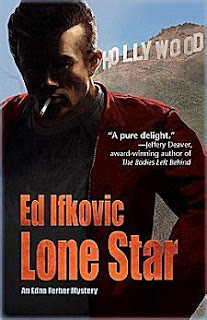
Even so, there's always room for one...or several...more, and that's why I want to ask if any of you are currently reading the "Edna Ferber, Detective" series featured in the latest Mystery Scene magazine (number 170). Ed Ifkovic began using author Edna Ferber as a fictional detective in 2009 and has averaged almost a novel per year since then:

  • Lone Star (2009)
  • Escape Artist (2011)
  • Make Believe (2012)
  • Downtown Strut (2013)
  • Final Curtain (2013)
  • Cafe Europa (2015)
  • Cold Morning (2016)
  • Old News (2017)
  • Mood Indigo (2018)
  • Run Cold (2019)
  • Indian Summer (2020)


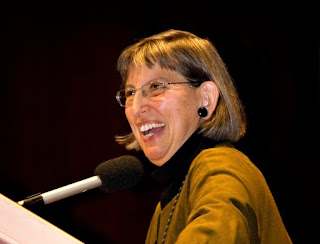
Series Author Ed Ifkovic

According to the Mystery Scene article, the novels jump back and forth between the various decades of Ferber's life and career, so it doesn't sound as if there is any particular benefit to reading them in order. That said, I did decide to take a look at the series via its first book because that one is set during the filming of Ferber's novel Giant in 1955. Elizabeth Taylor, Rock Hudson, and others involved in the movie are included as characters in Lone Star, but the primary focus is on actor James Dean because the murder victim in the story is a woman who has accused Dean of fathering her child. 

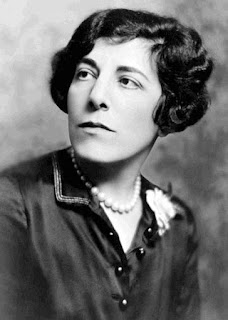
Edna Ferber in 1928

Edna Ferber (1885-1968) was the author of numerous novels, plays, novellas, and short stories. Among her most famous were the Pulitzer Prize winning So Big (1924), Showboat (1926), Cimarron (1930), and Giant (1952). I particularly admire the dedication in her 1938 autobiography: "To Adolph Hitler, who has made me a better Jew and a more understanding human being, as he has millions of other Jews, this book is dedicated in loathing and contempt." 1938, this was.

I have a vague recollection of seeing this series mentioned on another book blog, and I know that the books are not going to be new to all of you, so please do let me know what you think of them.

Thursday, January 06, 2022

Little Big Man - Thomas Berger


I only discovered Thomas Berger’s 1964 novel Little Big Man after watching its 1970 movie version starring Dustin Hoffman in the title role. But coincidentally, this week's second reading of the book coincided almost perfectly with the fiftieth anniversary of the first time I read it — and it turned out to be as entertaining as ever.


The novel’s main character, Jack Crabb, is the Forrest Gump of the second half of the nineteenth century. Despite dying at 34 years of age before he could complete his memoir, Crabb tells of his experiences and/or friendships with the likes of George Armstrong Custer, Wild Bill Hickok, Calamity Jane, Wyatt Earp, and others. Much like the fictional Forrest Gump would do in his own part of the country decades later via novel and film, Jack was everywhere out West where anything of consequence seemed to be happening, including the Battle of the Little Big Horn.


The fictional editor responsible for getting Little Big Man’s memoir into print put it this way:


“It is of course unlikely that one man would have experienced even a third of Mr. Crabb’s claim. Half? Incredible! All? A mythomaniac! But you will find, as I did, that if any one part is accepted as truth, then what precedes and follows has a great lien on our credulity. If he knew Wild Bill Hickok, then why not General Custer as well?”


Jack Crabb’s big adventure begins when his father converts to Mormonism and decides to move the family cross country to Salt Lake City. Unfortunately for Mr. Crabb and his family, an Indian raid on the wagon train the family was a part of ended their move well before its intended destination. The good news is that not everyone in the family was killed in that raid; the bad news is that Jack and his older sister were carried away by the raiders. Jack’s sister, who had talked the Indians into taking Jack along in the first place, manages to escape early on, but she does so without including Jack in her escape plan. And that’s how Jack became the adopted son of an Indian chief and survived to have all the adventures captured in Little Big Man.


For the next quarter of a century, Jack will move between the white world and the Native American world each time he needs to save his life from one side or the other. Whenever he finds himself on the losing side of any battle between the Americans and the Indians, Jack manages to switch sides just in the nick of time in order to survive and begin a new set of adventures. He is so good at saving his own neck, in fact, that by the time his memoirs have attracted some interest, Jack Crabb is 111 years old and still feisty as ever. 


Bottom Line: Little Big Man is great fun despite the tragic events the novel vividly portrays as Jack Crabb negotiates the two very different cultures he spends time in. It is the story of America’s westward expansion and the simultaneous near elimination of a race of people who already called this country home. It is a farcical view of American history that still manages the kind of emotional impact that serious, nonfiction history books do not always achieve. Little did they expect it, but fans of Little Big Man were to be rewarded 35 years later with the publication of Berger’s The Return of Little Big Man. How did Jack manage to tell the rest of his story? I’ll leave that up to you to find out because it’s all part of the fun. 


Thomas Berger


Tuesday, January 04, 2022

Crime Hits Home - S. J. Rozan (Editor and Contributor)


Crime Hits Home
is a nice collection of crime related short stories exploring the most jarring type of crime imaginable, those that invade a victim’s most personal space: the home. Keep in mind that, as S. J. Rozan points out in her introduction to Crime Hits Home, “home” does not mean the same thing to everyone. Some people, Rozan says, are living in the home they want to spend the rest of their lives in, others hate where they are, and still others are desperate to return to the place they never should have left in the first place. But what all of these homes have in common is that we feel safest when we are there. So what happens when those safe spaces are violated in the worst ways imaginable?


Twenty authors, including Rozan, give their take on how that feels to the victim and what happens next. Mystery fans, of course, will recognize names like Sara Paretsky and Walter Mosley among the twenty, but some of the best stories in the book come from authors with whose work I am less familiar. 


Among my favorites are “Oyster Creek,” a story by Neil S. Plakey in which a man comes home after his mother has been killed on the roadway in a tragic hit and run accident. After what he learns about the accident and who was behind the wheel, the young man faces a decision that there is no coming back from. 


I enjoyed Ellen Hart’s “Calling Mr. Smith” because it is so easy to imagine what a movie director like Alfred Hitchcock could do with a plot like this one in which a woman mouths off in a bar one night that she would be better off without her elderly mother. Was the wrong person perhaps listening? 


Then there’s G. Miki Hayden’s story, “Forever Unconquered,” about a Seminole Indian family whose home turf in swampy Florida is invaded by drug dealers who make the mistake of hijacking the wrong man’s airboat. Let’s just say that it’s not a mistake they are going to make twice.


What is my favorite story of them all is also the shortest in the book: S. J.  Rozan’s “Playing for Keeps.” This is a deceptively simple story about a little girl who not only survived a German concentration camp but made sure that her younger brother did the same. Now, the children are living in the US where the girl is being mocked and bullied by a boy because of her accent and religion. If he only knew who he was picking on…


Bottom Line: The stories in Crime Hits Home, despite the theme common to them all, are very different from one another. They were, however, all chosen for the collection because of how clearly they address that theme: nothing is worse, and no one feels more cornered, than when a criminal dares invade a person’s home space, be that a physical home or a place you live in only in your mind. Bad things can happen to bad people when they push their intended victims too far — and in Crime Hits Home, those things do happen. 


S. J. Rozan, editor & contributor

Crime Hits Home is schedule for an April 19, 2022 publication by Harlequin Trade Publishing's Hanover Press. Review copy was provided by publisher. 

Sunday, January 02, 2022

The Black Ice - Michael Connelly


The Black Ice
(1993), the second novel in Michael Connelly’s Harry Bosch series, solidifies the image of Bosch that started to take form in the novel that introduced Bosch to the world a year earlier (The Black Echo). Harry Bosch, at this stage in his life, is a loner, a Vietnam War veteran who still carries the resulting emotional scars, and above all else, an honest cop who will always stand up for the little guy. Even the LAPD brass recognize that Harry Bosch is not someone who will worry about what they think of him. Rather, he will go where his investigatory instincts take him, no matter the risks to his own life or career aspirations.


In The Black Ice, those instincts take him into Mexico - and he’s not coming back to Los Angeles until he is good and ready. 


It’s Christmas week, and even though Harry is the on-call detective, his phone doesn’t ring after another detective is discovered dead in a seedy LA motel room. Sensing that someone doesn’t want him to show up at the scene, Harry wastes no time getting there after being alerted to the crime by chatter on his police radio. There he learns that investigators are more than willing to call the cop’s death a suicide, and he is pretty much told to go away and mind his own business. 


But when another case that Harry is investigating starts to seem related to the cop’s death, Harry is reminded of a lesson he learned from his first partner when he was a just a rookie detective:


“…facts weren’t the most important part of an investigation, the glue was. He (the partner) said the glue was made of instinct, imagination, and sometimes guesswork and most times just plain luck.”


Harry is not one to count much on luck, but he has an abundance of instinct, imagination, and educated guesswork working in his favor. When, even after another cop is found dead, there are still a lot of people wanting to shut him down, Harry refuses to play their game. Now, if he can just avoid becoming the third dead cop in this case, Harry is going to separate the good guys from the bad guys once and for all. 


Bottom Line: The Black Ice is a well written and entertaining mystery, but it is also interesting for other reasons that Harry Bosch fans will appreciate. Along with further solidifying the Harry Bosch image as a crusader-cop, The Black Ice is also the novel in which Bosch learns his father’s identity. He learns, too, that he has a half-brother and three half-sisters when he spots them at their shared father’s funeral. That half-brother will, of course, turn out to be none other than Mickey Haller, who will go on eventually to earn his own Michael Connelly series as “The Lincoln Lawyer.” 


Michael Connelly