Thursday, August 05, 2021

On Reading Plans and How They Can Change in an Instant

I feel myself all of a sudden going off on a new reading tangent. The trip out West we just completed saw me coming home with five new books that I picked up in a couple of the bookstores I visited in Wyoming and South Dakota. Not too surprisingly, the books that caught my eye all have a western twist to them, and I even spent the afternoon in the library today picking out a few other similar books. 

Only two of the books I bought are novels, but they fit well with the nonfiction titles I picked up on the trip and at the library:

I've read a couple of the Leaphorn and Chee novels, but I've not read one written by Anne Hillerman since she took over the series. I'm hoping that this series, especially if I go back and pretty much start over at the beginning, will take up some of the slack I feel while I'm waiting for the next Longmire novel from Craig Johnson to be published. The settings are similar enough to make that happen, and I'm hoping that Anne's writing comes close to measuring up to Tony Hillerman's.


I'm only vaguely familiar with C.J. Box's work, but I've recognized the name for a long time, which only makes it even stranger that I've never read one of the man's novels. There are over twenty Game Warden Joe Pickett novels now, and this one from 2015 is pretty far down the list. Depending on my reaction to Endangered, this may well end up being a series I will spend more time reading from in the future. Its Wyoming setting is certainly a big plus for me.


Now for the nonfiction I bought:

I've been fascinated by Buffalo Bill Cody for years, especially with his showmanship and the way he managed to bring such a complicated wild west show all over the country - and the world - the way he did. I've often wondered what his personal relationship with the Native Americans in the show was like...and what they felt about being killed off in every show they appeared in. Our day in the Buffalo Bill Center in Cody, Wy, only reinforced my curiosity. I hope that Deanne Stillman's Blood Brothers has some of the answers I want.

I'm a big fan of Tom Clavin's nonfiction, so when I saw his name on the cover of this Chief Red Cloud biography, I jumped on it. Red Cloud is officially the "only American Indian in history to defeat the United States Army in a war." The government actually ended up suing for peace almost entirely on Red Cloud's terms, and for a few years he and his people were allowed to live in peace with very little interference from the army and the settlers wanting fresh starts in the West. 


Those old-time outlaws like the James Gang, the Daltons, Billy the Kid, Butch Cassidy and the Sundance Kid, etc. have intrigued me since I was a kid growing up on black & white westerns on television and in the movies. Butch Cassidy spent a lot of time hiding out in a couple of the states we just visited (if all the road signs are to be believed, anyway), and this biography promises to be "The True Story of an American Outlaw" that I want to know more about. It should be fun.


In addition, this afternoon I came home from the library with these:

  • Blood and Thunder: An Epic of the American West by Hampton Sides that is billed as "A Magnificent History of How the West Was Really Won - A Sweeping Tale of Shame and Glory."
  • A Terrible Glory: Custer and the Little Bighorn: The Last Great Battle of the American West by James Donovan - self-explanatory
  • The Comanche by T. Jensen Lacey - this is one book in a 14-book YA series in which each book concentrates on one of fourteen "major Native American tribes."
  • The Real West (companion book to the Legends and Lies television series) by David Fisher - this one separates myth from fact in the lives of many of the key figures of the day
  • Robert E. Lee and Me: A Southerner's Reckoning with the Myth of the Lost Cause by Ty Seidule - After initially avoiding this title when it was first published (and even before that), I think I'm finally ready to read this one.


This is not my reading plan for August, but I hope to get at least two or three of these read along with the other books I've already chosen for the month. I love being sidetracked a couple of times a year, and this looks like one of those times.

Wednesday, August 04, 2021

Oh, William! - Elizabeth Strout


In the last few years, Elizabeth Strout quietly worked her way onto my short list of favorite authors, something I really didn’t see coming when I first picked up The Burgess Boys back in 2013. But I found that novel to be so stunning in its insights into the human condition that I’ve read each of Strout’s subsequent novels almost as soon as they are published. Thanks to the HBO series and, of course, to the fact that Olive Kitteridge won the Pulitzer Prize for Fiction in 2009, Strout is probably still best known for having created such a memorable a character as Olive. But as this third Lucy Barton novel proves, Olive now has some pretty stiff competition when it comes to most memorable Elizabeth Strout character.


Lucy Barton was married to William Gerhardt, her first husband for almost twenty years — for eleven of those years she was officially Lucy Gerhardt, but after William’s mother died Lucy had her surname legally changed back to Barton because being “Lucy Gerhardt” just never had felt right to her. Lucy and William have two grown daughters, and for reasons she can’t explain even to herself, Lucy and William have become quite friendly again since the death of Lucy’s second husband a year earlier. Oh, William! is William’s story as seen through the eyes of Lucy, who is a frank narrator of what she observes with her own eyes and how the changes in her ex-husband, who is now 71 years old, make her feel about him, herself, and who they were together. 


Much of William and Lucy’s story is told in flashback, but it is what happens in real time that makes Oh, William! such a moving story. Over the course of the novel, William learns several things about his family history that will leave him wondering if he ever really knew who his mother was or even whom he really is. He is so stunned by some of the revelations that he struggles even to consider them for long through his newly opened eyes. Fascinating as William’s reaction to all of this is, however, it is what Lucy learns about herself and her relationship to this new version of William that most readers are likely to remember longest. Suddenly, William, her former protector and social-mentor, needs and depends on her more than she needs him. So when she quietly says to herself “Oh, William!” it is only because she feels sorry for him in his present state, and not to express any real fondness for the father of her two daughters. Now, she remembers why she walked out on him all those years ago. 


Bottom Line: Oh, William! is a wonderful character study that admirably extends the Lucy Barton saga. Fans of the previous Lucy Barton books will not want to miss this because Elizabeth Strout has done it again. Highly recommended. 


Elizabeth Strout

Tuesday, August 03, 2021

Road Trip 2021 Is History; Part One: The Buddy Holly Trail

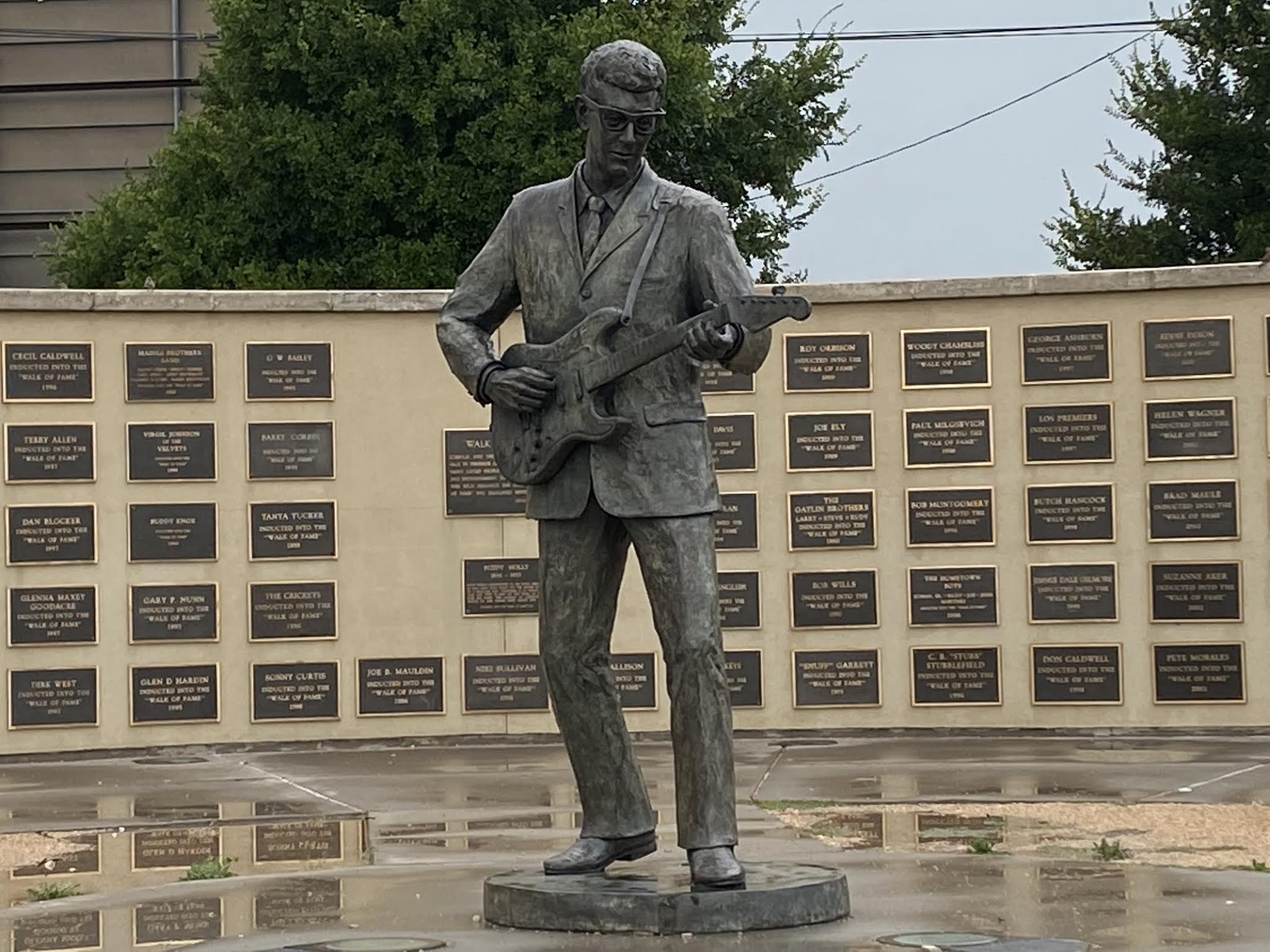
Buddy Holly Statue at Lubbock's Walk of Fame

Road trip 2021 may be history, but it will likely prove to be one of the most memorable ones I've ever taken. I left home early on Sunday, July 18, along with my nineteen-year-old grandson, with zero miles on the trip-counter, and we completed the trip on Sunday, August 1, with 5,035 miles on the meter. 

This is a quick summary of the 15 days we were on the road:

  1. Houston to Lubbock, TX: all about Buddy Holly,
  2. Lubbock to Clovis and Roswell, NM: personal tour of the Norman Petty recording studio in Clovis where Holly recorded the hits,
  3. Roswell, NM to Albuquerque, NM: the "alien" sites in Roswell along with stops in Lincoln, NM (site of the Lincoln County War) and White Sands National Park,
  4. Albuquerque to Kayente, AZ: with a long visit to the famous marker in Four Corners, USA, where you can place yourself simultaneously within the boundary of four different states,
  5. Kayente to Kanab, UT: with a Navajo guided tour through the beautiful Monument Valley,
  6. Kanab to Page, AZ: in between the two cities, we spent much of the day enjoying Zion National Park with my step-grandson who is interning there this summer,
  7. Page to Cedar City, UT: with an invigorating visit to the North Rim of the Grand Canyon that we enjoyed despite all the smoke from this summer's wildfires,
  8. Cedar City to Evanston, WY: with visits to Temple Square in Salt Lake City and to the Great Salt Lake itself,
  9. Evanston to Cody, WY: spent the day in Grand Teton National Park and Yellowstone National Park (which was overwhelmed by tourist traffic) before arriving in one of my favorite cities,
  10. Cody to Sheridan, WY: after spending much of the day exploring the wonderful Buffalo Bill Cody Center,
  11. Sheridan to Rapid City, SD: visited Mount Rushmore and the Crazy Horse Monument (both with good crowds),
  12. Rapid City to Ogallala, NE: highlight of the day's driving was the fascinating Wall Drug, one of the most iconic "tourist traps" in the country,
  13. Ogallala to Dodge City, KS: with a fun visit to the Boot Hill Museum in town,
  14. Dodge City to Lubbock, TX: to complete our Buddy Holly tribute by visiting the museum that was closed on our earlier visit to Lubbock,
  15. Lubbock to Houston: a ten-hour day of travel to complete the circuit
The first two days were largely spent immersing ourselves in the tragic history of one of both our favorite singers, Buddy Holly. Buddy was from Lubbock, Texas, but he did his earlier recordings at the Norman Petty recording studio in Clovis, New Mexico, so we spent time in both cities walking in Buddy's footsteps. Sadly, Buddy's career lasted only 18 months before a 1959 crash in a small plane claimed his life along with the lives of Richie Valens, J.P. "The Big Bopper" Richardson, and the plane's pilot. 

We both find the man's music to be so much fun that it's impossible not to be in a good mood when you're listening to the songs. 

Buddy Holly (Holley) Gravesite in Lubbock, Texas


Lounge Area of Clovis, NM, Recording Studio (everything is original)


We had a wonderful tour of the Norman Petty studio, just us and a man who spent much of his life working with and for Petty. We were able to spend some time not only in the studio itself but also in the small apartment attached to it that was used by the musicians when they recorded all night long. All of the original furniture, pictures, etc. from back in the day are still in place there. It was like waking up in the 1950s. 

Monday, August 02, 2021

Go West, Young Man - B.J. Hollars


Go West, Young Man
, B.J. Hollars’s account of the Oregon Trail road trip he shared with his six-year-old son, Henry, will be a fun read for anyone who enjoys similar road trips of their own. Smartly, Hollars spends a substantial amount of time in this travel memoir exploring his evolving relationship with Henry (who, if he is even half as precocious as his dad portrays him to be here, is quite the character) as the long hours in the car began to wear a bit on both of them. It didn’t hurt, too, that I read Go West, Young Man during my own 5,000 mile road trip with my nineteen-year-old grandson. As we came upon some of the landmarks highlighted in the Hollars book, I knew what to expect, which landmarks to explore more deeply, and was happier and happier that my grandson was enjoying the trip — and (supposedly) my company — as much as I had hoped he would.


B.J. and Henry were on a mission to rediscover America, both as the country was in the past and the way it is today. And they did it the hard way. They usually camped out along the way, very rarely breaking up the camping routine by a hotel stay or a night spent in the home of friends. And I suspect that the occasional thunderstorm or heavy winds they endured and conquered will likely turn out to be some of their strongest memories of the entire trip. 


Father and son met their goals: they completed the Oregon Trail together and they met enough people along the way, including cross country truck drivers, to get a good feel about both the things that still bind Americans together and the things, mostly political, that so destructively divide those same Americans today. Mr. Hollars used the trip as a means of educating his young son to the realities of the exploitive nature of America’s move west, and what he has to say on the subject is a disturbing reminder of how destructive the westward migration of settlers was to the native peoples already there. 


Bottom Line: Go West, Young Man is fun. I think it’s a little heavy-handed at times on the guilt trip associated with the author’s reaction to how terribly our native peoples were treated by white settlers of the day, but there are plenty of reasons — and takeaways — to read this fun travel memoir. I have to admit that I particularly enjoyed reading about the author’s interface with Henry during such an extended road and camping trip, but I also learned much about the key spots along the Oregon Trail and how important it was to this country’s westward expansion. I recommend this one to all the road-trippers out there. You’ll enjoy it.


B.J. Hollars

Review Copy provided by Publisher

Saturday, July 17, 2021

On the Road Again: Road Trip 2021

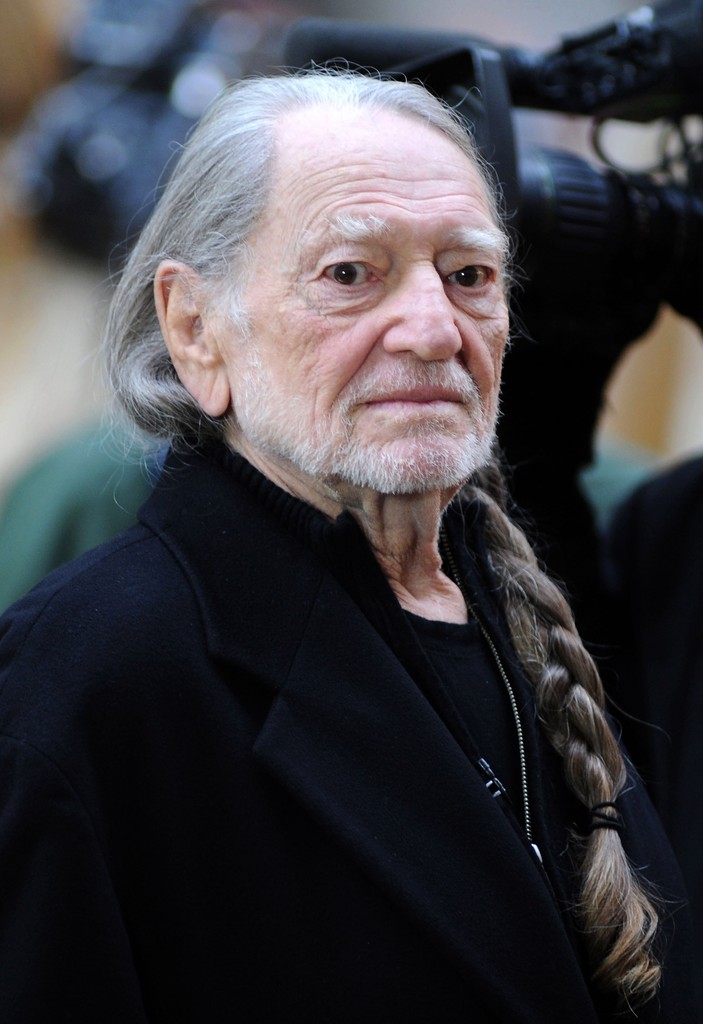
My Hero: Willie Nelson
King of the Road Trip

I'm leaving in the morning with my 19-year-old grandson beside me on a much anticipated road trip...the first in just over two years. You never know how many opportunities are left to spend this kind of time with a grandchild, so I'm putting aside my uneasiness and going ahead with the trip. We are going to be extra cautious, though, as you would know if you saw the number of cleaning and sanitizing items, masks, etc. we are packing along with us. 

So, we'll be taking it one day at a time, and as long as we both feel comfortable being out on the road, we will continue on - hopefully, for at least two weeks. The plan is literally to wander around New Mexico, Arizona, Utah, Nevada, Idaho, Montana, North Dakota, South Dakota, and Nebraska to see what we stumble upon. I'm a stickler for not over-planning a road trip (well, not planning it at all is closer to the truth) so we may not make all of these states, depending on what we find to take up our days - or what the COVID conditions are in some of the states on the list. 

This means that my blogging will be sporadic, at best, through the end of July and maybe into early August - as will my reading. I do plan to check in with a post or two when decent WiFi is available, though, and who knows what I'll have to say? Certainly, not me.

Snowblind - Ragnar Jónasson


Snowblind
(2010) marks the beginning of Ragnar Jónasson’s earliest crime fiction series, a series that has come to be called the author’s “Dark Iceland” books. There are now five other books in the Dark Iceland series, including 2020’s Winterkill. From what I understand, the order of the books as they were internationally published differs from the order in which they were originally published in Iceland, so it’s not clear to me how closely one plot from the series chronologically follows its Icelandic predecessor. 


Snowblind appears to be Jónasson’s debut novel, as I don’t find anything of his having been published in Iceland prior to this one’s 2009 publication in that country. The novel, while certainly not my favorite of the Jónasson novels I’ve read to this point, shares many of the characteristics that readers love most about the author’s work: a strong sense of place, well-developed characters, attention to police procedural details, and crimes (usually murders) perpetrated by truly warped criminal minds. 


Ari Thór Arason is a rookie policeman who eagerly moves to Siglufjöròur, a little town in far north Iceland, to begin his first job. He accepts the job offer over the telephone, however, and his enthusiasm about working in such an isolated town is hard to maintain after he realizes exactly what he has gotten himself into. He is the outsider; everyone knows who he is, but he knows no one. Even worse for him as a policeman, he knows nothing about anyone’s past relationships or the social history of his community. That is a huge disadvantage when investigating a crime in a community as small as the one he’s now committed himself to working and living in for the next two years. 


But as his new boss tells him, nothing much ever happens in Siglufjöròur anyway. And that’s true…right up until the moment that two dead bodies are discovered, one of them more obviously the body of a murder victim than the other. 


The most prominent of the two victims is an elderly man who appears to have fallen to his death down a flight of theater stairs while there alone. The man is internationally famous because of a book he wrote decades earlier, and his death, especially a suspicious one, still has the potential to draw the world’s interest. The other body belonged to a near-naked young woman who is discovered lying in the snow in almost a “snow angel” position by a young neighbor of hers. 


At first, Thór is the only one who suspects foul play. Others in town, including Thór’s own boss are more than willing to believe that the old man’s death had been an accident and the young woman’s a suicide. Despite his ignorance of local politics and relationships, Thór begins to take “crime scene” pictures and ask uncomfortable questions. And when someone breaks into his home in the middle of the night, he realizes that he might just be on to something. Now he only needs to get someone else to take him seriously.


Bottom Line: While the mystery in Snowblind is rather run-of-the-mill and holds few real surprises, this is a novel that has such intriguing characters and such an interesting setting that I enjoyed reading it. I look forward to reading the rest of the series. 


Ragnar Jónasson