Saturday, March 06, 2021

Summerwater - Sarah Moss


Sarah Moss’s Summerwater is one of those novels that has drawn praise from professional critics on both the U.S. and the U.K. All that I knew about it going in was that it was short (201 numbered pages) and that it was supposed to have some kind of tragic/impactful/heartbreaking ending that kind of sneaks up on the reader. I can verify that the page-count is accurate, but the ending is more like getting blindsided by a freight train than having something surprise you by slowly sneaking up on you. 


And that makes this a tricky novel to review. One slip and the freight train is derailed before it even reaches the neighborhood.


Summerwater is the story of a group of strangers who happen to be staying in a Scottish holiday camp during the same week, a week during which it seems mostly to be raining so often that the various families are largely confined to their cabins where they surreptitiously spy on each other through slatted windows. With one exception, everyone pretty much seems to be from either Scotland or England. The outsiders are from Eastern Europe - the others think - and depending on whom you ask that family is characterized as Bulgarian, Polish, Russian, or Romanian. Everyone is so certain that they know the family’s origin that no one makes an effort to verify any of the assumptions. They don’t speak to the foreigners at all, but for that matter, they barely speak to each other either.


In what could pass for a collection of interconnected short stories as much as anything else, Moss introduces the families to the readers one at a time. Each “story,” of course has the same setting and sometimes the characters do have the kind of interaction that requires a little more from them than staring at, and wondering about, each other. The characters run the gamut from the elderly to toddlers, and their lives from contentment to despair. Some of what is going on behind closed doors is laugh-out-loud funny, and some of it will bring a tear to your eye. Moss truly is a good writer, and the structure works well. For the most part, her adult characters are witty and observant, if more than a little standoffish, such as one wife who is  desperate for a little alone-time because all the rain. She thinks:


“…setting aside the violent and deranged, getting married is like voting in that whatever you choose the outcome will be at best mildly unsatisfactory four years down the line.”


My favorite chapter of them all is “Zanzibar,” a snippet during which Moss places the reader inside the minds of Josh and Millie, who are on the verge of marriage, during the sex act itself. The contrast between what each is thinking, as opposed to what each believes the other must be thinking and experiencing is hysterical at times. Let’s just say it is a very good thing that neither of them is a mindreader.


But that freight train is still out there somewhere.


Bottom Line: Summerwater is as enjoyable as it is memorable, but for entirely different reasons. However, the ending left me a bit confused because of something that is only hinted at about one of the characters. I’m still not sure exactly why what happens at the end actually happens; perhaps, that’s what Moss was going for, perhaps not. And, too, maybe I just missed something. It wouldn’t be the first time that’s happened. 


Sarah Moss

I do not particularly enjoy endings that leave me guessing even after the last page has been turned, so I would love to hear what others think. A spoiler-alert warning has been added to make such a discussion, I hope, acceptable. 


Comments may include spoilers, especially as to the novel’s ending.

Thursday, March 04, 2021

The Widows - Jess Montgomery

The Widows is the first novel in what has now become known as Jess Montgomery’s Kinship Series. The series, set in rural Ohio, begins in the mid-1920s and features two very strong female characters, Lily Ross and Marvena Whitcomb, who only reluctantly team up together to fight for the welfare of their coal-mining community. By the end of The Widows, Lily and Marvena have become much more than two women forced to work together; they have become family. 


The story begins before the women have met for the first time. In fact, it begins before Lily even knows of Marvena’s existence. Lily, the mother of two small children, lives in the small town she has known all her life, a town in which Daniel, her husband, is the well respected sheriff. Lily helps out in the town’s small jailhouse by cleaning the cells, providing meals, and doing all the paperwork that Daniel is so bad about keeping up with. Her world falls apart on the day that someone appears at her front door to tell her that Daniel has been “found.” As in found dead.


It appears that Daniel has been killed by a prisoner he was transporting to the jail. But Lily wants the details that no one but her much seems to care about. And after she has been asked to take on the role of acting sheriff until the next election to select the permanent new sheriff, she has the power and authority to do a little digging on her own. Marvena Whitcomb, unaware of the sheriff’s death, shows up at Lily’s door the day of Daniel’s funeral. She has come to Daniel for the answers he’s promised her about her missing sixteen-year-old daughter, answers that now she will never get from Sheriff Ross. The two women are suspicious about the motives of the other, especially especially after Lily figures out how much have in common, but they need each other - and given enough time - the mutual trust will come.


Now, working as a team, they become a threat to the powerful family that owns the local coal mining company, a company headed up by a man so ruthless that he will do whatever it takes to maximize the profits of his mines. If that means that people have to die, in or outside the mines, so be it. That kind of thing matters little to him.


Bottom Line: The Widows, being the first book in the Kinship Series, works very well as a standalone novel because, if you stop with this one, that’s what it is. But, given the storytelling skills of Jess Montgomery and the memorable characters she creates, I suspect that most readers will want to keep reading. I’m looking forward to the next two books in the series: The Hollows and The Stills - along with any that follow those. 


Jess Montgomery

Monday, March 01, 2021

The Book Chase March 2021 Reading Plan

I've slipped back into my old habit of reading multiple books at the same time, and now I wonder why I ever quit doing that in the first place. Having more than one going at a time (7 seems to work best for me) ensures that a single book won't go so stale on me that my reading slows down. In the long run, it probably will also result in me abandoning fewer books. As long as the books are different enough from each other that I don't begin to confuse plots, and as long as I have them in multiple stages of completion, I enjoy reading more than ever - and that says a lot. 

So, coming into March, these are the ones I'm already reading - or looking forward to reading soon:

This turned out to be the first book in Jess Montgomery's now three-book "Kinship Series." It tells the fictional story of the first female sheriff in the state of Ohio who was given that job after the assassination of the prior sheriff, her husband. The story is advanced through the alternating points-of-view of Sheriff Lily Ross and Marvena Whitcomb, a unionizer who lost her own husband in a coal mine explosion. The book is set in the 1920s and is very good.


I discovered this one via Netflix because it is the basis of a 2020 movie starring George Clooney called The Midnight Sky. The movie was good, but the book is fantastic. The basic plot is that the world is coming to a rapid end that cannot be stopped. One man and an eight-year-old girl are alone in an Arctic observatory and a space mission is returning from a close look at Jupiter with its six astronauts. The chapters alternate between the two scenarios, as each group struggles with the more and more obvious reality of the situation.


The Brutal Telling is Louise Penny's fifth Inspector Gamache book, and one of only three of the sixteen books in the series I haven't read. This one is really Olivier's story, a character that fans of the series by now know quite well, but in this 2009 book, Olivier is a prime suspect in the murder that brings Gamache and his team to Three Pines. This one is part of the project I started last year to catch up on as many of my favorite detective series as I could - but now I'm dreading the withdrawal period that will result when I've done that.

Summerwater has been named a best book of the year by two of the U.K.'s newspapers, so I grabbed a library-copy even before I knew much about it. It is short, only 190 pages, but even though I've only just finished the first chapter, I'm hooked. It all takes place in a Scottish vacation park during a day in which the weather is miserable. No one really knows anyone else, and they seem to like it that way right up until one family starts to seem different from the rest and "tragedy sneaks into their lives." 

I'm about 40 pages into this one now, and just noticed that it is "book 2 of Between Us." I had noticed that a previous book of this author's had a very similar title and wondered why. Now I know. So far, though, The Secrets Between Us is reading just fine as a standalone, and I'm confident that it will continue to do so. The two main characters have now been introduced in alternating chapters, and I'm enthralled by the horrible lives these women are being forced to live because of their utter poverty. 

Luster got all kinds of attention after it was published in August 2020, and it ended up making too many "best books of the year" list to count. I have literally read less than ten pages so far, but I am totally taken by what is going on in the head of the book's narrator, a twenty-three old black woman with a slightly off-kilter take on the world. It looks like it's going to be one of those stream-of-consciousness books that can end up being very funny, very dark, or both. Reader-reviews have run the spectrum; some love it, some hate it.

And then there's Lonesome Dove. This one will almost definitely not be finished in March because I'm limiting myself to a chapter or two per day at most. It's a story I know so well from my two previous reads of the novel, and the great television series, that there are really no surprises left for me to discover. Yet, I find myself laughing in the same places I always laugh, and falling in love with the same characters I always favor. I really don't want this one to end - and that's nothing new either.

Others books I'm looking forward to in March, or perhaps April, include several ARCs. Among those are James Lee Burke's latest book (part of his Holland family saga) Another Kind of Eden; Nick McDonnell's The Council of Animals, an Animal Farm-kind of take on what happens when humans begin to die off; Laurie Frankel's One Two Three, a book I've mentioned before; and You Belong Here Now by Dianna Rostad, an "orphan train" book that takes place in 1925 Montana.

Potential library surprises include Nothing More Dangerous by Allen Eskens, The Good Girls by Sonia Faleiro, The Thursday Murder Club by Richard Osman, Blood Grove by Walter Mosley, A Swim in the Pond in the Rain by George Saunders, and The Searcher by Tana French. Depending on how long I can check these out for, they may move directly up to the top of the reading list. 

So there you have it: book choices in abundance. Life is good...considering.

Edit: Change of plans after reading a few more pages of Luster. I've decided that I'm among the "hate it" crowd on this one because it all seems kind of pointless and an overreach to be snarky. Luster becomes my third abandoned book of 2021. 


Sunday, February 28, 2021

The Dig - John Preston

I only recently discovered John Preston’s 2007 novel The Dig via the movie version of the same title being so prominently featured on Netflix right now. I knew almost nothing about England’s famous 1939 Sutton Hoo excavation, but as I’ve always had an interest in archaeology, the movie immediately caught my attention. I ended up so thoroughly enjoying the film that I decided to track down a copy of the book it is based upon to learn more about the dig and the people involved. Surprisingly, because in my experience it so seldom happens this way, the movie version of The Dig left me with a better feel for what the dig must have been like for those who experienced it than the book managed to do. 


The Sutton Hoo site is home to thirteen ancient burial mounds, but the book and film focus on the initial excavation of only the first of them. England was, of course, on the brink of war with Germany in 1939, so the discovery of a burial chamber dating back to the late sixth century, came at a precarious time. If the finds were going to excavated and safeguarded from the perils of open warfare with a neighboring country, time was of the essence and someone was going to have to step on toes to get it all done in time. There were also rather petty jealousies between the regional museum and the British Museum in London that had to be negotiated, although the national museum was always likely to be the winner in any dispute over which museum should permanently house the finds. 


Preston’s novel focuses on some of the key people in the story: Edith Pretty, on whose property the burial mounds were located; Basil Brown, the proficient “amateur” archaeologist originally hired by Pretty to begin the excavation; Peggy Piggott, a freshly-minted professional archeologist who accompanied her husband to the dig; and Robert Pretty, the little boy who saw the whole thing as the greatest adventure of his young life. With the exception of the little boy - who only serves as narrator for the novel’s short epilogue - the main characters are given long sections of the book to narrate what they personally experience as the dig proceeds over much of 1939. 


Those looking for much detail about the finds and the burials are likely to be disappointed as The Dig is more a character study than an accounting of the archeological finds and conclusions. What the novel does well - and what the film does even better - is give a feel for the period and exploration methods of the day. Preston uses the characters to humanize the efforts required and to portray how it all comes together in the end despite the factional rivalries. Edith Pretty, owner of the property, deservedly comes across as the real heroine of the piece because of her insistence, in the first place, that the mounds be explored. Basil Brown is the story’s underdog because of the way that his initial work on the mound is denigrated by those who come later to the project, and Peggy Piggott, being a female archeologist, is treated much the same as Brown. 

Bottom Line: Novels based on true events often leave the reader wanting to know more, and The Dig is certainly one of those. Just as the film led me to the novel, the combination of the two makes me want to read much more about the Sutton Hoo excavations and what was ultimately discovered there. I do suggest that both the film and the book be experienced if that is possible because they supplement each other well. My only reservation about the film is that, even though I understand it was done for dramatic effect, I do think the film focuses too much on the supposed sex life of Peggy Piggott. I suppose that is the kind of thing that is unavoidable when a movie is based on a novel that is based upon a true story.


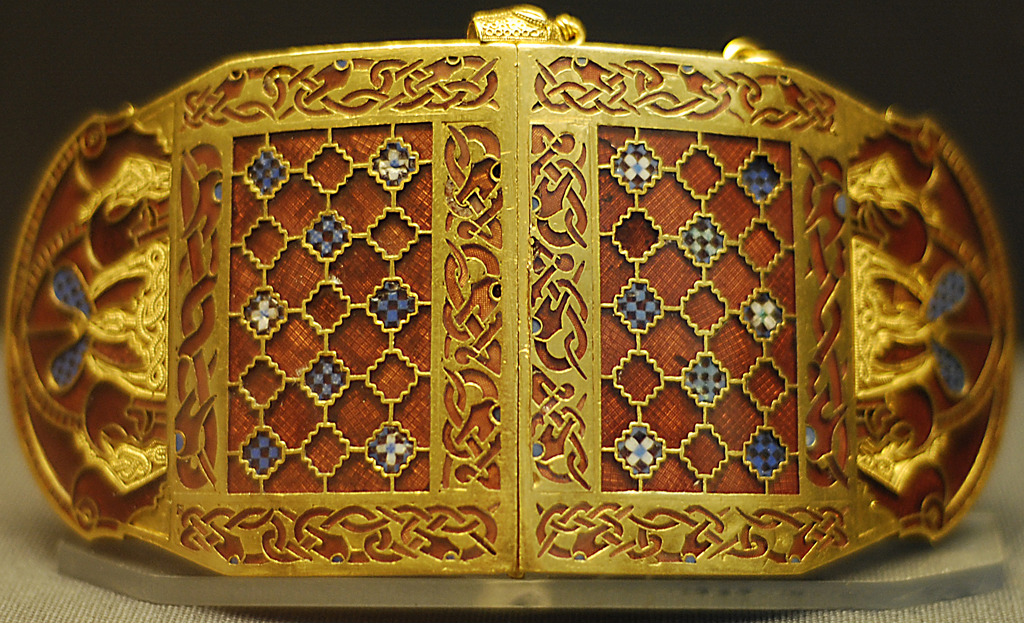
Please do click on these artifact pictures because they are spectacular at full size. 

Friday, February 26, 2021

Blackout - Candace Owens


I almost never read political opinion books written by elected officials anymore because I think the majority of them are actually written by the kind of hired-gun ghost writer paid handsomely to make the politician look a whole lot smarter than they actually are. I do, on the other hand, still occasionally read a political book written by a relative outsider, someone still far enough away from scene of the crime that they are not completely nauseated by the smell in the room. I generally prefer the ones written by respected historians (although my respect for even some of those people has slipped more than a notch or two in recent years) or by someone with a particularly interesting point-of-view. 

Candace Owens is one of those people, and Blackout is one of those books. 


Owens is what used to be much more rare than it is today: a young, black conservative with the courage to publicly share her beliefs about today’s political environment. As such, she has often been viciously targeted by media people and/or via social media in an attempt to discredit her to the point that she shuts up or changes her message to suit her critics. To her credit, this articulate young woman has done neither. Instead, she has responded to those who want so badly to destroy her with Blackout, a compelling argument that African American culture is going to continue to deteriorate as long as her fellow blacks are willing to sell their votes to the Democratic Party so cheaply. 


Owens contends that it is time for African Americans (she, I think, prefers the term “American Blacks”) to lose the herd mentality that has allowed one political party to claim roughly 95% of their votes for the last several decades. In that spirit, she has founded the “Blexit” movement by which she urges blacks to leave the Democratic Party until Democrat politicians actually earn their votes. She says that it is time to quit working for the Democrats for free. 


But perhaps the most damning charge Owens makes against Democrat politicians is that they will never allow black Americans to quit thinking of themselves as victims of systemic racism. Her argument goes that as long as blacks have someone other than themselves to blame for their cultural failures, they do not have to do the hard work of solving their own problems. It is just too much easier to have someone else promise to do that for them, as both political parties do, even though both parties almost never deliver in a meaningful way on those promises. The concept of black victimhood, Owens says, is a card that the Democrats have relied on for too long, a card they can never afford to give up now because black bloc-voting is what keeps them in power.


Bottom Line: In Blackout Candace Owens makes a strong case for what she herself has only relatively recently come to believe about American culture. Along the way, the reader learns about Owens’s upbringing and why she changed her own mind about the relationship between the Democratic Party and American Blacks. Sadly, I doubt that a significant number of  American Blacks are going to cut through all the noise and personal attacks on Owens long enough to read the book. That is part of the problem. And that is the saddest thing of all. Right, wrong, or somewhere in the middle of the real truth, Candace Owens deserves to be heard.

Thursday, February 25, 2021

Page 99: What It Says About Lonesome Dove


The Times
(London) includes a feature called "Page 99" in its book section every week that I've come to find works very effectively to give a real sense of what a particular book is all about, especially as to its style and overall readability. The editor in charge always introduces the  piece puts it this way:

    "Ford Madox Ford, friend of Joseph Conrad, novelist and literary critic, said: 'Open the book to page ninety-nine and read, and the quality of the whole will be revealed to you.' Arbitrary, perhaps, but surprisingly accurate."

In that spirit, I've shamelessly stolen the idea (whether from Ford Madox Ford or from The Times, I'm not sure) to see how it works on a couple of the books I'm reading at the moment. First up, a portion of the ninety-ninth page of Larry McMurtry's absolutely brilliant western novel, Lonesome Dove:

    "Wilbarger of course was a surprise. He trotted his big black horse right up to the porch, which surprised the blue pigs as much as it did Augustus. They woke up and grunted at the horse.

    Wilbarger looked enviously at Augustus's jug. 'By God, I bet that ain't persimmon juice you're drinking,' he said. 'I wish I could afford an easy life.'

    'If you was to dismount and stop scaring my pigs you'd be welcome to a drink,' Augustus said. 'We can introduce ourselves later.'

    The shoat got up and walked right under the black horse, which was well broke enough that it didn't move. Wilbarger was more shocked than the horse. In fact, Augustus was shocked himself. The shoat had never done such a thing before, though he had always been an unpredictable shoat.

    'I guess that's one of the pigs you don't rent,' Wilbarger said. 'If I'd been riding my mare she'd have kicked it so far you'd have had to hunt to find your bacon.'

    'Well, that pig had been asleep,' Augustus said. 'I guess it didn't expect a horse to be standing there when it woke up.'

    'Which are you, Call or McCrae?' Walberger asked, tired of discussing pigs.

    'I'm McCrae,' Augustus said. 'Call wouldn't put up with this much jabbering.'

    'Can't blame him,' Walberger said. 'I'm Walberger.'

That's a taste of my favorite novel of all-time. I'm reading Lonesome Dove for the third time right now - all 843 pages of it - and it still makes me laugh and seems as fresh as it did the first time I read it back in 1985. It's only one of half-a-dozen books I'm reading at the moment, so I'm limiting myself to one or two chapters a day, and I'm finding that may be the best way of all to experience the Augustus McCrae/Woodrow Call saga. After all, I really don't want it to end...and have just reached page 99. 

Larry McMurtry